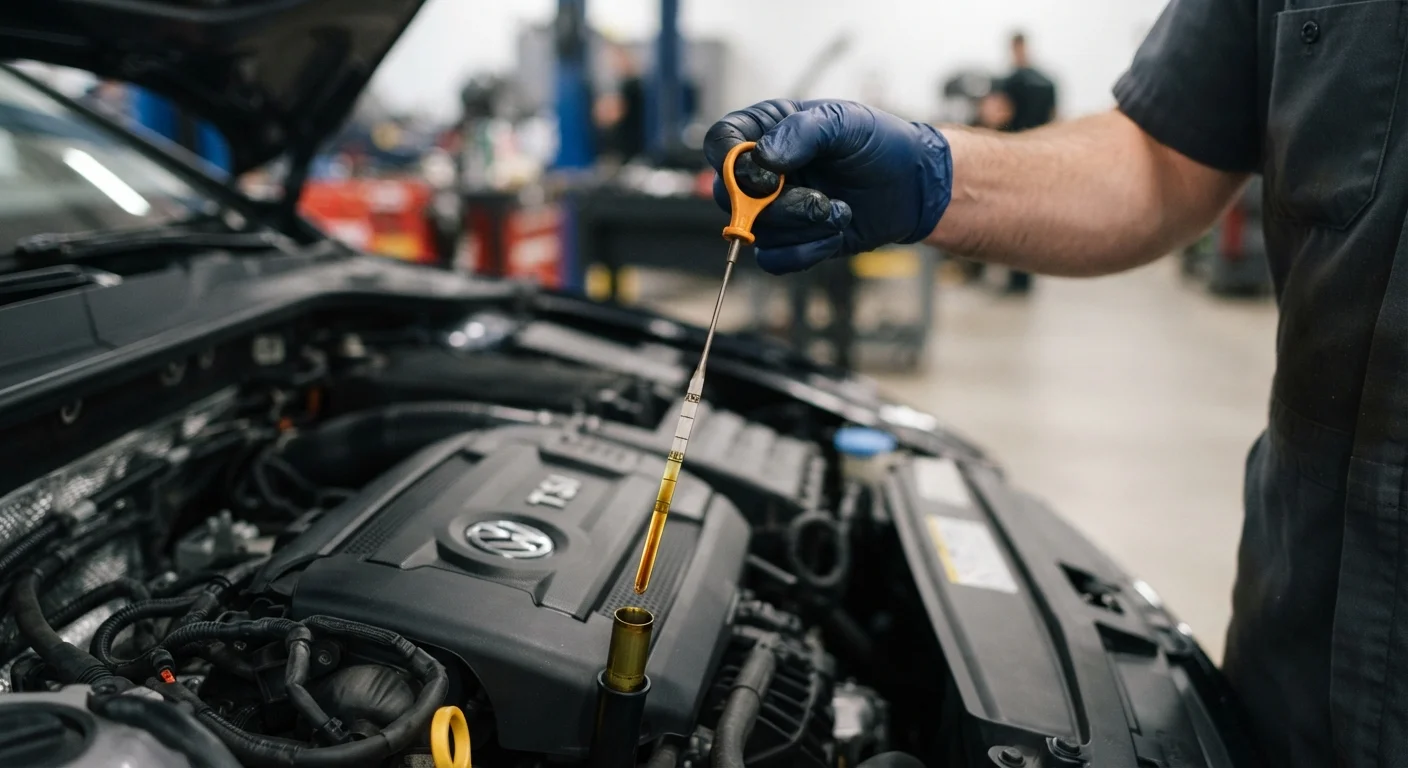
What Engine Oil Actually Does
Think of your engine as thousands of metal parts moving against each other at high speed, many times per second. Engine oil forms a thin protective film between those surfaces, preventing direct metal-to-metal contact. That's its primary job - lubrication - but it does considerably more.
Oil also acts as a coolant for parts the water-cooling system can't reach directly, carries combustion byproducts away from sensitive areas, and holds microscopic debris in suspension until the oil filter traps it. As the oil ages, its additive package wears out, its viscosity changes, and it becomes less effective at all three jobs.
For a broader look at how oil changes fit into overall upkeep, see our guide to your first year of car ownership.
Oil Level vs. Oil Condition
These are two separate concerns. Your dipstick tells you how much oil is in the engine; it cannot reliably tell you whether the oil's protective additives are still effective. That's why following a change interval based on mileage or your vehicle's oil-life monitor matters even when the level looks fine.
How to Read a Viscosity Grade
Oil bottles display a code like 5W-30 or 10W-40. This is the viscosity grade - a measure of how the oil flows at different temperatures.
- The number before the W (W stands for Winter) indicates cold-weather flow. A lower number means the oil flows more readily at low temperatures, which is critical for protecting the engine during a cold start.
- The number after the W indicates viscosity at normal operating temperature (roughly 212°F / 100°C). A higher number means the oil is thicker at operating temperature.
So a 5W-30 oil flows easily in cold conditions and maintains moderate thickness when hot - a common specification for many passenger cars. A 10W-40 Your owner's manual will specify the grade your engine is designed for. Using a grade that's too thick can reduce flow on startup; too thin and the oil film may not provide adequate protection under load. If you're unsure, the manual is always the authoritative source. Find Your Grade in 30 Seconds Open your glove box and locate the owner's manual. Look in the index under 'engine oil' or 'lubrication.' The recommended viscosity grade is usually printed clearly in a table alongside the capacity in quarts. Some vehicles also print it on the oil filler cap under the hood. Walk into any auto parts store and you'll see three main categories of engine oil: The right choice for your car is whichever type your manufacturer specifies - not necessarily the most expensive option on the shelf. 5,000-10,000 mi Typical modern oil change interval Most vehicle manufacturers now recommend this range for full synthetic oil under normal driving conditions, according to published owner's manual guidelines. ~20% Engine wear occurs at cold start Automotive engineering research suggests a significant proportion of engine wear happens in the first moments after startup, before oil fully circulates - underscoring why cold-flow viscosity matters. The old 3,000-mile rule is outdated for most modern vehicles. It originated in an era of conventional oil and less refined engine tolerances. Today, many manufacturers recommend oil changes every 5,000 to 10,000 miles, and some full synthetic specifications extend to 15,000 miles under normal driving conditions. Two factors refine that range for your specific situation: If you want help interpreting your handbook's mileage and time-based guidance, see our article on understanding manufacturer service intervals. And if common myths about oil changes have you second-guessing yourself, separating motoring myths from reality is worth reading. “The single most important thing you can do to extend your engine's life is use the right oil and change it on schedule. Everything else is secondary.” — Bob Sutherland, Automotive engineer and technical contributor, SAE International publications You don't need mechanical expertise to stay on top of your engine oil. A few basic habits make a real difference: Building these checks into a broader routine is easier than you might think. Our article on building a sensible car maintenance schedule walks you through setting one up from scratch.Synthetic vs. Conventional: What the Labels Mean
How Often Should You Actually Change Your Oil?
Simple Habits That Keep Your Engine Protected