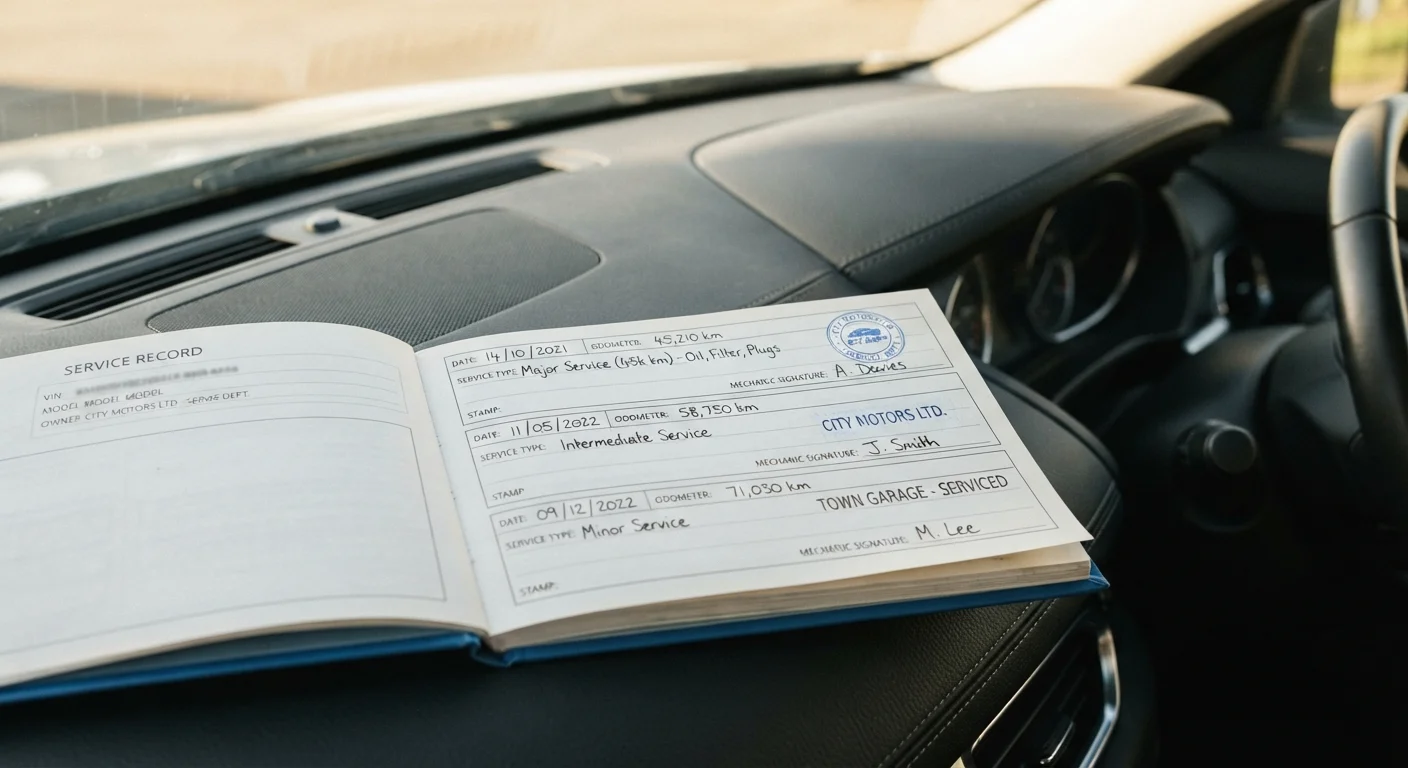
What a Service Logbook Actually Contains
Your car's service logbook usually comes inside the vehicle handbook pack - a slim booklet with pre-printed pages, one for each scheduled service interval. Each page includes fields for the date, current mileage, services performed, and a space for the garage's stamp and the technician's signature.
What gets recorded varies by service type, but typically includes oil and filter changes, fluid checks, brake inspections, tire condition, and any advisory notes. The logbook doesn't replace a full invoice - it's a summary confirmation that the work took place. For a clearer picture of what different service types cover, see our breakdown on full-service vs. interim service.
Digital Logbooks Are Becoming More Common
Several manufacturers now maintain service records electronically through their authorized dealer networks. If your car uses a digital system, ask the dealership how to access or print your service history. Digital records and paper logbooks can coexist - both count as legitimate evidence of maintenance.
Why Keeping It Updated Matters
The logbook does three important jobs for you as a car owner.
1. It protects your warranty
Many manufacturer warranties require the car to be serviced at the intervals specified in the handbook. Missing a service - or failing to have it recorded - can void warranty coverage on certain repairs. Always keep receipts alongside your logbook entries as backup documentation.
2. It helps mechanics spot problems early
A mechanic reviewing your logbook can see at a glance what has already been replaced and what might be overdue. This reduces guesswork and can prevent small issues from becoming expensive ones. Pairing your logbook habit with a broader maintenance plan makes this even more effective - our guide on building a car maintenance schedule walks you through that process.
3. It supports resale value
When you eventually sell your car, a buyer's first question about maintenance is almost always answered by the logbook. A full, stamped history signals that the vehicle has been looked after consistently - and that reassurance has real monetary value.
Up to 40%
Potential value difference with full service history
Industry estimates from used-car valuations commonly suggest a well-documented full service history can influence a vehicle's resale price by a significant margin compared to a car with missing records.
1 in 3
Used cars sold without complete service records
Consumer automotive surveys consistently find that a substantial proportion of used vehicles change hands with incomplete or absent service documentation, making a full logbook a notable selling point.
Understanding Service Intervals and Logbook Timing
Most manufacturers specify service intervals by mileage, time, or both - whichever comes first. A common example is every 12 months or every 10,000 miles. If you're unsure how your manufacturer's schedule works, our explainer on manufacturer service intervals goes into detail.
The key practical point: don't wait for a warning light before having the car serviced. Services logged at the correct intervals tell a far cleaner story than a logbook where years or miles are missing between stamps.
Always Ask for Your Stamp on the Day
Don't leave a service appointment without checking that your logbook has been stamped and signed. It's easy to forget in the moment, and asking the service advisor before you pay takes only a few seconds. Once you've driven away, getting a retrospective stamp can be more complicated.
What Gaps in a Logbook Signal
When you're buying a used car, a logbook with missing stamps should prompt questions rather than automatic alarm. Sometimes a stamp was genuinely forgotten despite the work being done - receipts can help fill those gaps. Other times, gaps reflect skipped services, which may mean worn components haven't been replaced on schedule.
A logbook is one piece of the due-diligence puzzle. Our article on reading a used car's history explains what records can and can't tell you when evaluating a vehicle before purchase.