What Makes a Sugar 'Natural' or 'Added'?
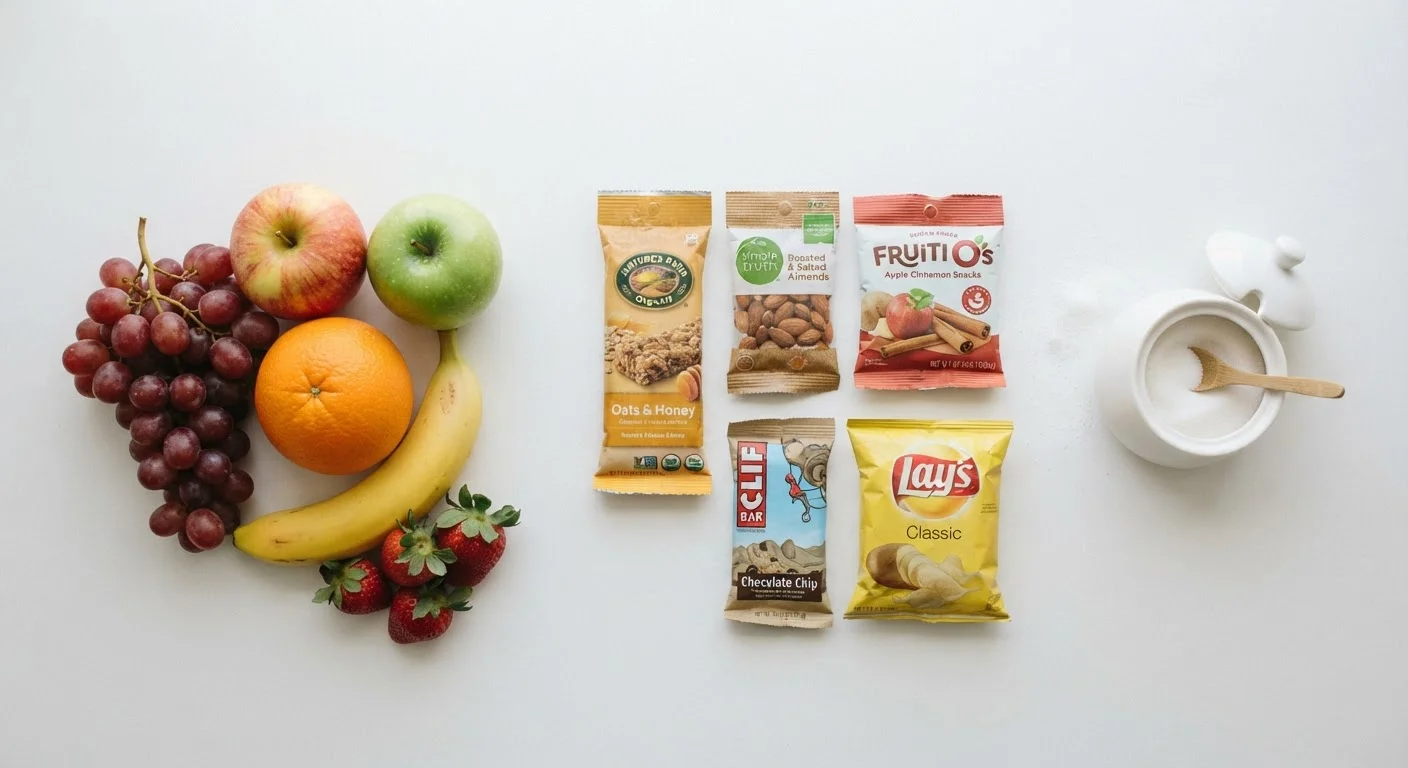
The terms sound simple, but they describe something specific about origin, not chemistry. Natural sugars are those already present in a whole food before any processing occurs. The lactose in milk, the fructose in an apple, the glucose in a carrot - these arrive in the food as nature made it.
Added sugars, by contrast, are any sugars or caloric sweeteners incorporated into a food during manufacturing, cooking, or preparation. This includes obvious examples like table sugar stirred into yogurt, but also honey added to granola bars, high-fructose corn syrup in soda, and fruit juice concentrate used to sweeten packaged cereals.
At the molecular level, a glucose molecule from an apple and a glucose molecule from a candy bar are chemically identical. The distinction lies in what surrounds that sugar when it enters your body - and that context changes quite a lot. See our Nutrition Facts label guide for a full breakdown of how added sugars appear on packaging.
How the Body Processes Each Type
When you eat a whole piece of fruit, the sugar it contains travels through your digestive system alongside dietary fiber, water, and various vitamins and minerals. Fiber physically slows the rate at which sugar is absorbed into the bloodstream, which helps prevent a rapid spike in blood glucose. The vitamins and minerals present also contribute to your overall nutrition.
When you consume a food high in added sugars - say, a sweetened beverage - there is typically little or no fiber to slow absorption. Sugar enters the bloodstream more quickly, producing a sharper rise in blood glucose followed by a faster drop. Over time, repeatedly triggering these spikes may place greater demands on the body's insulin response, according to general nutrition research.
It is worth noting that the body's response to sugar is complex and influenced by many factors, including overall diet, activity level, and individual physiology. This article provides general educational information, not medical advice - please consult a qualified healthcare professional about your specific health needs.
17 tsp
Average daily added sugar intake for US adults
The CDC has reported that US adults consume an average of about 17 teaspoons of added sugar per day, well above recommended levels.
10%
Recommended daily calorie limit from added sugars
The 2020-2025 Dietary Guidelines for Americans set an upper reference limit of less than 10% of total daily calories from added sugars.
39g
Added sugar in a standard 12 oz cola
A typical 12-ounce can of regular cola contains approximately 39 grams of added sugar, close to a full day's recommended limit.
Side-by-Side: Natural Sugar vs. Added Sugar
The table below summarizes the key differences to keep in mind when reading labels or planning meals. For a broader look at how carbohydrates - including sugars - fit into a healthy diet, see our article Carbohydrates Are Not the Enemy.
| Criterion | Natural Sugar | Added Sugar |
|---|---|---|
| Origin | Inherent in whole food | Added during processing or cooking |
| Common sources | Fruit, dairy, vegetables | Soda, candy, packaged baked goods |
| Accompanying nutrients | Fiber, vitamins, minerals | Typically minimal |
| Absorption rate | Generally slower (fiber present) | Often faster (less fiber) |
| Appears on Nutrition Label | Under Total Sugars | Listed separately as Added Sugars |
| Dietary guidance | No specific limit for whole-food sources | Less than 10% of daily calories recommended |
Reading Labels and Making Practical Choices
Since 2020, the updated US Nutrition Facts label has been required to list Added Sugars as a separate line item beneath Total Sugars, expressed in grams and as a percentage of the Daily Value. This makes it easier for consumers to see exactly how much sugar was introduced during manufacturing, versus how much was already in the ingredients.
The 2020-2025 Dietary Guidelines for Americans recommend that added sugars account for less than 10% of total daily calorie intake. For a 2,000-calorie diet, that works out to roughly 50 grams of added sugar per day as an upper reference point - though individual needs vary, and a registered dietitian can help determine what makes sense for you personally.
A useful rule of thumb: foods where natural sugars dominate (whole fruits, plain dairy, vegetables) generally also supply fiber, protein, or micronutrients. Foods with high added sugar counts often supply energy with few other nutrients. Our guide to whole foods vs. ultra-processed foods explores this distinction further.
A Note on Fruit Juice vs. Whole Fruit
Even 100% fruit juice - with no added sugar - behaves differently from whole fruit in the body. Juicing removes most of the fiber, so the natural sugars are absorbed more rapidly. Most nutrition guidance favors eating whole fruit over drinking juice for this reason. This does not mean juice is harmful, but it is a useful distinction when comparing food choices.
This article is for general informational and educational purposes only and does not constitute medical or nutritional advice. Consult a qualified healthcare professional for guidance tailored to your individual health situation.