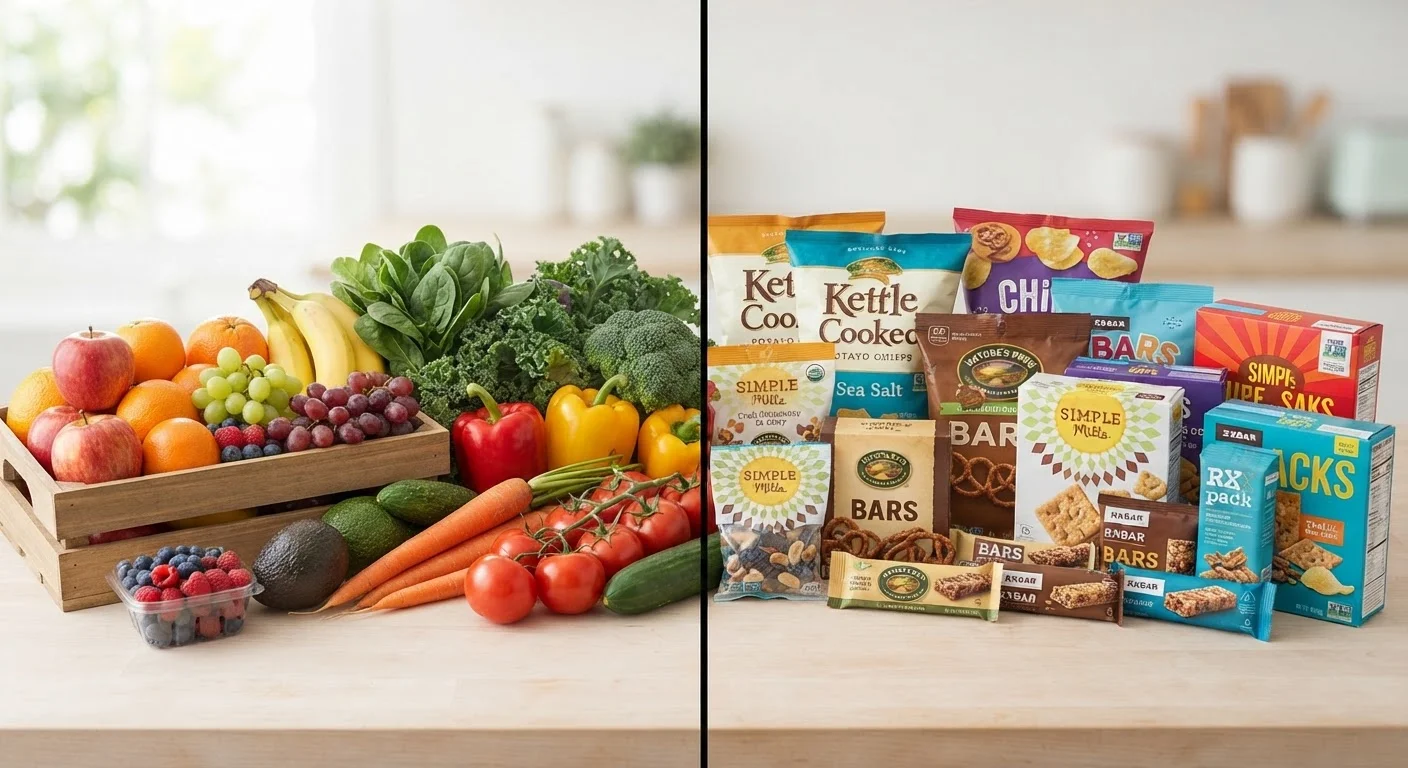
What Does 'Whole Food' Actually Mean?
A whole food is one that has undergone little or no processing before it reaches your plate. Think a raw apple, a handful of almonds, dried lentils, or a plain chicken breast. The defining quality is that the food is still recognizable as coming from a plant or animal, with its natural structure largely intact.
Minimal processing - like washing, cutting, freezing, or pasteurizing - doesn't disqualify a food from this category. Frozen spinach and canned plain tomatoes, for example, are still considered minimally processed and retain most of their nutritional value. The key distinction is that nothing significant has been added or removed that changes the food's basic character.
Whole foods tend to be rich in fiber, vitamins, and minerals - what nutrition professionals call micronutrients - because their natural structure hasn't been stripped away by industrial processing. That structure also affects how your body digests and absorbs nutrients.
What Makes a Food 'Ultra-Processed'?
The term ultra-processed food comes from a classification framework called NOVA, developed by nutrition researchers to categorize foods by the extent and purpose of their processing - not just their nutrient content. Ultra-processed foods are industrial formulations that typically contain ingredients you wouldn't find in a home kitchen: emulsifiers, flavor enhancers, color additives, modified starches, and preservatives.
Common examples include packaged chips, flavored instant noodles, ready-to-eat frozen meals, sugary breakfast cereals, and many soft drinks. The defining feature isn't that they're cooked or packaged - it's that they're formulated using combinations of refined ingredients and additives designed primarily to extend shelf life, enhance palatability, or reduce production costs.
Ultra-processed foods are also frequently high in added sugars, sodium, and saturated or trans fats, while being relatively low in fiber and micronutrients. However, nutrient content alone doesn't define ultra-processing - some ultra-processed products are fortified to appear nutritious on labels.
The NOVA System Isn't Universally Adopted
While the NOVA classification is widely cited in nutrition research, it is a research framework - not an official regulatory standard used by the FDA or USDA. Some nutrition scientists debate whether classifying foods solely by processing level captures the full picture of dietary quality. It's a useful lens for beginners, but keep in mind that no single system tells the whole story.
Side-by-Side: How They Compare
Putting both categories next to each other helps clarify what's really different - and why it matters for everyday food choices.
| Criterion | Whole Foods | Ultra-Processed Foods |
|---|---|---|
| Definition | Minimally altered from natural state | Industrially formulated with multiple additives |
| Typical ingredients | One or few recognizable ingredients | Long list including emulsifiers, flavors, preservatives |
| Fiber content | Generally high | Often low due to refining |
| Added sugar & sodium | Minimal to none | Frequently elevated |
| Shelf life | Shorter; perishable | Extended; engineered for stability |
| Examples | Apples, oats, eggs, lentils | Flavored chips, instant noodles, soda |
| Research association | Linked to positive health outcomes | Associated with higher chronic disease risk |
It's worth noting that "processed" isn't a binary label. Yogurt with live cultures, whole grain bread, and canned beans are all processed to some degree, but they remain nutritionally valuable foods. The concern with ultra-processing is the cumulative effect of removing beneficial components while adding ingredients that may work against health over time.
For help understanding what specific claims on packaging actually mean, see our guide on nutrition claims on food packaging.
What the Evidence Says - and What It Doesn't
Research into ultra-processed food consumption has grown significantly in recent years. Several large observational studies have associated high intake of ultra-processed foods with increased risks of cardiovascular disease, type 2 diabetes, and other chronic conditions. A 2019 randomized controlled trial published in Cell Metabolism found that participants assigned an ultra-processed diet consumed more calories and gained more weight over two weeks than those eating an unprocessed diet, even when both diets were matched for macronutrients.
57%
Share of US calories from ultra-processed foods
A study published in BMJ Open (2016) estimated that ultra-processed foods account for roughly 57% of energy intake in the average US adult diet.
~500 kcal/day
Extra calories consumed on ultra-processed diet
In the 2019 Cell Metabolism randomized trial, participants on an ultra-processed diet consumed approximately 500 more calories per day than those on an unprocessed diet.
However, it's important to be clear about what the evidence does and doesn't show. Most studies in this area are observational - meaning they identify associations, not causes. People who eat more ultra-processed foods may also differ in other lifestyle factors that affect health. Researchers are still working to isolate which specific aspects of ultra-processed foods - additives, rapid energy delivery, lower satiety, or overall dietary displacement - drive these associations.
The broader takeaway from current research is that overall dietary patterns matter more than any single food. Eating predominantly whole or minimally processed foods, with room for occasional convenience items, reflects the approach most aligned with established dietary guidance in the US.
Once you understand these patterns, a practical next step is building a weekly grocery list around nutritional balance.
This article is for general informational and educational purposes only and is not a substitute for personalized medical or dietary advice. Please consult a qualified healthcare professional or registered dietitian before making significant changes to your diet.