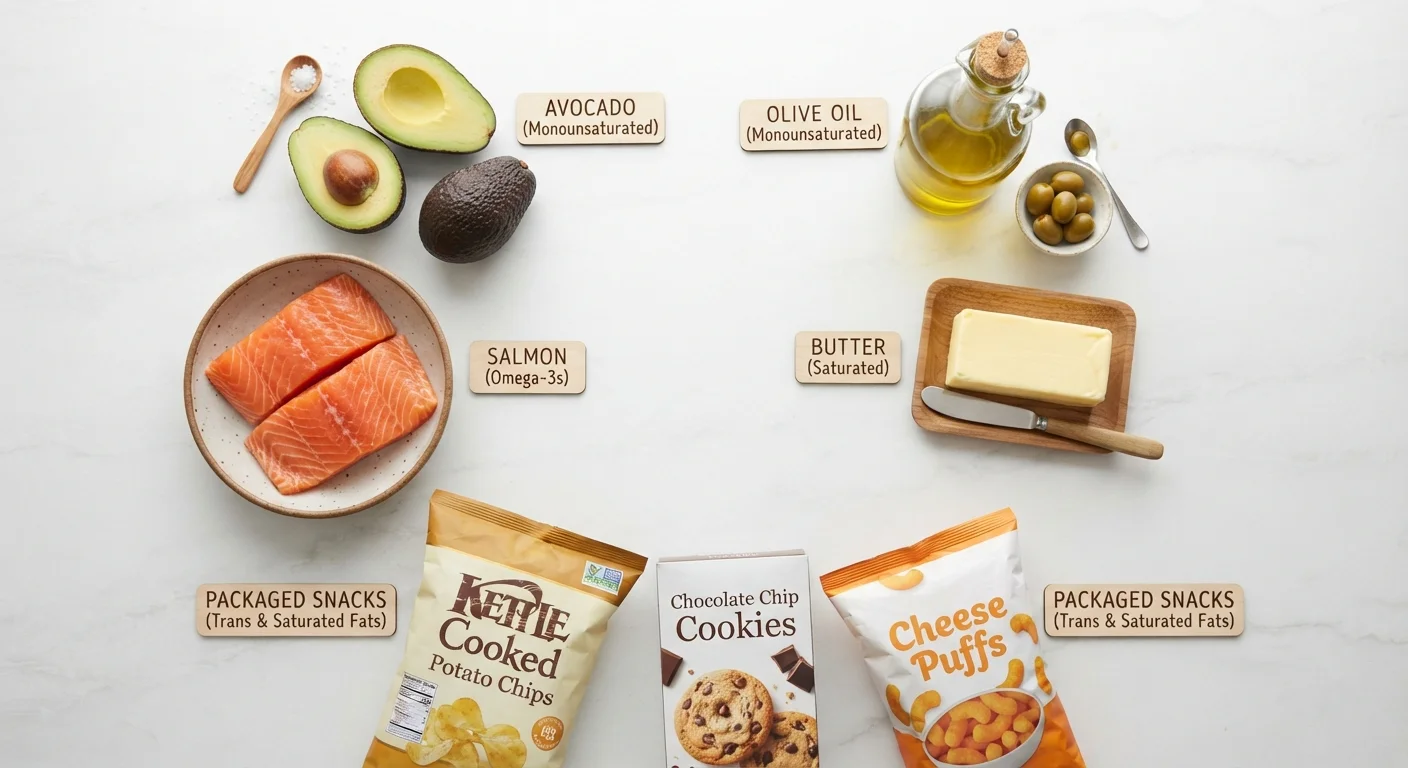
Why Fat Is Not the Enemy
For decades, low-fat diets were promoted as the key to good health. That framing has largely been revised. Dietary fat is a macronutrient - one of three major nutrient categories your body uses for energy, alongside carbohydrates and protein. Fat supports cell membrane structure, helps absorb fat-soluble vitamins (A, D, E, and K), and plays a role in hormone production.
The issue was never fat itself - it was the type of fat and the overall dietary pattern. To understand what you're eating, it helps to know how the three main categories differ. For a broader look at macronutrients and why each matters, see our guide to macronutrients and micronutrients.
Saturated, Unsaturated, and Trans Fats Side by Side
The three main dietary fat types differ in their chemical structure, the foods they come from, and how research suggests they affect cardiovascular health over time.
| Saturated Fat | Monounsaturated Fat | Polyunsaturated Fat | Artificial Trans Fat | |
|---|---|---|---|---|
| State at room temperature | Solid | Liquid | Liquid | Solid |
| Common food sources | Butter, red meat, cheese | Olive oil, avocado, almonds | Fatty fish, walnuts, flaxseed | Partially hydrogenated oils (now largely banned) |
| Effect on LDL ('bad') cholesterol | Raises LDL | May lower LDL | Lowers LDL | Raises LDL significantly |
| Effect on HDL ('good') cholesterol | Neutral to slight raise | Maintains or raises | Maintains | Lowers HDL |
| General dietary guidance | Limit to <10% daily calories | Emphasise in diet | Include regularly | Avoid entirely |
| US regulatory status | Permitted | Permitted | Permitted | Largely banned since 2020 |
These broad patterns reflect general dietary guidance, but individual foods are complex - whole foods containing saturated fat also provide protein, vitamins, and minerals. Context always matters.
Unsaturated Fats: The More Beneficial Category
Unsaturated fats remain liquid at room temperature. There are two subtypes:
- Monounsaturated fats - found in olive oil, avocados, and most nuts. Research consistently links these to improved LDL (low-density lipoprotein, often called "bad") cholesterol levels without reducing HDL ("good") cholesterol.
- Polyunsaturated fats - found in fatty fish, walnuts, flaxseed, and vegetable oils like sunflower and corn. These include omega-3 and omega-6 fatty acids, which the body cannot produce on its own and must obtain from food. Omega-3s in particular have been studied for their role in reducing inflammation and supporting heart function.
A Simple Swap Strategy
You don't need to overhaul your entire diet at once. Start by noticing which fats you use most often for cooking. Replacing butter with olive oil for sautéing or adding a handful of walnuts to a meal are small, practical ways to shift your fat intake toward the unsaturated category. Small consistent changes tend to be more sustainable than dramatic short-term restrictions.
Most dietary guidelines - including those from the American Heart Association - recommend replacing saturated fat with unsaturated fat rather than simply adding more fat overall.
Saturated Fat: Moderation, Not Elimination
Saturated fats are solid at room temperature. Common sources include butter, cheese, whole milk, red meat, coconut oil, and palm oil. They raise LDL cholesterol levels in the blood, which is associated with increased cardiovascular risk - though the relationship is more nuanced than it was once described.
Current US dietary guidelines suggest limiting saturated fat to less than 10% of daily calories, not eliminating it entirely. Whole-food sources like dairy and unprocessed meat come packaged with nutrients, so the goal is proportion and balance rather than strict avoidance. If you see terms like "low saturated fat" on packaging, our article on nutrition label claims explains exactly what those phrases are legally permitted to mean.
Trans Fats: The One Type to Actively Avoid
Trans fats come in two forms. Small amounts occur naturally in some animal products (dairy, beef). The concern centres on artificial trans fats, created through a process called partial hydrogenation, which turns liquid vegetable oils into solid fats to extend shelf life.
The evidence against artificial trans fats is particularly strong: they raise LDL cholesterol and lower HDL cholesterol simultaneously - the worst combination for cardiovascular risk. The FDA removed partially hydrogenated oils from the list of substances generally recognized as safe, and their use in US food production has been largely eliminated since 2020.
"Zero Trans Fat" Labels Can Be Misleading
FDA rules allow a product to claim "0g trans fat" per serving if it contains less than 0.5 grams. If you eat multiple servings, those small amounts add up. Always scan the full ingredient list for the phrase "partially hydrogenated" oil to confirm whether artificial trans fat is truly absent.
On a Nutrition Facts label, a product may legally list "0g trans fat" if it contains less than 0.5g per serving. Check the ingredient list for "partially hydrogenated oil" - if it appears, the product contains some artificial trans fat. Paying attention to the degree of food processing can also help you spot products more likely to have relied on these ingredients historically.
This article is for general informational and educational purposes only and is not a substitute for advice from a qualified healthcare or registered dietitian professional. Always consult a professional for guidance specific to your health circumstances.