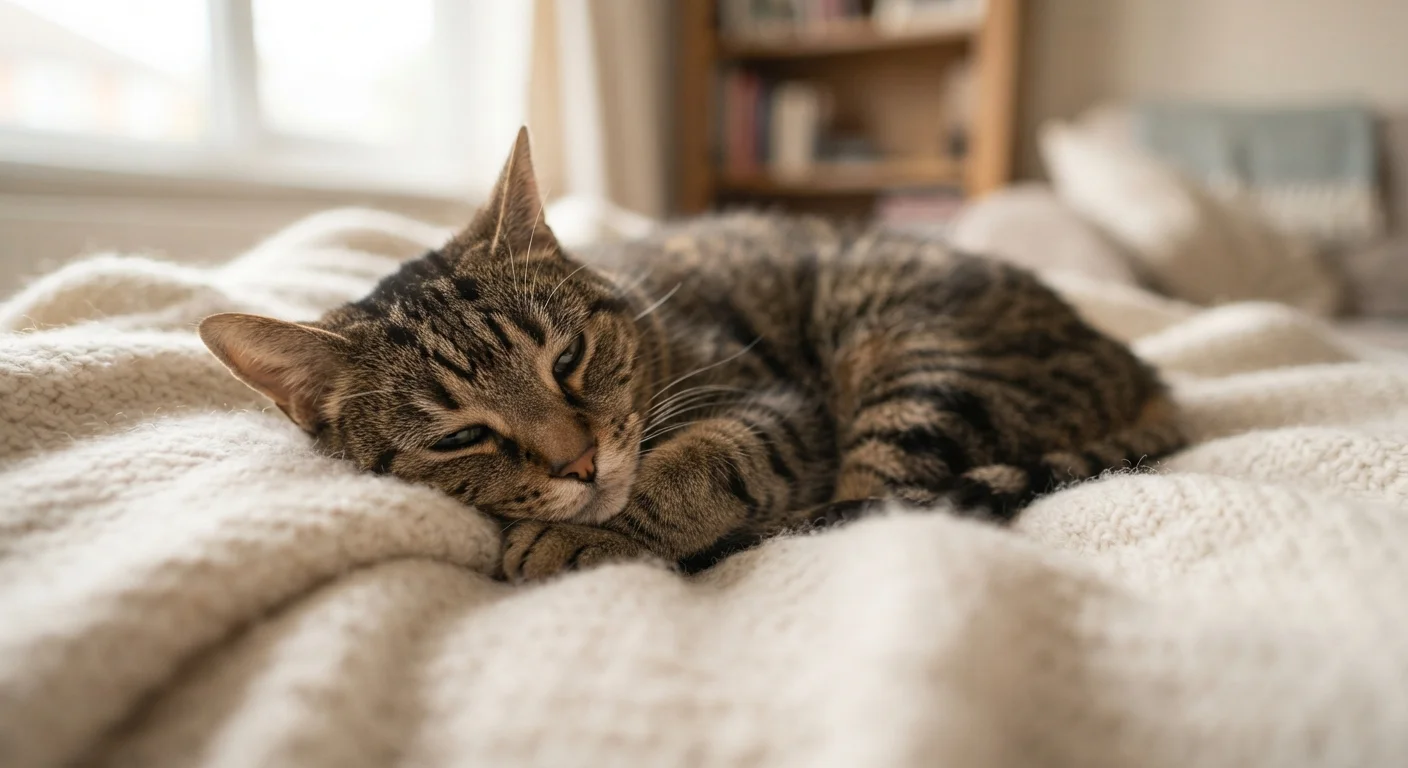
Why Cats Hide Illness (and Why That Matters)
Cats are instinctively wired to mask pain and weakness - a survival trait carried over from their wild ancestors. For new owners, this means a cat can be genuinely unwell before any obvious sign appears. By the time something looks wrong, the problem may already be advanced.
That's why building a baseline sense of your individual cat's normal behaviour is one of the most useful things you can do early on. Notice how much they typically eat, drink, sleep, groom, and play. Changes from that baseline - not just dramatic collapses - are usually the first meaningful clues that something is off.
For a broader foundation in keeping your cat healthy, see our comprehensive feline health guide.
| Normal resting respiratory rate | 20-30 breaths per minute (American Animal Hospital Association (AAHA)) |
| Normal resting heart rate | 140-220 beats per minute (Merck Veterinary Manual) |
| Typical daily water intake | 3.5-4.5 oz per 10 lbs of body weight (Cornell Feline Health Center) |
| Urinary blockage risk | Higher in male cats due to narrower urethra (Cornell Feline Health Center) |
| Age vomiting becomes more concerning | More than once per week at any age (General veterinary guidance) |
Physical Symptoms That Warrant a Vet Call
The following physical changes should prompt you to contact a veterinarian. Some require urgent same-day attention; others can wait for a next-available appointment but should not be ignored.
- Changes in appetite or thirst: Refusing food for more than 24-48 hours, or suddenly drinking significantly more or less water than usual, can signal conditions ranging from dental pain to kidney disease or diabetes.
- Vomiting or diarrhea persisting beyond 24 hours: Occasional hairball vomiting is common, but repeated vomiting or loose stools - especially with blood - warrants prompt evaluation.
- Difficulty urinating or straining in the litter box: This is a potential emergency, particularly in male cats. A blocked urinary tract can become life-threatening within hours. If your cat is crying out, visiting the box frequently with little result, or producing no urine, seek veterinary help immediately.
- Labored or rapid breathing: Open-mouth breathing in cats (outside of extreme heat or stress) is not normal. Any visible effort to breathe, or breathing that seems fast and shallow at rest, needs same-day assessment.
- Eye or nasal discharge: Clear discharge may indicate a mild infection; thick, colored, or one-sided discharge can point to more serious respiratory illness and should be evaluated.
- Unexplained weight loss: Gradual weight loss is easy to miss in a fluffy cat. Run your hands along your cat's spine and ribs regularly - being able to feel them sharply is a warning sign worth raising with your vet.
When to Treat It as an Emergency
Some symptoms require emergency veterinary care without delay: complete inability to urinate, collapse or unresponsiveness, seizures, suspected poisoning, or breathing that is labored or very rapid at rest. If you observe any of these, contact an emergency veterinary clinic immediately rather than waiting for a regular appointment.
Behavioural Changes to Watch For
Physical symptoms are only part of the picture. Behavioural shifts are often the earliest indicators of pain, illness, or anxiety in cats.
Dysuria
Painful or difficult urination. In cats, this often appears as straining in the litter box, frequent trips with little output, or crying while trying to urinate.
Anorexia (feline)
In veterinary terms, this means loss of appetite - not the human eating disorder. Even 24-48 hours without eating can be medically significant in cats.
Polydipsia
Excessive thirst. A cat drinking noticeably more water than usual can be an early sign of diabetes, kidney disease, or hyperthyroidism.
Alopecia
Partial or full hair loss, often caused by over-grooming, allergies, parasites, or a hormonal imbalance. It may appear as patchy thinning or bare skin.
- Hiding more than usual: Cats that are in pain or feeling vulnerable often retreat to quiet, dark spaces. A cat that suddenly spends hours under the bed or in a closet - especially combined with other signs - deserves attention.
- Reduced grooming or over-grooming: A coat that looks dull, matted, or unkempt can mean your cat lacks the energy or flexibility to groom - common in older or arthritic cats. Conversely, excessive licking of one area may signal skin irritation, allergies, or pain at that site.
- Changes in vocalization: Unusual crying, howling, or sudden silence in a normally vocal cat both warrant investigation.
- Aggression or sudden personality changes: A cat that becomes withdrawn, reactive to touch, or uncharacteristically irritable is often communicating discomfort. Pain is a common driver of sudden behavioural shifts.
- Litter box avoidance: Going outside the box can point to a urinary tract infection, constipation, or pain associated with posturing. Always rule out a medical cause before assuming it's a behaviour problem.
If you're preparing to discuss any of these changes with a veterinarian for the first time, our guide to your first vet visit walks you through what to bring and what to ask.
This article is for general informational purposes only and does not constitute veterinary or medical advice. Always consult a licensed veterinarian for concerns about your cat's health.