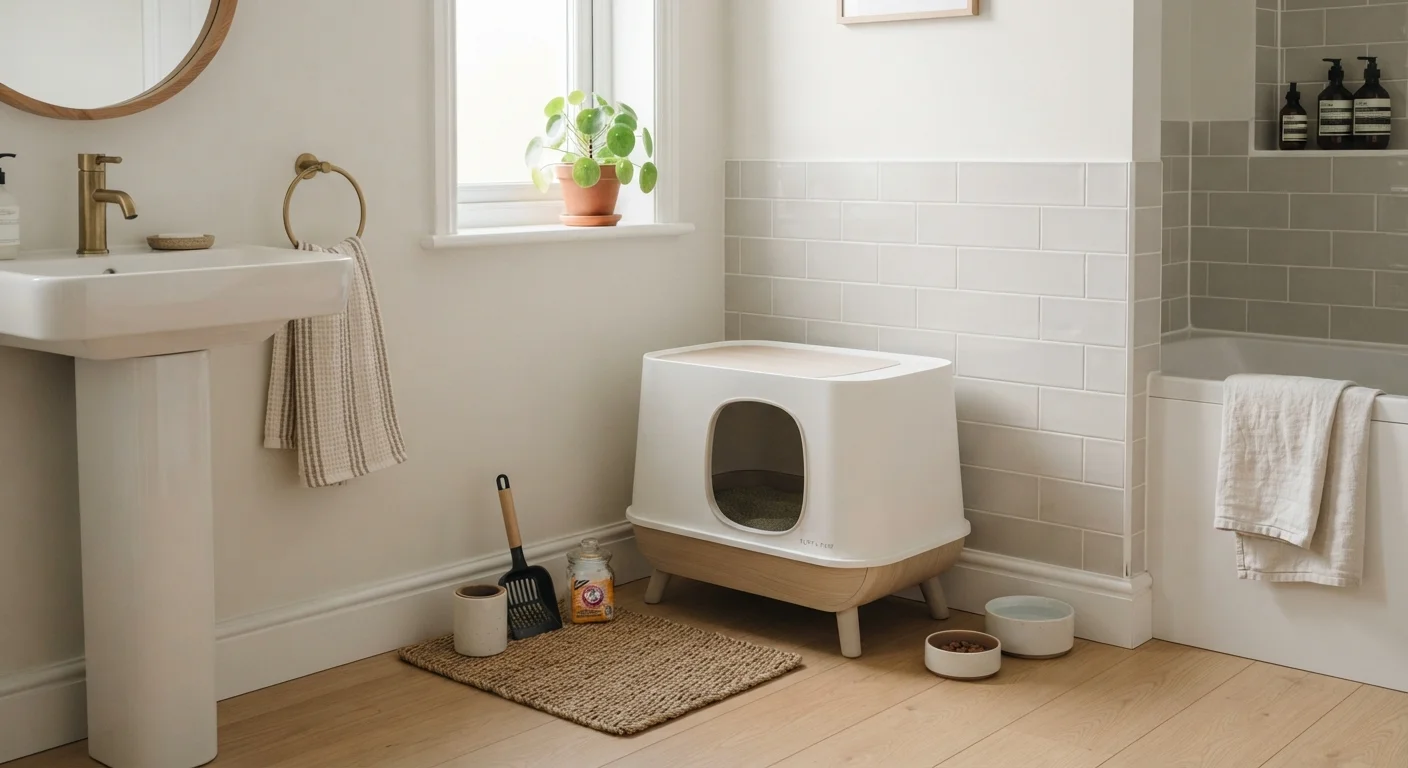
Why Getting the Litter Box Right Matters
For a cat living indoors, the litter box is as essential as food and water. When the setup works, your cat uses it reliably and your home stays fresh. When something is off - the wrong size, a bad location, or irregular cleaning - cats often stop using the box entirely, which is stressful for both of you.
The good news is that most litter box problems are completely preventable. Getting the basics right from day one builds a habit your cat will keep for life. If you are still in those first few days of cat ownership, our guide to the first week at home walks through everything else you will need to set up alongside the litter box.
What you will need
Choosing the Right Box and Litter
Before placing any box, you need to choose one that suits your cat's size and preferences. Here are the key decisions:
- Size: The box should be at least 1.5 times the length of your cat from nose to tail base. Many standard boxes sold in stores are on the small side, so measure before you buy.
- Covered vs. uncovered: Some cats prefer the privacy of a hooded box; others feel trapped and refuse to enter. When in doubt, start uncovered - it is easier to switch to covered later than to retrain a cat that has already rejected a box.
- Litter type: Unscented, clumping clay litter is the most widely accepted starting point. It is easy to scoop, signals clearly when it needs changing, and most cats tolerate it well. Avoid heavily scented litters - what smells pleasant to you can be overwhelming to a cat's sensitive nose.
Litter box (open style)
Provides an accessible, open elimination space that most cats accept readily without feeling confined.
Clumping, unscented litter
Forms solid clumps around waste for easy scooping and helps control odor without overwhelming your cat's senses.
Slotted litter scoop
Removes clumps and solid waste while sifting clean litter back into the box.
Small covered waste bin
Stores scooped waste hygienically until trash day; keeping it near the box makes the daily habit easier to maintain.
Litter mat
Placed in front of the box to catch litter tracked out on your cat's paws and reduce mess around the area.
Covered or hooded litter box
Offers additional privacy for cats that prefer an enclosed space; switch to this only if your cat uses an open box confidently first.
The number of boxes also matters. The standard recommendation from veterinary professionals is one box per cat, plus one additional box. In a single-cat household, that means two boxes - placed in different locations, not side by side.
Where to Place the Litter Box
Location is one of the most overlooked parts of litter box setup. Cats are instinctively cautious when they are vulnerable, and toileting is a vulnerable moment. A box tucked in a noisy laundry room next to a loud washing machine, or wedged behind a door that gets bumped open, is a box many cats will avoid.
Follow these placement principles:
- Quiet and low-traffic: A spare bathroom, bedroom corner, or quiet hallway alcove works well. Avoid placing boxes near appliances that start suddenly.
- Away from food and water: Cats instinctively avoid eliminating near where they eat. Keep the litter box in a separate area from their feeding station.
- Accessible at all times: Do not place the box behind a door that gets closed at night. Your cat needs access 24 hours a day.
- Multiple floors: If your home has more than one floor, put at least one box on each level.
Give Your Cat an Escape Route
Position the box so your cat can see the room entrance from inside it. Cats feel safer when they can watch for potential threats while using the box. Avoid corners that have walls on three sides with only one narrow exit - especially in multi-pet households.
If your cat is avoiding the box despite good hygiene, location is often the culprit. Our article on why cats avoid the litter box covers the most common reasons and fixes in detail.
Step-by-Step: Setting Up and Maintaining the Litter Box
Follow these steps to get your litter box set up correctly and keep it in good shape. Consistent maintenance is the single biggest factor in whether your cat keeps using the box reliably.
Choose the right box size
Measure your cat from nose tip to base of tail. The interior of the litter box should be at least 1.5 times that length. If your cat is still a kitten, buy for the adult size it will become, or plan to upgrade within a few months.
Fill with the right amount of litter
Pour unscented clumping litter to a depth of about 2 to 3 inches. Too little and your cat cannot dig and cover properly; too much and litter gets tracked excessively around the house.
Place the box in a quiet, accessible spot
Set the box in a low-traffic area away from your cat's food and water bowls. Ensure the spot is accessible at all hours. If you live in a multi-floor home, place at least one box on each level.
Scoop once (or more) daily
Remove clumps and solid waste with a litter scoop at least once every 24 hours. Most cats will avoid a dirty box entirely - and some will stop after just one or two unremoved deposits. Daily scooping is non-negotiable for consistent use.
Do a full litter change weekly
Once a week, empty the box completely, wash it with warm water and a mild unscented dish soap, dry it thoroughly, and refill with fresh litter. Even clumping litter accumulates odor and fine particles over time that scooping alone cannot remove.
Changes in Litter Box Habits Can Signal Health Issues
If a cat that previously used the box reliably suddenly stops, or begins eliminating outside the box, rule out a medical cause before assuming it is a behavioral problem. Urinary tract infections, kidney issues, and digestive problems can all affect litter box use. A veterinary check-up is the right first step when habits change suddenly.
If you notice your cat straining to urinate, crying in the box, or producing very little urine, contact your veterinarian promptly - these can be signs of a urinary issue that requires professional attention. For broader health guidance, see our complete guide to feline health care.