Why Litter Training Feels Harder Than It Should
Cats have a natural instinct to bury their waste - unlike puppies, they don't need to be taught what to do in a litter box. That's why many new owners are caught off guard when their cat avoids the box entirely. The problem is almost never stubbornness. It's nearly always a signal that something about the setup isn't working for the cat.
If you're dealing with accidents outside the box, the good news is that most causes are fixable. Start by reading through the common mistakes below and matching them to what you're currently doing. Small changes often make a significant difference - and fast.
For a broader look at settling your cat into your home, see our guide to the first week with a new cat, which walks through the full adjustment process.
Not scooping the litter box frequently enough.
Why it happens: New owners often assume cats tolerate a litter box the way humans tolerate a public restroom - they don't. It's easy to underestimate how quickly waste accumulates.
Placing the litter box in a high-traffic or noisy location.
Why it happens: Owners often tuck the box wherever it's least visible - next to the washing machine, near a loud appliance, or in a busy hallway - prioritizing convenience over the cat's need for privacy.
Using only one litter box in a multi-cat household - or even for a single cat in a large home.
Why it happens: The "one box is enough" assumption is widespread among first-time owners who haven't yet learned the standard veterinary guidance.
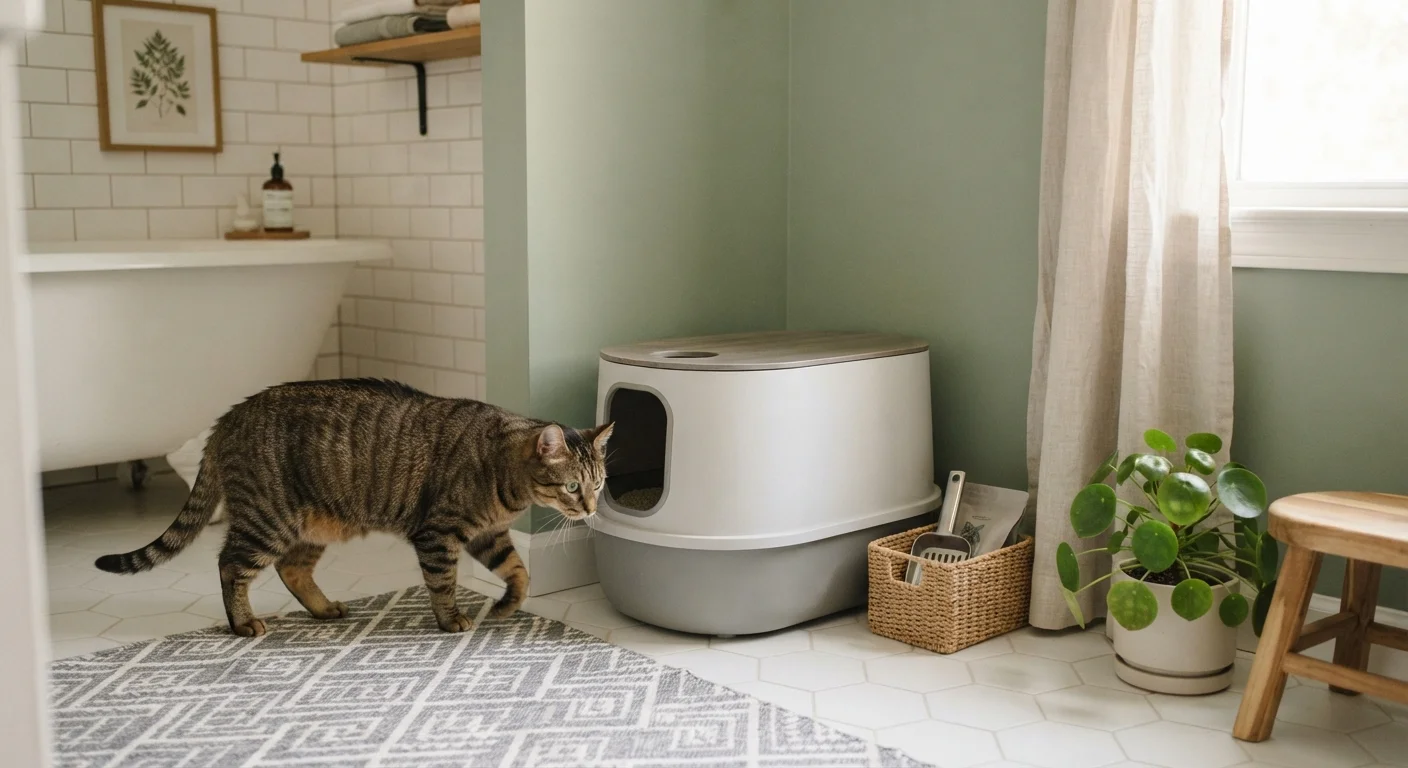
Choosing a covered or hooded litter box without testing whether the cat accepts it.
Why it happens: Covered boxes are marketed as odor-controlling and tidy - appealing features for owners. Many buyers assume the cat will agree.
Switching litter types or brands abruptly.
Why it happens: Owners may switch for cost reasons or because a product is out of stock, not realizing texture and scent consistency matter to cats.
Using heavily scented litters or cleaning products near the box.
Why it happens: Scented litters seem like a logical solution to odor - from a human perspective. Owners don't realize the scent is often far more overwhelming to a cat's sensitive nose.
When Box Problems Point to Something More Serious
Not every litter box issue is a training or setup problem. If your cat was previously using the box reliably and suddenly stops - or if you notice straining, frequent trips with little output, blood in urine, or crying during elimination - contact your veterinarian promptly. These can be signs of urinary tract infections, blockages, or other conditions that need professional attention.
Sudden Changes in Habit Need a Vet Visit
If your cat abruptly stops using the litter box after previously being reliable, don't assume it's a behavioral issue. Straining, frequent trips to the box, or any sign of discomfort can indicate a urinary tract problem or blockage - conditions that require prompt veterinary care. Never delay a vet visit waiting to see if the behavior corrects itself.
Behavioral causes and medical causes can look identical from the outside. A vet visit rules out health issues before you invest time adjusting your setup. Our article on feline health care for beginners explains how to recognize signs that warrant a call to the vet.
Once medical causes are ruled out, returning to basics - clean box, right location, appropriate litter - resolves the majority of cases. For a detailed walkthrough of setup choices, our companion piece on litter box setup, placement, and cleaning covers every practical step.