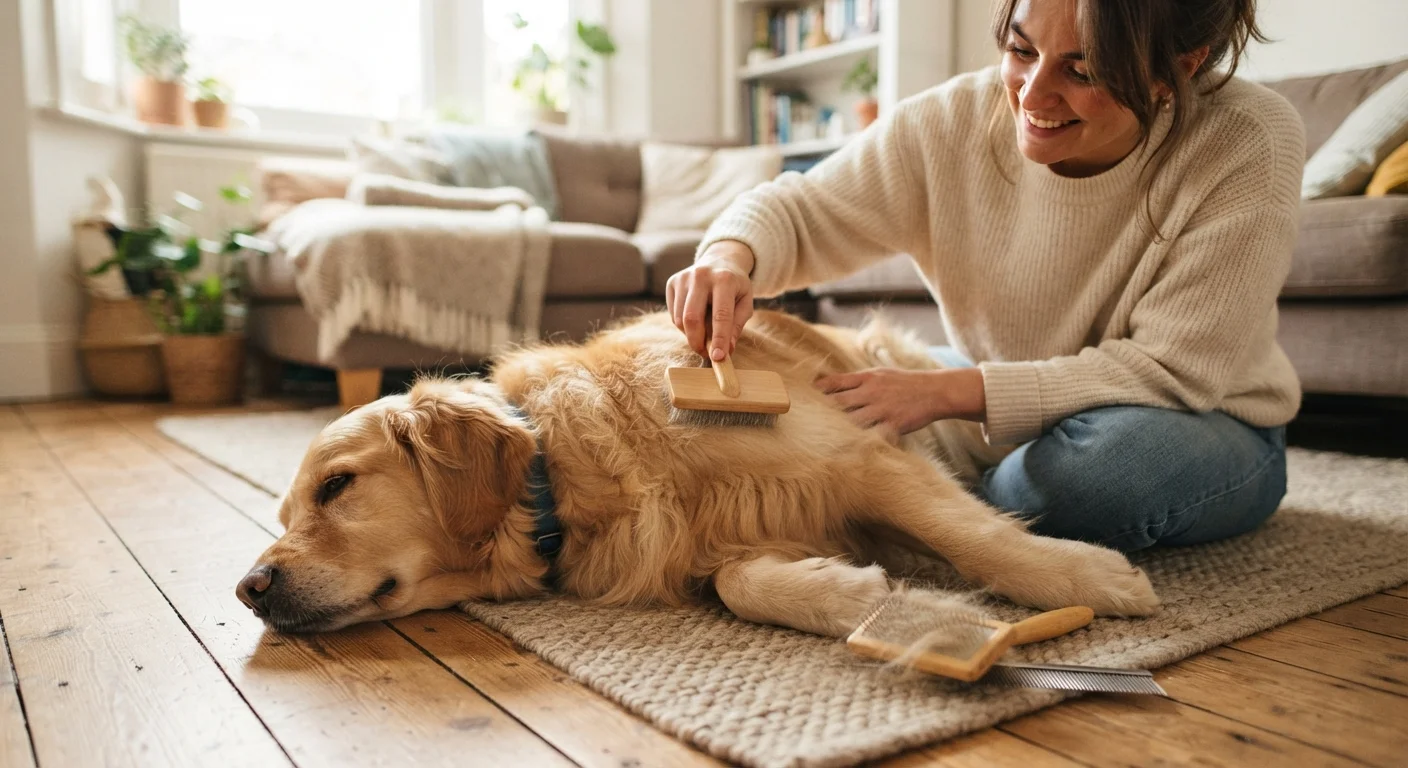
Why Regular Grooming Is More Than Cosmetic
Many first-time dog owners think of grooming as optional upkeep - something you do when the dog starts to look scruffy. In reality, regular grooming is one of the most reliable ways to monitor your dog's physical condition. Running a brush through your dog's coat gives you a hands-on chance to notice lumps, skin irritation, parasites, or changes in body condition that might otherwise go undetected for weeks.
Grooming also supports your dog's comfort in direct ways. Mats (tangled clumps of fur) pull at the skin and can cause pain. Overgrown nails force a dog to shift its weight awkwardly, which strains joints over time. And a buildup of wax or debris in the ears creates conditions where bacteria or yeast can thrive.
For a fuller picture of what dogs need daily, see what dogs actually need each day. Grooming fits naturally into that rhythm rather than sitting apart from it.
Brushing: Frequency by Coat Type
Coat type is the starting point for any brushing schedule. Using the wrong tool or brushing too infrequently for your dog's coat can create more problems than it solves.
- Short, smooth coats (Beagles, Boxers, Dachshunds): Once a week with a rubber grooming mitt or soft bristle brush is usually enough to remove loose hair and distribute skin oils.
- Medium double coats (Labrador Retrievers, German Shepherds): Two to three times per week, increasing during seasonal shedding periods. A slicker brush followed by an undercoat rake works well.
- Long or silky coats (Shih Tzus, Cavaliers, Afghan Hounds): Daily brushing is often necessary to prevent matting. A wide-tooth comb helps work through tangles without breaking the hair.
- Curly or wire coats (Poodles, Schnauzers, terrier mixes): Every few days with a slicker brush; these coats need professional clipping more regularly than others.
When you find a mat, work from the outer edge inward using your fingers first, then a comb. Never yank through a mat - it hurts and damages trust.
Make Brushing Part of Downtime
The easiest way to keep up with brushing is to fold it into a moment your dog already enjoys - while watching TV, after a walk when your dog is tired, or during a calm evening. A relaxed dog is far easier to brush than one that's alert and restless. Consistency matters more than perfection: a brief daily brush beats a long, stressful weekly session.
Nail Trims, Ear Checks, and Bath Basics
Three tasks beyond brushing form the core of a home grooming routine:
Nail Trims
Aim for every three to four weeks. You'll know it's time when you hear nails clicking on hard floors. Use a dedicated dog nail clipper and clip small amounts at a time to avoid the quick - the blood vessel that runs partway down each nail. On pale nails, the quick is visible as a pink core. On dark nails, clip small slivers and stop when you see a dark circular dot appear in the center of the cut surface. Keep styptic powder on hand in case you nick the quick; it stops bleeding quickly.
Ear Checks
Once a week, gently fold back each ear and look inside. Healthy ears are pale pink, have minimal odor, and show only a light coating of wax. If you notice a strong smell, dark discharge, redness, or your dog scratching at its ears, contact your veterinarian - do not attempt to treat an infection at home. To clean ears that simply look dusty, a veterinarian-approved ear cleaner applied to a cotton ball (never a cotton swab inside the canal) is the right approach.
Bathing
Most dogs do well with a bath every four to six weeks, though dogs who swim often or roll in mud may need more. Over-bathing strips natural skin oils and can cause dryness. Use a dog-specific shampoo - human products have a different pH and can irritate canine skin. Rinse thoroughly; residue left near the skin is a common cause of itching.
4-6 weeks
Recommended interval between baths for most dogs
Veterinary dermatologists generally suggest bathing most dogs every four to six weeks to maintain skin oil balance without over-drying.
3-4 weeks
Nail trim frequency to prevent overgrowth
The American Kennel Club notes that nails left untrimmed beyond this window can begin to affect a dog's gait and joint alignment over time.
Best Practices for Calm, Safe Sessions
How you groom matters as much as how often. Dogs that have a tense or painful experience during grooming become harder to handle over time - and may develop anxiety that carries into other parts of their lives. Understanding your dog's body language helps you recognize when your dog is uncomfortable before the situation escalates.
Start each session with calm handling before any tools come out
Dogs associate the approach and setup of grooming with what follows. A few seconds of calm petting and a relaxed voice before picking up a brush sets a positive tone that makes the whole session easier.
Keep early sessions short and build duration gradually
Asking a dog to tolerate a full grooming session before it's comfortable with the tools leads to stress and resistance. Short, positive sessions build tolerance in a way that sticks.
Use tools appropriate to your dog's coat, not whatever is on hand
The wrong brush can scratch the skin, miss loose undercoat, or snap through hair rather than detangle it. The right tool makes the experience more comfortable and the result more effective.
Always check the skin, not just the coat surface
A dog's coat can look clean while the skin underneath is irritated, flea-infested, or developing a hot spot (a moist, inflamed patch of skin). Parting the fur during brushing catches these issues early.
End every session on a positive note
The last thing a dog experiences in a session is what it remembers most strongly. Ending with praise and a reward, even after a difficult session, helps maintain positive associations with grooming over time.
One mistake many new owners make is waiting until grooming feels urgent before starting. Dogs introduced to handling early - even brief, positive touch sessions - adjust far more easily. See common mistakes first-time dog owners make in the first month for other early habits worth building.
When a Professional Groomer Makes Sense
Home grooming handles most routine needs, but there are clear situations where a professional is the right call:
- Complex coat types requiring breed-specific cuts (Poodles, Doodles, Cocker Spaniels) need clipping with professional-grade tools and technique. Improper clipping can damage certain coat types permanently.
- Severely matted coats often require shaving close to the skin, which carries a small but real risk of nicking skin folds. Professionals have the tools and experience to do this safely.
- Anxious or reactive dogs may need a groomer experienced in low-stress handling, or in some cases a veterinary grooming setting where sedation is an option if recommended by a vet.
- Anal gland expression is a task some groomers offer but one that can cause injury if done incorrectly - ask your veterinarian whether your dog needs it and who should perform it.
Visiting a groomer every six to eight weeks for a clip and tidy, while maintaining basic care at home in between, is a practical and common approach for many breeds.
This article is for general informational purposes only and is not a substitute for veterinary advice. Always consult your veterinarian if you notice changes in your dog's skin, ears, or overall condition.