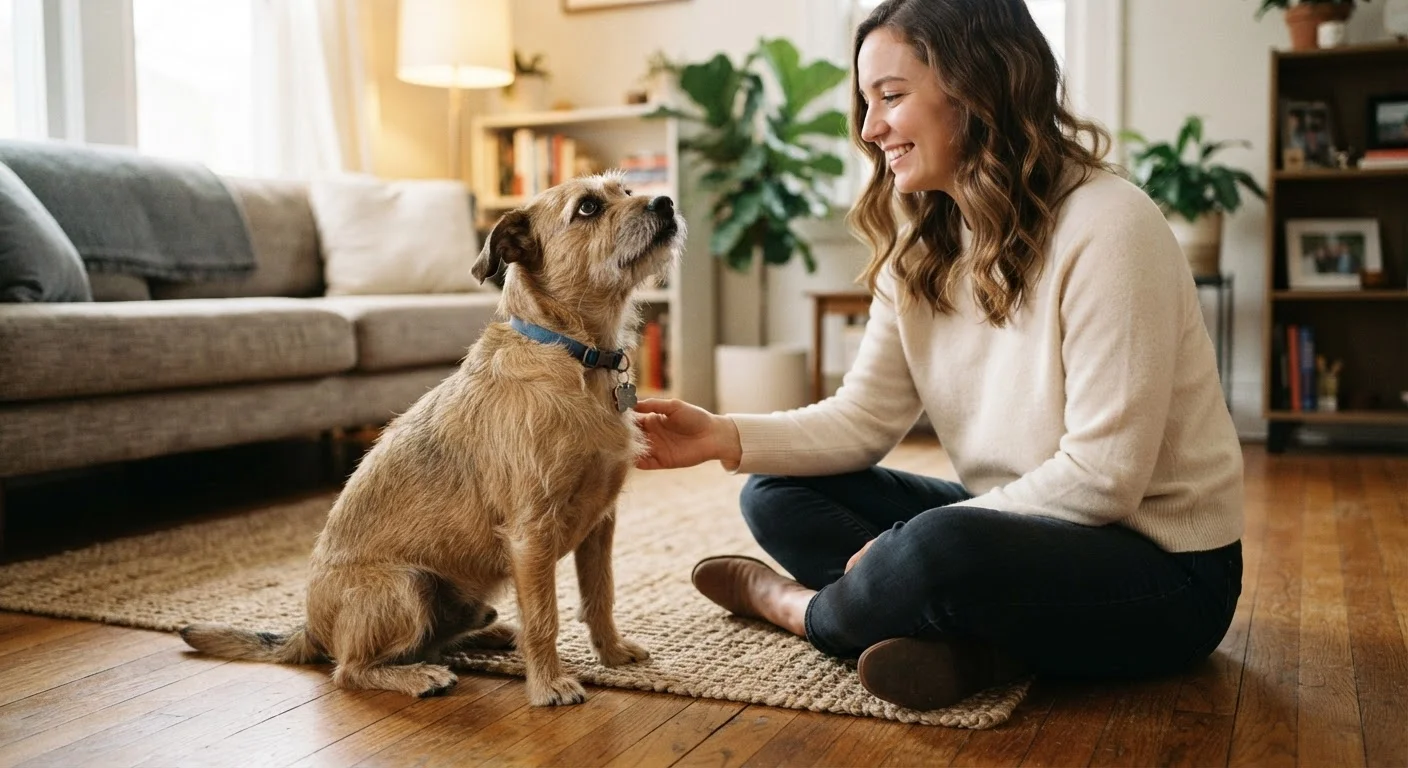
Why the First Month Is So Formative
The first few weeks with a new dog are not just an adjustment period - they are an active learning window for both of you. Habits, expectations, and trust are all being established in real time, whether you are intentional about it or not. The good news is that most common first-month mistakes are simple to avoid once you know what to look for.
If you haven't yet brought your dog home, our new dog owner checklist covers what to have ready before day one, and our guide on what to expect in week one walks you through the early days step by step.
3-4 weeks
Average adjustment period for a new dog
Animal behaviorists commonly reference a 3-3-3 rule: three days of overwhelm, three weeks of learning routine, three months of feeling at home.
~80%
House training success tied to supervision
Veterinary behavior resources consistently identify lack of supervision - not a dog's inability to learn - as the primary reason house training stalls.
The Most Common Mistakes - and How to Sidestep Them
These six errors show up repeatedly among first-time dog owners. None of them reflect bad intentions - they are almost always the result of enthusiasm, misinformation, or simply not knowing what to expect from a dog's perspective.
Letting everyone meet the dog on the first day.
Why it happens: New owners are excited and want to share the moment with family and friends, which feels natural and celebratory.
Applying rules inconsistently across family members.
Why it happens: Different household members have different comfort levels - one person allows the dog on the sofa, another doesn't, without any coordination.
Delaying the first veterinary appointment.
Why it happens: Owners often assume a dog looks healthy enough and want to give it time to settle before introducing more stress.
Waiting to start training until the dog 'settles in.'
Why it happens: First-time owners often think training should wait until the dog is comfortable, not realizing that the settling-in period is actually the best time to establish expectations.
Giving the dog unsupervised access to the whole home too soon.
Why it happens: Owners want the dog to feel free and at home, which is understandable - but a new dog hasn't yet learned what is and isn't appropriate to chew or investigate.
Misreading stress signals as bad behavior.
Why it happens: Yawning, lip licking, low posture, and turning away are calming signals dogs use when overwhelmed - behaviors that owners unfamiliar with dog body language may interpret as disobedience.
Schedule a Vet Visit Within the First Week
Many health issues common in new dogs - parasites, respiratory infections, and vaccination gaps - show no obvious symptoms early on. A vet exam in the first week establishes a health baseline and catches problems before they worsen. Do not wait until something seems wrong to book that first appointment.
Building Good Habits From Day One
Avoiding mistakes is only half the picture. The other half is actively building structure that makes your dog feel safe and clear about expectations.
Routine is the single most effective tool you have. Feed at the same times, go outside on a consistent schedule, and run training sessions at predictable intervals. Dogs are pattern-oriented animals - routine reduces anxiety and accelerates learning faster than almost any other single factor.
When it comes to house training specifically, supervision is everything. Our guide on why house training takes time explains the developmental reasons behind accidents and how to set realistic expectations.
Avoid Punishing Accidents During House Training
Scolding or physically correcting a dog after an indoor accident does not help them understand what went wrong - it only creates fear and confusion. Dogs cannot connect a punishment to something that happened even minutes earlier. Focus instead on preventing accidents through supervision and rewarding outdoor success consistently.
For training foundations, short daily sessions on basic cues go a long way. Our guide to teaching sit, stay, and come gives you a clear, positive starting point. And if you notice anything in your dog's behavior or appearance that concerns you, knowing when to contact a vet helps you decide when a call is warranted.
The first month is genuinely challenging, but it is also when the relationship between you and your dog begins to take shape. Small, consistent actions - calm introductions, agreed-upon household rules, early vet visits, and patient training - make a larger difference than any single big gesture.