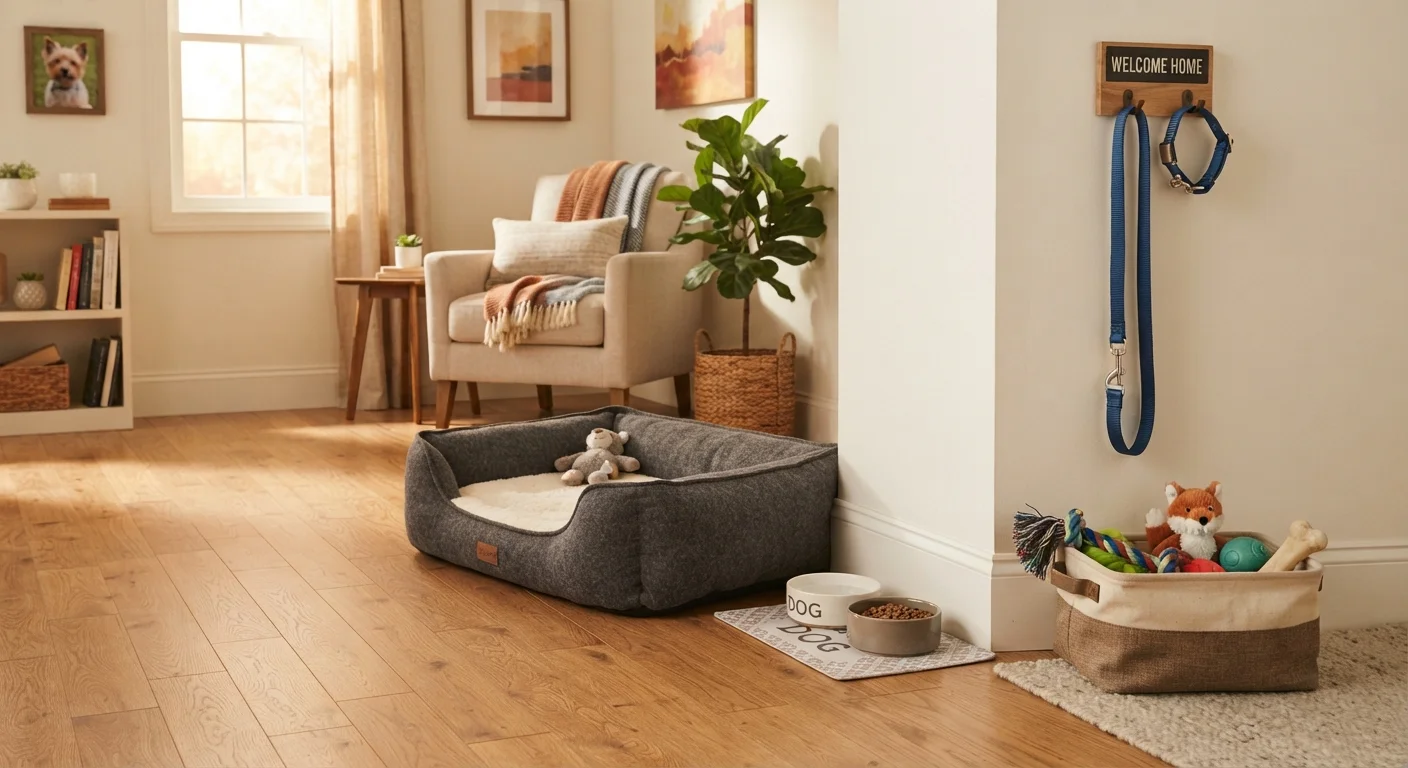
Why Preparing Before Day One Matters
Bringing a new dog home is exciting - but walking in unprepared can turn that excitement into stress quickly. Dogs are highly sensitive to their environment, and arriving in a chaotic or incomplete space can make the adjustment harder than it needs to be.
This checklist is designed for first-time dog owners who want to feel genuinely ready, not just roughly ready. Whether you're still deciding how to get your dog or you've already signed on the dotted line, now is the right time to work through these steps. If you're still weighing your options, our guide on adopting vs. buying a dog can help you think through that decision first.
Work through this list a few days before pickup - not the morning of. That buffer gives you time to make any last purchases or adjustments without rushing.
Collar, ID tag, and leash
Keeps your dog safely identified and under control from the moment they arrive.
Crate or playpen
Provides a safe, confined space that helps dogs feel secure and supports house-training.
Enzymatic pet cleaner
Breaks down the proteins in pet urine and feces to fully eliminate odors and discourage repeat accidents.
Dog-safe food and bowls
The right food matched to your dog's current diet prevents digestive upset during transition.
Baby gates or room barriers
Limits your dog's unsupervised access to rooms while they adjust to a new environment.
Training treats
Small, high-value rewards that support reward-based learning and reinforce good behavior early on.
How to Use This Checklist
The items below are grouped into logical categories so you can tackle them one area at a time. Each item is tagged as must (non-negotiable for a dog's safety and wellbeing), should (strongly recommended for a smoother start), or nice to have (helpful once you're settled in).
Start with the "must" items and work outward. Don't let the full list overwhelm you - most of what a dog needs on day one fits into a single shopping run and an hour of home prep.
Don't Skip the Dog-Proofing Step
It's easy to prioritize buying supplies and overlook the safety walk-through. Many common household items - certain plants, human medications, electrical cords, small objects - pose real risks to curious dogs. Set aside dedicated time to check your space at floor level before your dog arrives, not after.
Once you've checked off this list, read our companion article on what to expect in week one so you know what's coming after the supplies are sorted. It's also worth reviewing common first-month mistakes - knowing what to avoid is just as useful as knowing what to do.
Supplies and Gear
Food and Feeding
Home Preparation
Health and Vet Readiness
A Note on Vet Care
One item on this list deserves extra emphasis: scheduling a veterinary appointment. This is not something to do "eventually" - ideally your dog should see a vet within the first week of coming home, if not sooner.
Schedule Your Vet Visit Before Day One
A first vet appointment isn't optional - it's one of the most important things you can do in your dog's first week. Your veterinarian can identify health issues that aren't visible to an untrained eye, confirm vaccinations are current, and provide feeding and care guidance tailored to your specific dog. Don't wait until something seems wrong.
Your vet will review vaccination history, check for parasites, and flag any health concerns you might not notice as a new owner. They're also your best resource for questions about feeding amounts, spay/neuter timing, and breed-specific care. Think of that first appointment as your onboarding session for dog ownership.
General health information for pets is widely available, but always rely on a licensed veterinarian for decisions about your individual dog's care - not online forums or general guides alone.
This article is for general informational purposes only and does not constitute veterinary advice. Always consult a licensed veterinarian for guidance specific to your dog's health and care needs.