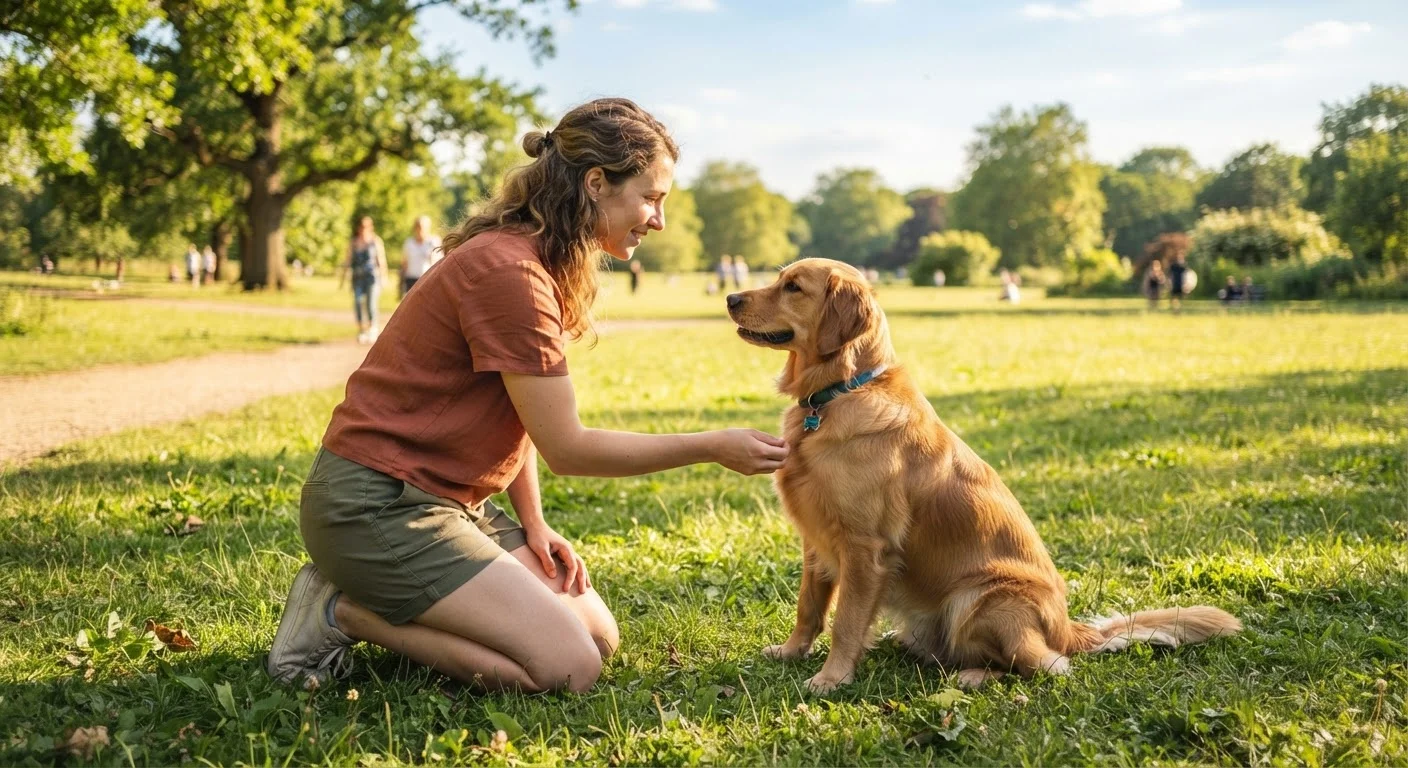
Why These Three Cues Come First
Before your dog learns tricks or complex commands, three cues form the practical backbone of everyday life: sit, stay, and come (also called the recall). Together they give you a way to manage your dog safely at the door, near traffic, or off-leash - situations where a reliable response can prevent real harm.
If you've just brought a new dog home, you're already building habits that will shape the whole relationship. See our first-week guide for context on what to expect before training begins in earnest.
Training also helps you read your dog better. Understanding how your dog responds to pressure, excitement, or distraction is its own skill - our guide to canine body language can help you interpret what you're seeing during sessions.
What you will need
What You'll Need Before You Start
Good training requires almost no equipment, but a few things make a meaningful difference in how smoothly early sessions go.
Small, soft treats
Used as the primary reward to mark and reinforce correct behavior in each step.
Treat pouch or pocket
Keeps rewards accessible so you can deliver them within one to two seconds of the correct behavior.
Standard leash (4-6 ft)
Needed for the recall (come) step to practice in a controlled way before moving to open spaces.
Clicker
Provides a precise, consistent sound marker to replace or supplement a verbal "yes" when timing is tricky.
Timing Your Reward Is Everything
Dogs associate the reward with whatever they were doing in the moment they received it. Aim to deliver the treat within one to two seconds of the correct behavior. If you wait too long, you may accidentally reward your dog for sitting up or looking away rather than for completing the cue correctly.
Step-by-Step: Teaching Sit, Stay, and Come
Work through these steps in order. Don't rush to combine the cues until each one is solid on its own - your dog needs a clear, separate association for each word before you can chain them together.
Teach Sit Using a Lure
Hold a small treat close to your dog's nose, then slowly move your hand back over the top of its head. As the dog's nose follows the treat upward, its hindquarters will naturally lower to the ground. The instant the dog's bottom touches the floor, say "sit" clearly and deliver the treat.
Repeat five to eight times per session. Once your dog is following the lure reliably, begin saying "sit" just before you move your hand. Over several sessions, you can fade the hand motion so the word alone becomes the cue.
Build Duration With Stay
Ask your dog to sit. With your palm facing the dog, say "stay" in a calm, even tone. Wait just one second, then reward before the dog has a chance to move. Gradually extend the time - two seconds, then five, then ten - rewarding calmly while the dog holds position.
Add distance only after your dog holds a stay for at least ten seconds with you right in front of it. Take one step back, return, reward. Build distance gradually over multiple sessions, not in a single attempt.
Release your dog with a consistent word - "okay" or "free" - so it learns that stay ends only when you say so.
Introduce Come (Recall) on a Leash
Attach a standard leash. Step back a few feet, crouch slightly to appear welcoming, and call your dog's name followed by "come" in an upbeat voice. Gently guide the leash if needed - never yank. When your dog reaches you, reward enthusiastically with a treat and brief praise.
Practice in your home or a quiet yard before attempting recall in busier environments. Gradually increase the distance as your dog responds reliably. A long training line (15-20 ft) is useful for practicing in open spaces while maintaining control.
Practice in Short, Consistent Daily Sessions
Aim for two to three sessions of five to ten minutes each day. End every session on a success - finish with something your dog can do reliably rather than stopping after a failure. Dogs learn through repetition spaced over time, so daily practice across several weeks will produce far better results than one long session per week.
Rotate through all three cues in each session once your dog knows the basics. Varying the order prevents your dog from simply anticipating the sequence rather than responding to each individual word.
Avoid Repeating Cues
Saying "sit, sit, sit" teaches your dog that the first word means nothing and it can wait for the third or fourth repetition. Give the cue once, wait a moment, and use a gentle physical lure only if needed. Over time, a single clear cue should be enough.
For a broader look at what can slow progress in the early weeks, see our article on common first-month mistakes.
Keeping Training on Track
Progress is rarely a straight line. Most dogs learn sit quickly, slow down on stay, and find recall the hardest - especially outdoors where distractions compete with your voice. That's normal. The key variables within your control are consistency, session length, and how you react when your dog gets it wrong.
Never call your dog to you and then do something it finds unpleasant, such as ending a play session abruptly or clipping its nails without warning. If the word "come" predicts something uncomfortable, your dog will start ignoring it. Keep the recall associated with good things - a treat, a game, genuine praise.
Pairing basic training with early socialisation gives your dog the best foundation. Our article on socialising a young dog explains why exposure to new experiences in the early months matters so much for long-term temperament.