Why the Early Weeks Are So Important
Between roughly 3 and 16 weeks of age, a puppy's brain is in a uniquely receptive state. During this period - often called the socialisation window - puppies form their baseline expectations about what the world looks and feels like. Experiences during this time are encoded deeply, influencing how a dog responds to novelty for the rest of its life.
A puppy that meets confident, friendly people, hears household sounds, rides in a car, and interacts calmly with other vaccinated dogs during this phase is far more likely to grow into an adaptable, relaxed adult. Conversely, a puppy kept in isolation during these weeks may become fearful or reactive - not out of bad character, but simply because the world feels unfamiliar and therefore threatening.
This doesn't mean that older dogs can't be helped - they absolutely can. But reshaping an adult dog's deep-seated fears takes considerably more time and consistency than building confidence from the start. If you're still in the early planning stage, our guide on what to expect in your dog's first week home explains how to set the right tone from day one.
The Socialisation Window Has an Expiry Date
Most behaviourists place the primary socialisation window between 3 and 16 weeks of age, with the most sensitive phase around weeks 6 to 12. If your puppy is approaching the upper end of this range, prioritise breadth of experience now rather than waiting for the "perfect" moment. Partial socialisation during the window is significantly better than none at all.
What Good Socialisation Actually Looks Like
Socialisation isn't about flooding a puppy with as many experiences as possible. It's about controlled, positive exposure - where the puppy stays calm, curious, and comfortable throughout. Think of each session as building a small deposit of confidence, not a test to pass.
Useful exposures to work toward include:
- Different types of people - varying ages, heights, appearances, and clothing (hats, uniforms, glasses)
- Other animals - calm, vaccinated dogs, and household pets if applicable
- Everyday sounds - traffic, appliances, children playing, doorbells
- Varied surfaces - grass, gravel, tile, stairs, grates
- Handling - gentle touching of paws, ears, and mouth to prepare for grooming and vet visits
Watch your puppy's body language throughout. Relaxed posture, a soft gaze, and willingness to approach are all good signs. Tucked tail, pinned ears, or repeated attempts to flee signal that you've pushed too far too fast - end that session positively and scale back next time.
Pairing new experiences with small, high-value treats reinforces that novelty predicts good things. This is the same logic behind the positive-reinforcement principles explored in our article on why punishment-based training often backfires.
How to Socialise Your Puppy Safely: Step by Step
Use these steps as a practical framework you can begin as soon as your puppy arrives home. Always confirm your puppy's vaccination schedule with your vet before exposing them to unknown dogs or public spaces.
What you will need
Start at home with low-stakes exposure
Before venturing outside, introduce your puppy to everyday household experiences: the sound of the vacuum cleaner, the dishwasher, the television, and visitors coming through the front door. Keep each introduction brief - a few minutes is enough - and follow every neutral or curious response with calm praise and a treat. This teaches your puppy that new sensations inside the house lead to good outcomes.
Introduce a variety of people in a controlled way
Ask friends and family members of different ages, builds, and appearances to visit and offer your puppy a treat from an open palm - no reaching overhead or direct eye contact initially, which can feel confrontational to a young dog. Include people wearing hats, glasses, or uniforms if possible. The goal is for your puppy to learn that all kinds of humans predict pleasant things.
Arrange calm meetings with vaccinated dogs
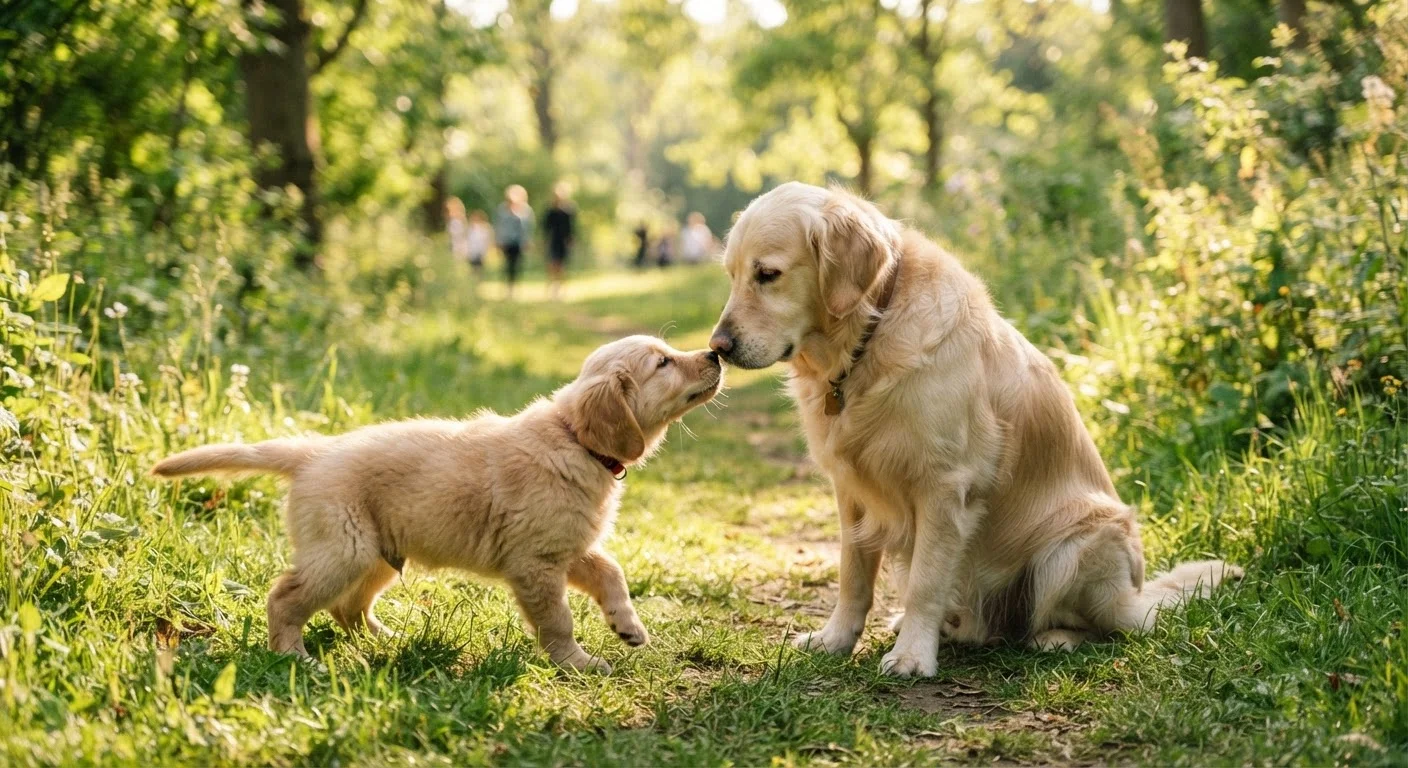
Well-matched canine encounters are one of the most valuable parts of socialisation. Choose adult dogs with a known gentle temperament, or join a reputable puppy class where all participants are vaccinated. Keep initial meetings short - five to ten minutes - and end while both dogs are still relaxed. Avoid dog parks with unknown animals until your puppy's vaccine course is complete and they've built some confidence.
Expose your puppy to varied surfaces and environments
Carry or walk your puppy across different textures - grass, gravel, wooden decking, tile floors, and gentle slopes or stairs. Take short car rides, visit quiet outdoor seating areas, and walk near (not into) busy streets so traffic sounds and movement become familiar. Each environment is a new data point that helps your puppy build a mental picture of a world that is generally safe and navigable.
Practise gentle handling every day
Regularly and gently touch your puppy's paws, ears, gums, and tail while giving treats. This prepares them for grooming and veterinary examinations, preventing the handling sensitivity that causes many adult dogs distress. Keep sessions to one or two minutes and always stop before the puppy becomes impatient. Consistent daily repetition matters far more than long occasional sessions. Our guide on grooming your dog at home expands on what routine care involves as your dog grows.
Keep a simple log and adjust as you go
Jot down which experiences went smoothly and which caused hesitation. This doesn't need to be elaborate - a note on your phone works fine. Tracking reactions helps you spot patterns (e.g., your puppy is consistently unsure around men with beards) and plan targeted, gentle follow-up sessions. Progress is rarely linear; a small setback is normal and not a sign of failure.
Common Pitfalls to Watch Out For
Even well-intentioned owners can make missteps during the socialisation process. Knowing what to avoid is just as valuable as knowing what to do.
Fear Responses Are a Signal to Slow Down
If your puppy freezes, trembles, tucks its tail, or tries to escape during a socialisation session, do not push through in the hope that repeated exposure will fix things. Forcing a frightened puppy to endure a situation can deepen fear rather than reduce it. Scale back to a level where the puppy is calm and curious, then build back up gradually over several sessions.
One of the most common errors is waiting until a puppy is fully vaccinated before beginning any socialisation at all. While avoiding unvaccinated dogs and high-risk environments is sensible, isolating a puppy entirely during the socialisation window may carry its own long-term costs. Many vets suggest that puppy classes held in clean, controlled environments - attended only by vaccinated dogs - are a reasonable option before the full vaccine series is complete. Always have that conversation with your own vet based on your specific circumstances.
Another frequent mistake is letting an overly enthusiastic person or dog overwhelm a nervous puppy, then dismissing the reaction as "they'll get used to it." A single overwhelming experience during the sensitive period can create a lasting negative association. If your puppy seems consistently anxious despite gentle exposure, a referral to a certified veterinary behaviourist or a positive-reinforcement trainer is worth pursuing early. See our guide on common first-month mistakes for more pitfalls to avoid as a new owner.