The Hidden Cost of a Bored Dog
Most first-time dog owners are prepared for the physical side of pet care - the walks, the feeding, the vet visits. What catches many off guard is how much a dog's brain also needs to be exercised. When that mental need goes unmet, dogs often find their own solutions: shredding furniture, barking for hours, digging up yards, or pacing restlessly. These aren't signs of a "bad" dog - they're signs of an under-stimulated one.
Domestic dogs are descended from animals that spent most of their day working - tracking scents, solving problems, navigating social dynamics. Even a well-walked dog that spends the rest of the day with nothing to engage its mind can become frustrated. Understanding this changes how you approach daily care entirely.
For a full picture of what dogs need every single day, see what dogs actually need each day - mental stimulation is one of several core pillars covered there.
Use mealtimes as a mental workout
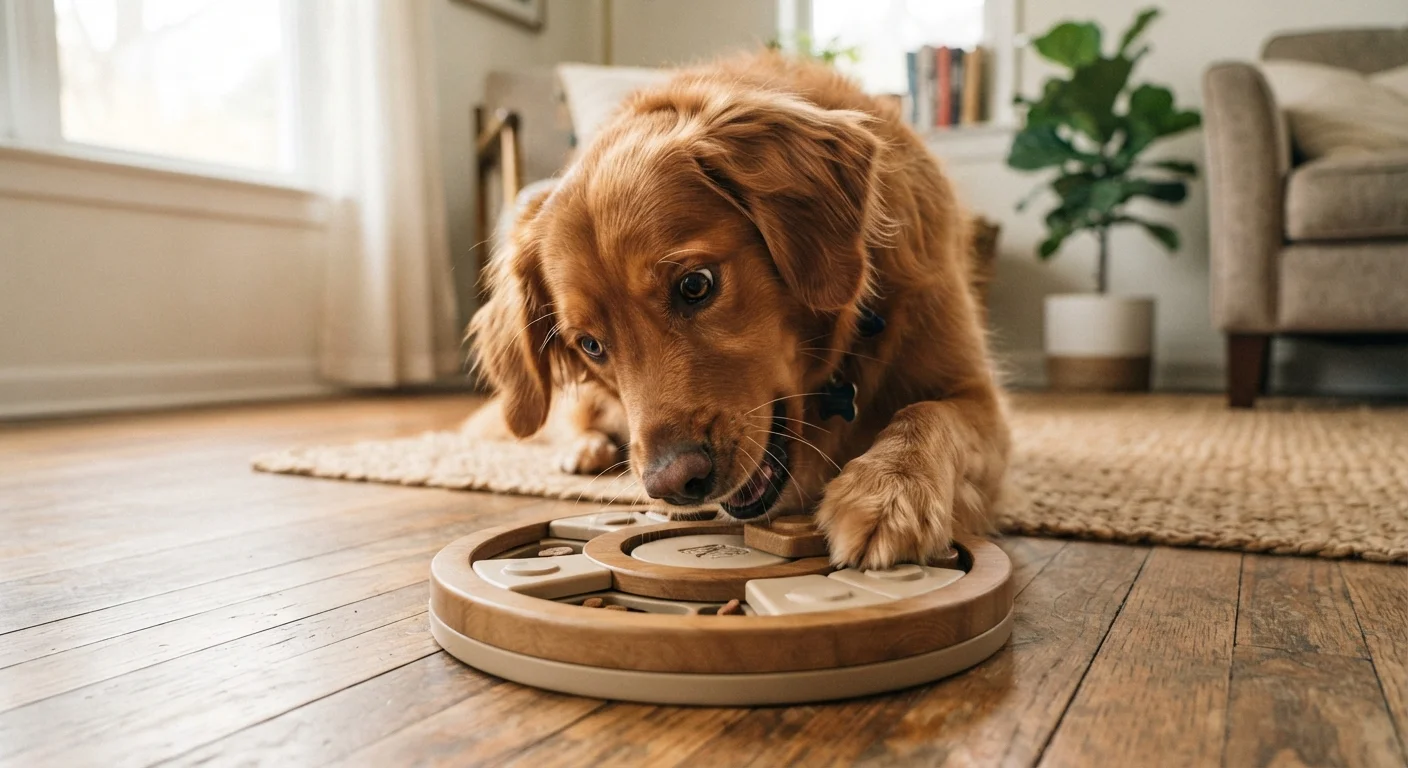
Instead of placing food in a bowl, make your dog work for it. Puzzle feeders - trays or toys that require a dog to slide, lift, or paw at compartments to release kibble - turn a routine meal into a problem-solving session. Even simpler: scatter kibble across a snuffle mat (a mat with dense rubber fibres designed to mimic grass) so your dog has to sniff out each piece. This activates the foraging instinct and typically takes far more time and mental energy than bowl feeding.
Start with an easy level so your dog builds confidence, then increase difficulty as they get the hang of it. A meal that takes ten focused minutes to finish is genuinely tiring in a positive way.
Turning every meal into a foraging challenge can tire a dog's brain more effectively than a walk.
Let your dog lead on sniff walks
A walk where your dog is allowed to stop, sniff, and investigate at their own pace is qualitatively different from a brisk exercise walk. Smell is a dog's primary sense - their olfactory system is estimated to be tens of thousands of times more sensitive than ours, and processing scent information is genuinely mentally demanding.
On a "sniff walk," let your dog choose the pace and the stops. Allow them to spend as long as they need on an interesting smell before moving on. These slower, smell-led outings are often more satisfying for dogs than double the distance at a marching pace. Even fifteen minutes in a new environment can be surprisingly tiring.
A fifteen-minute sniff walk in a new environment can be more satisfying than a long but rushed jog.
Teach new commands and tricks regularly
Learning new behaviours requires concentration, memory, and focus - all of which are mentally demanding for dogs. You don't need to work toward competition obedience; even simple tricks like "spin," "touch" (nose to hand), or "find it" (searching for a hidden treat by scent) provide genuine cognitive challenge.
Keep training sessions short - five to ten minutes is usually ideal - and always end on a success. Use positive reinforcement (treats, praise, play) rather than corrections. The goal here isn't perfect performance; it's engagement. A dog that has spent ten minutes actively thinking and earning rewards is usually noticeably calmer afterward. This pairs well with positive training methods that build trust rather than anxiety.
Even five minutes of reward-based training can leave a dog noticeably calmer and more settled.
Introduce basic scent work games
Scent work - teaching your dog to locate a specific smell - is one of the most effective enrichment activities available, and it can be done indoors with no equipment beyond treats. A simple starting game: ask your dog to sit and stay, hide a treat under one of three upturned cups, then release your dog to sniff out which cup hides the reward.
As your dog improves, hide treats in progressively harder locations around a room. Formal nose work classes exist in many areas if you want structured progression, but the home version is just as valuable for mental engagement. Scent work is particularly well-suited for dogs recovering from injury or surgery, since it's low-impact.
Scent work games tap directly into a dog's strongest sense and require no equipment to start.
Rotate toys to maintain novelty
Dogs habituate quickly - a toy that was exciting on Monday may be ignored by Wednesday. Rather than buying more toys, simply divide your dog's existing collection into two or three groups and rotate them every few days. When a toy reappears after an absence, it often holds renewed interest.
Add novelty in other low-cost ways too: let your dog explore a cardboard box before recycling it, introduce a new texture underfoot, or hide a treat inside a rolled-up towel for them to unravel. The specific activity matters less than the fact that something is new to investigate and figure out.
Rotating toys on a schedule can restore novelty without any extra cost to you.
Give your dog a job during downtime
Many dogs respond well to having a specific task during periods that would otherwise mean lying idle. A simple example: ask your dog to carry a lightweight item - their favourite toy, a small bag - during part of your walk. It gives them something to focus on. A "go to your mat" command, taught with positive reinforcement, gives your dog a clear, rewarding job to do when you're busy.
For dogs left alone during the day, a long-lasting chew (such as a rubber toy stuffed with food and frozen) can occupy them for extended stretches. Pair this with a consistent routine - dogs settle more easily when they can predict what comes next - and you reduce the likelihood of anxiety-driven destructive behaviour. For more on shaping a dog's daily routine, this daily care overview covers the full picture.
Giving a dog a simple, repeatable task during idle time can significantly reduce restless behaviour.
Building Mental Enrichment Into Your Routine
The good news is that mental stimulation doesn't require expensive gear or hours of free time. Many of the most effective activities take five to fifteen minutes and can be woven into what you're already doing. The goal is consistency - a little engagement each day beats an occasional intense session.
Start Small and Build Gradually
If your dog is new to enrichment activities, begin with one or two simple additions to their day rather than overhauling everything at once. A sniff walk one day and a puzzle feeder the next is enough to make a noticeable difference. As your dog builds familiarity with each activity, you can gradually increase the challenge level. Consistency over a few weeks is far more effective than an intense enrichment weekend followed by nothing.
Keep in mind that different dogs have different needs. High-drive working breeds - such as Border Collies, German Shepherds, and Belgian Malinois - typically require more mental challenge than lower-energy companion breeds. Age matters too: puppies tire quickly and need short bursts, while senior dogs can benefit from gentle sniff-based activities that are easier on ageing joints. If problem behaviours persist despite enrichment, a qualified veterinary behaviourist can help identify underlying causes. You might also find that reward-based training approaches make learning new skills a more positive experience for both of you.