Small Doesn't Mean Simple
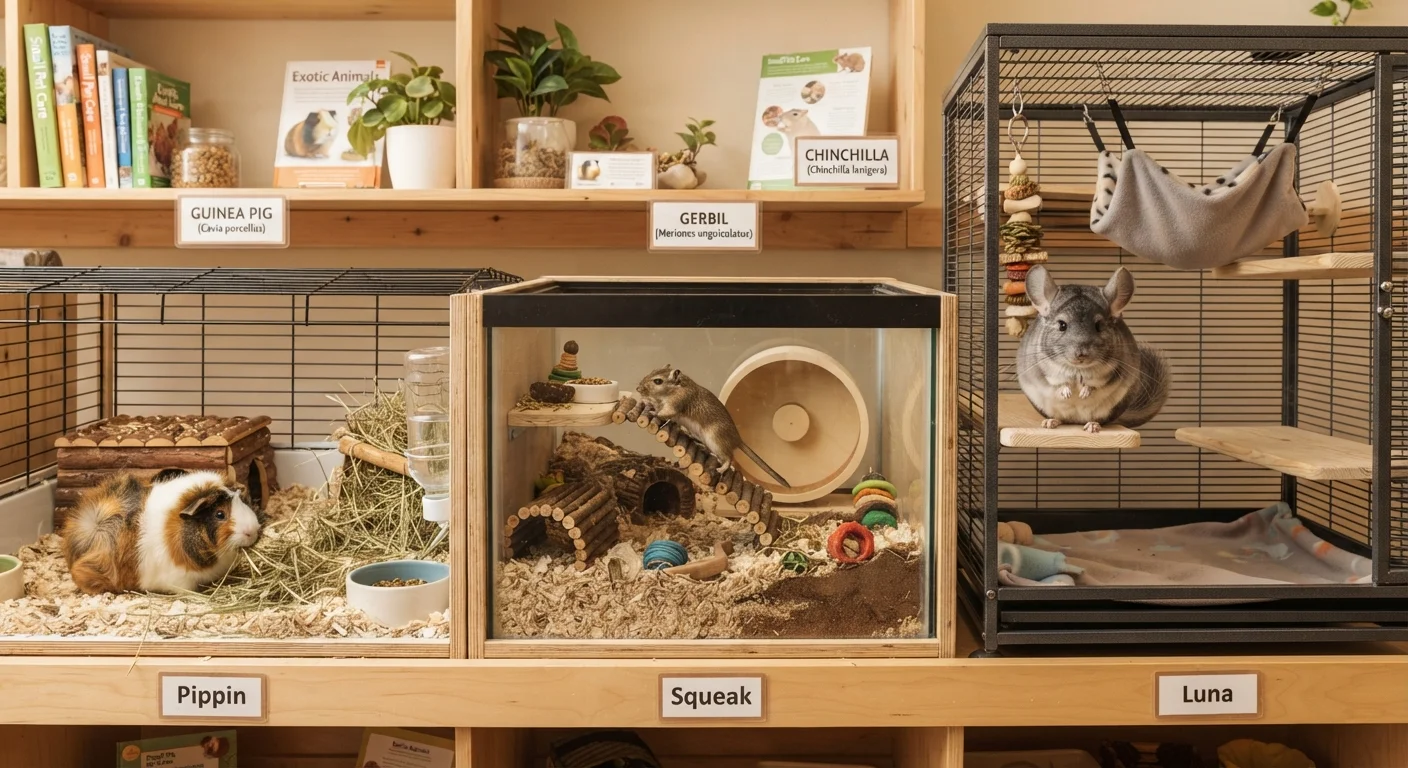
Guinea pigs, gerbils, and chinchillas are routinely marketed as low-maintenance starter pets. In reality, each species has specific dietary, social, environmental, and veterinary needs that catch new owners off guard. The good news: once you understand those needs upfront, these animals make deeply rewarding companions.
If you're still deciding which small pet is right for you, our beginner's guide to small pet ownership is a solid place to start. This article drills into the specific surprises waiting for owners of these three popular species.
Guinea pigs cannot make their own vitamin C
Like humans, guinea pigs (also called cavies) lack the enzyme needed to synthesize vitamin C internally. Without a daily dietary source, they develop scurvy - a condition that causes lethargy, swollen joints, and dental problems. This surprises many new owners who assume a commercial pellet covers everything.
Fresh bell peppers, leafy greens like romaine lettuce, and small amounts of kiwi are reliable sources. Pellets formulated for guinea pigs do contain added vitamin C, but the vitamin degrades quickly once a bag is opened, so fresh food is essential - not optional.
Without daily vitamin C from fresh food, guinea pigs develop scurvy - a real and preventable risk.
Chinchillas are extremely vulnerable to heat
Chinchillas originate from the cool, high-altitude Andes mountains. Their dense fur - among the finest of any land mammal - keeps them warm in cold climates but makes them dangerously prone to overheating. Temperatures above approximately 75°F (24°C) can cause heat stroke, which can be fatal.
Air conditioning is not a luxury for chinchilla owners in warm climates - it's a necessity. Their room should stay consistently cool and well-ventilated. Avoid placing their enclosure near windows, heating vents, or any appliance that generates warmth.
Chinchillas can die from heat stroke at temperatures most people consider comfortable indoors.
Gerbils are highly social and usually shouldn't live alone
Gerbils are colony animals in the wild. Keeping a single gerbil is possible, but it generally results in a less active, less engaged animal. Most experienced owners and veterinary behaviorists recommend keeping gerbils in same-sex pairs or small groups to support natural social behavior.
The key is to introduce pairs correctly - ideally as littermates - because adult gerbils can fight, sometimes seriously. A method called the split-cage introduction (gradually introducing scent before physical contact) is commonly recommended when pairing adults. If you're comparing social needs across species, our article on which small pet fits your life offers a useful side-by-side view.
A lone gerbil is often an unhappy gerbil - same-sex pairs tend to thrive far better.
Chinchillas can live 15 years or longer
Many people adopt chinchillas expecting a pet with a short lifespan similar to a hamster. In fact, well-cared-for chinchillas commonly live 10 to 15 years, and some reach beyond that. This is a decade-and-a-half commitment - one that needs to survive moves, life changes, and shifting schedules.
Before adopting a chinchilla, it's worth thinking honestly about where you expect your life to be in 10 years. Chinchilla rescues are filled with animals surrendered by owners who didn't anticipate that longevity.
A chinchilla adopted today could still be with you in your mid-thirties - plan for that honestly.
All three species need exotic-animal veterinary care
Guinea pigs, gerbils, and chinchillas are classified as exotic pets in veterinary terms, meaning standard dog-and-cat practices may not have a vet trained to treat them. Finding a qualified exotic-animal or small-mammal vet before you bring your pet home - not during a health emergency - is one of the most important steps a new owner can take.
Expect exotic vet visits to cost more than a typical pet checkup, and consider whether routine wellness exams (recommended at least annually) fit your budget. Understanding this cost upfront prevents difficult decisions later.
Exotic vets can be scarce and more expensive - find one before your pet needs one urgently.
Dust baths are a chinchilla hygiene requirement, not a treat
Chinchillas cannot get wet. Their fur is so dense that it traps moisture against the skin, leading to fungal infections and matting. Instead, chinchillas clean themselves by rolling in volcanic ash dust (sold specifically for this purpose), which absorbs oils and maintains coat health.
Dust baths should be offered several times a week for about 10 to 15 minutes each session, then removed - leaving the dust in the enclosure permanently can dry out eyes and respiratory tracts. This routine is non-negotiable, not optional enrichment.
Chinchillas must roll in volcanic dust to stay clean - water can damage their coat and skin.
Before You Bring One Home
The most consistent advice from experienced owners of all three species is simple: do the research first, not after. That includes locating an exotic-animal veterinarian in your area before you even pick up your new pet - not all general practice vets see small mammals, and an emergency is the wrong time to find that out. Our article on small pet health warning signs can help you recognize when a vet visit is urgent.
You should also build a realistic budget. Food, bedding, enclosures, enrichment, and routine veterinary care add up faster than most people expect. See our breakdown of what small pets actually cost beyond the purchase price for a clear financial picture before you commit.
Find Your Exotic Vet First
Search for a vet experienced with small mammals before you bring your new pet home. Call ahead and confirm they regularly see your specific species - experience with guinea pigs, for example, doesn't always extend to chinchillas. Having a vet relationship in place before an emergency is one of the most valuable things you can do as a new owner.
This article is for general informational purposes only and is not a substitute for advice from a qualified exotic-animal veterinarian. Always consult a vet for guidance specific to your pet's health and care needs.