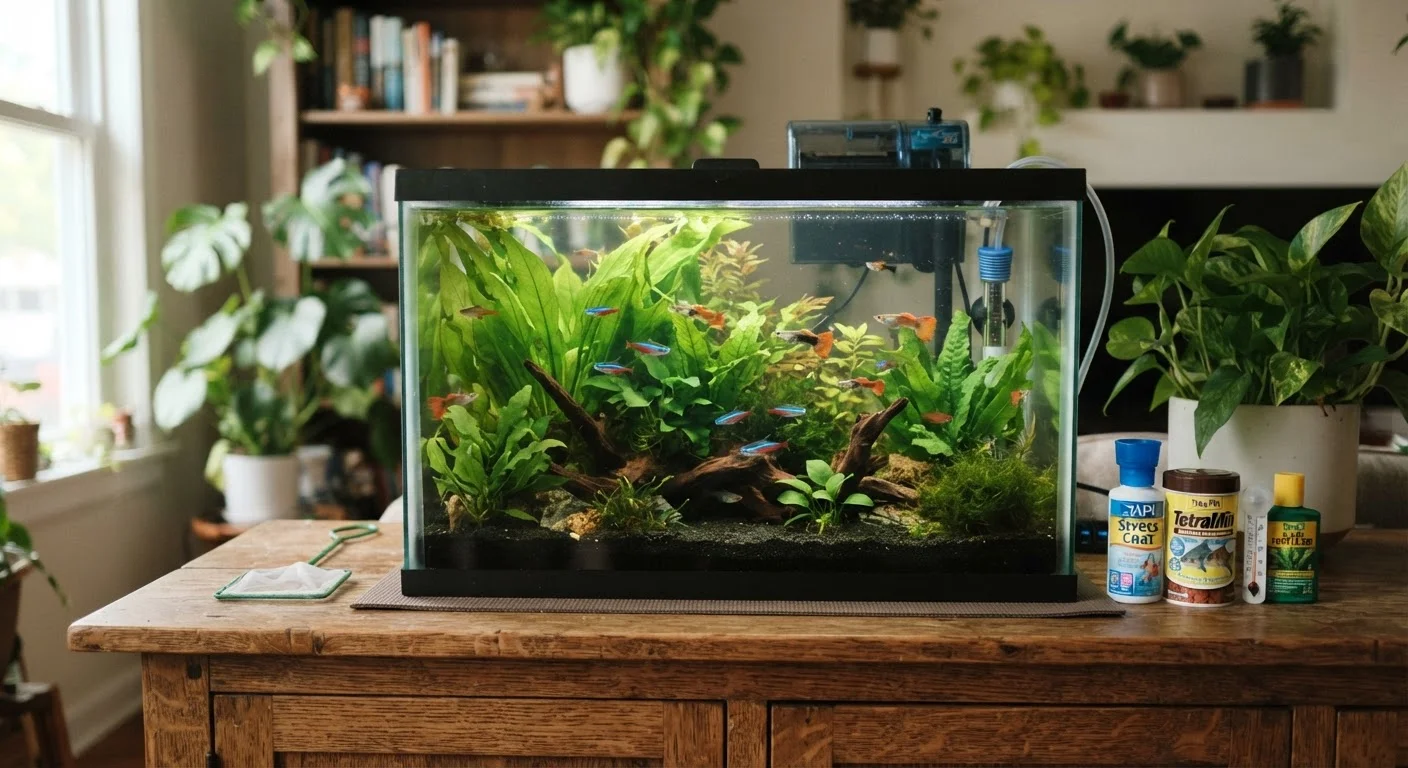
Why the First Month Is the Most Dangerous for Your Fish
Fishkeeping looks simple from the outside - fill a tank, add water, add fish. But that surface simplicity hides a set of biological processes that beginners rarely hear about before they bring fish home. The result is that most early losses happen not from bad luck but from a handful of well-documented, entirely preventable mistakes.
Understanding why these errors happen is the first step. New keepers aren't careless - they're simply missing information that experienced hobbyists treat as obvious. The good news is that once you know what to watch for, avoiding these pitfalls is straightforward. See also how these early challenges compare to mistakes first-time dog owners make - the pattern of preventable early errors runs across many types of pet ownership.
The Nitrogen Cycle Cannot Be Skipped
Adding fish to an uncycled tank exposes them to ammonia - a compound their own waste produces - with no beneficial bacteria present to neutralize it. Ammonia poisoning is often invisible until fish are already dying. Before adding any fish, always cycle your tank. Our plain-language guide to the nitrogen cycle explains exactly what this process involves and how to confirm it's complete.
The Mistakes That Cost Most Beginners Their Fish
The errors below are the ones aquarium communities, veterinary fish health resources, and experienced hobbyists consistently identify as the leading causes of beginner fish loss. Each one has a clear explanation and a concrete fix.
Adding fish to a tank that hasn't been cycled.
Why it happens: New keepers are eager to see fish in their tank immediately and aren't warned that a freshly filled aquarium lacks the beneficial bacteria needed to process fish waste.
Adding tap water directly to the tank without treating it first.
Why it happens: Tap water looks clean, so beginners assume it's safe. In reality, municipal water contains chlorine or chloramine - chemicals that damage fish gills rapidly.
Overstocking the tank with too many fish too quickly.
Why it happens: Pet stores display dozens of fish together, which gives beginners a skewed sense of how many a home tank can support. Filtration capacity and tank volume work very differently in small home aquariums.
Overfeeding fish and leaving uneaten food in the tank.
Why it happens: Feeding feels like an act of care, and fish often appear to beg at the glass no matter how recently they've eaten. Uneaten food sinks and rots, rapidly raising ammonia levels.
Making large, sudden water changes instead of small, regular ones.
Why it happens: Beginners often delay water changes and then try to compensate by replacing a large volume at once. A sudden shift in temperature, pH, or chemistry shocks fish significantly.
Choosing incompatible fish species that fight or have very different care needs.
Why it happens: Fish at a store are often grouped by size rather than behavior or water requirements. A fish that looks peaceful in a store display may be highly territorial or need very different water conditions at home.
Many of these mistakes are reinforced by widespread myths about fishkeeping - for example, the idea that small bowls are acceptable homes or that fish are low-maintenance by nature. Our article on popular myths about keeping pet fish addresses those misconceptions directly.
Building Habits That Keep Fish Healthy Long-Term
Avoiding these mistakes isn't a one-time fix - it's a set of habits that become second nature quickly. Keep a simple log of your water test results, feeding schedule, and water change dates. Patterns in that data will alert you to problems before fish show visible symptoms.
2-4 weeks
Minimum time to cycle a new fish tank
Aquarium care resources and fishkeeping organizations consistently recommend allowing at least two to four weeks for beneficial bacteria to establish before adding fish.
10-20%
Recommended weekly water change volume
Small, regular water changes maintain stable water chemistry far more effectively than infrequent large changes, according to standard aquarium husbandry guidance.
A basic liquid test kit that measures ammonia, nitrite, nitrate, and pH is one of the most useful tools a beginner can own. Test weekly during your first three months. If any reading looks unusual, perform a partial water change and retest before drawing conclusions.
If you're newer to small pets generally, the first-time small pet owner's complete starting guide offers useful grounding across species - fishkeeping fits into a broader set of principles that apply whether you're keeping fish, hamsters, or other small animals.
This article is for general informational purposes only and does not constitute veterinary or professional animal care advice. Consult a qualified aquatics specialist or veterinarian for concerns about your fish's health.