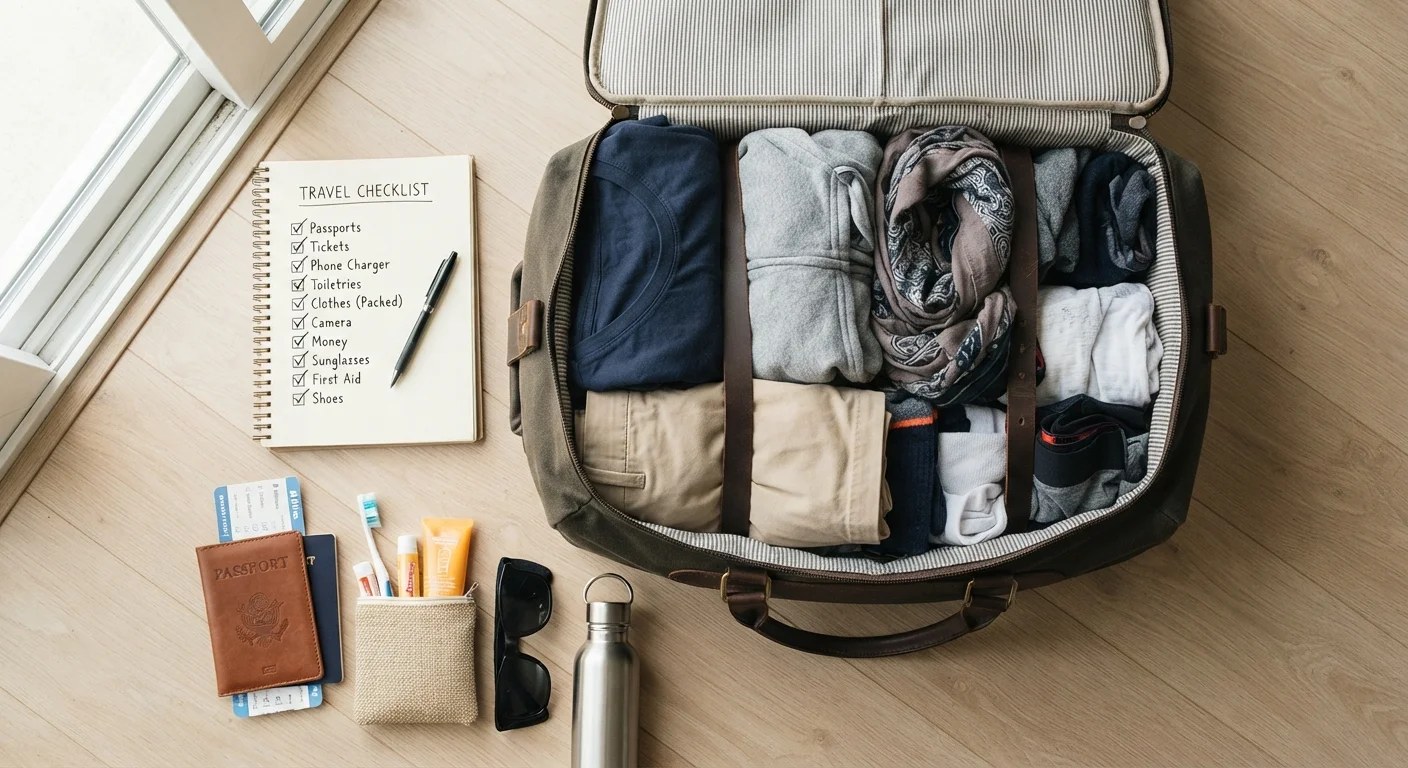
Why Your Memory Alone Isn't Enough
Most first-time travelers assume packing is straightforward: open the bag, throw in what comes to mind, zip it up. The problem is that human memory under mild stress - and pre-trip excitement counts as stress - is unreliable. Items get forgotten not because they're obscure, but because the mental load of trip prep crowds them out.
A packing list solves this by moving decisions from your working memory onto paper. Once an item is written down, you no longer have to actively remember it. This frees mental bandwidth for everything else that surrounds a trip: bookings, transport logistics, work handoffs. The list holds the inventory so your brain doesn't have to.
This is also why overpacking happens so often: without a structured list, people compensate for uncertainty by adding more. The logic is subconscious - if you're not sure whether you've covered everything, bringing extra feels like a safety net. A list replaces that anxiety with evidence.
Start With What You Know You'll Forget
Before drafting categories, jot down the one or two items you've left behind on past trips - or that a friend famously forgot. Anchor your list with those specifics first. This makes the list feel immediately personal and useful, rather than a generic template you're filling in by obligation.
The Two Phases a List Creates
The most underappreciated benefit of a packing list is that it separates two distinct tasks: deciding what to bring, and actually packing it. When you do both at once - standing in front of your wardrobe the night before - the decisions are rushed and reactive. The list forces the thinking to happen earlier, when you're calm and have time to be deliberate.
Phase one is planning: you write the list days before departure, reviewing it against your itinerary, the forecast, and any specific activities planned. Phase two is execution: you work through the list methodically, checking off each item. Packing becomes a mechanical task rather than a judgment call.
This structure also makes it easier to pack light intentionally. When you can see every item written out before it goes in the bag, you can evaluate each one against a simple question: does this earn its weight for this specific trip?
Lists Work for Any Trip Length
It's tempting to skip a list for short trips, assuming there's not enough to forget. In practice, the shorter the trip, the less margin you have to replace forgotten items. A five-minute list for a two-night stay is one of the highest-return habits a new traveler can build.
How to Build a Packing List from Scratch
Start with categories rather than individual items. A reliable framework for most trips includes: travel documents (passport, ID, reservations, insurance), clothing (broken down by day or activity type), toiletries, electronics and chargers, health essentials, and a destination-specific section for items unique to your trip - hiking poles, beach gear, formal attire.
- Draft against your itinerary. Go through each day and ask what you'll actually be doing. A day at a business meeting needs different clothing than a day of hiking.
- Apply a quantity rule. For clothing, a common approach is to plan outfits rather than individual pieces - this prevents redundant items from accumulating.
- Add a 'pack last' section. Items you use right up until departure (phone, toiletry bag, medications) need their own reminder so they don't get left behind.
- Review and cut. Once drafted, go through each item and ask: what happens if I don't have this? If the answer is manageable, consider leaving it out.
Once you've traveled with a list once, review it when you return. Note what you used, what stayed in the bag, and what you wished you'd brought. This turns every trip into a refinement - and over time, your list becomes a reliable personal reference. For more on building organized travel habits, see smart packing habits experienced travelers swear by.
~30%
Typical overpacking rate among leisure travelers
Travel industry surveys consistently suggest a significant share of travelers report bringing items they never used, indicating widespread overpacking habits.
7+ days
Before departure to start your packing list
Travel preparation guides broadly recommend beginning a written packing list at least a week before departure to allow time to identify gaps without last-minute pressure.
Making Your List Work Trip After Trip
A single-use list is useful. A master list is transformative. After your first or second trip, consolidate your refined list into a reusable template - a document you copy and edit rather than rebuild from scratch each time. This master list captures the essentials that belong on every trip, with placeholder categories for destination-specific items you fill in as needed.
Pair your list with your itinerary for maximum effect. A clear itinerary tells you exactly what activities, climates, and settings you'll encounter - which makes every packing decision more specific and confident. These two tools work together: the itinerary defines the context, the list defines the contents.
If you find your list consistently growing beyond what fits your bag, that's worth examining separately. Common packing myths - like the idea that you need a backup outfit for every day - often drive list inflation without adding real value. Once you recognize those patterns, trimming becomes much easier.
The goal isn't a perfect list on the first attempt. It's a process that gets more accurate each time you use it - and that's exactly how experienced travelers make packing look effortless.