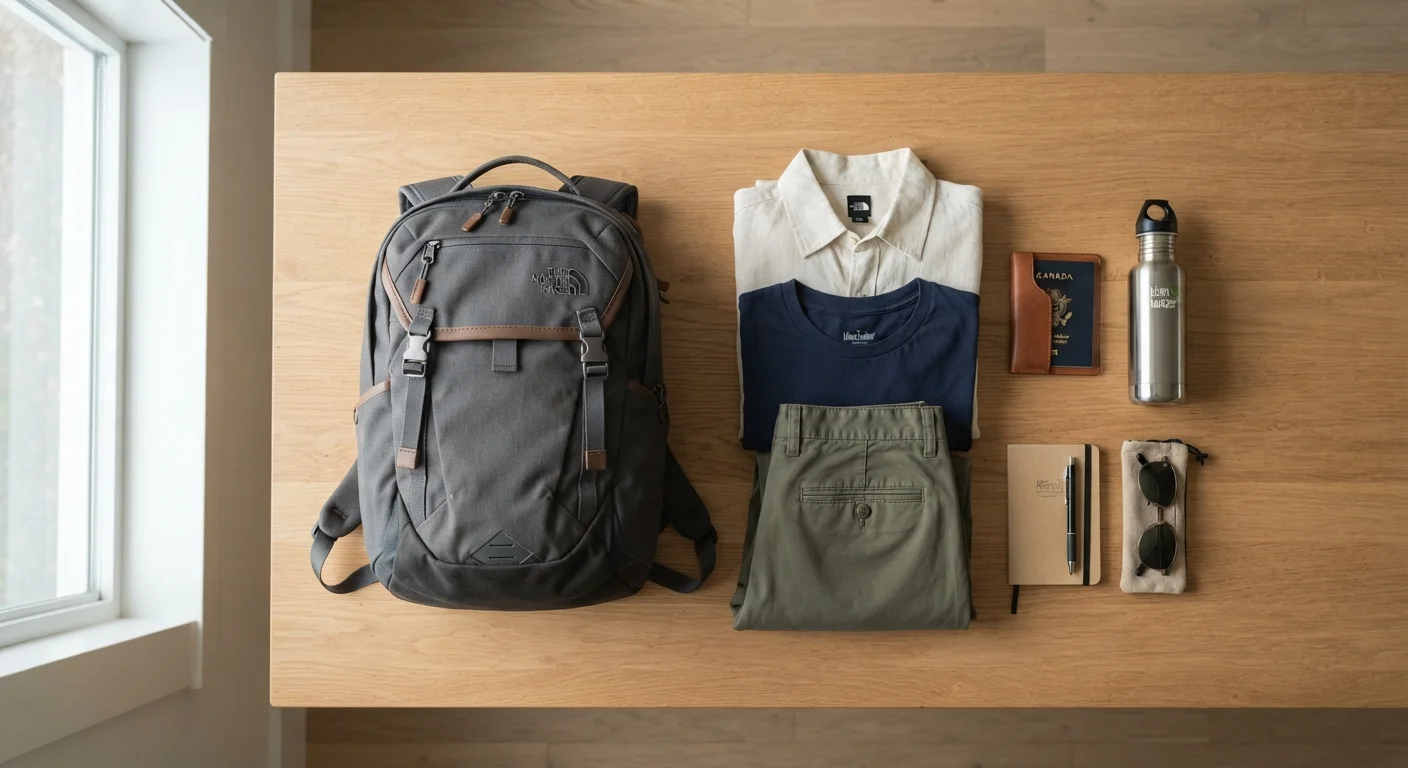
What Packing Light Actually Means
Packing light does not mean packing nothing. It means making intentional choices about what earns a place in your bag - and committing to those choices before you zip up. For most travellers, this translates to fitting everything into a carry-on-sized bag, though the specific definition varies by person and trip.
The concept sits at the intersection of travel philosophy and practical logistics. Done well, it reshapes the airport experience, the transit experience, and even daily movement at your destination. Done poorly - by simply leaving things behind without a plan - it creates problems that surface at inconvenient moments.
If you want a structured approach to deciding what makes the cut, building a packing list from scratch is a useful place to start.
The Real Advantages of a Lighter Bag
The benefits of packing light are concrete and felt early - often at the very first gate of your journey.
Eliminates checked baggage fees entirely
Flying with only a carry-on sidesteps the fees airlines charge for checked bags, which can add up significantly on multi-leg or budget-carrier itineraries. Over several trips, this saving is meaningful.
Faster through airports from start to finish
No checked bag means skipping the check-in desk and baggage claim at arrival. On short trips especially, this can cut an hour or more from your total airport time.
More physical freedom on the ground
A lighter bag is easier to carry up cobblestone streets, into overhead bins, on public transit, and through hostels or boutique hotels without elevators. Your back will notice the difference by day two.
Reduces the risk of lost or delayed luggage
Luggage that stays in your hands cannot be misrouted. Checked bags occasionally get delayed or misdirected, particularly on connecting flights, which can derail the start of a trip.
Simplifies decision-making during the trip
With fewer items, there is less to keep track of, less to repack each morning, and less time spent choosing an outfit. Many travellers report that constraints make getting ready easier, not harder.
Beyond fees and speed, there is a less obvious benefit: decision fatigue drops. Travellers who bring fewer clothes often report that getting dressed each morning is easier, not harder, because the choices are limited. Constraints, in this context, can be freeing. If you want to sharpen that skill further, smart packing habits every traveller eventually learns covers the techniques that make minimalism sustainable over time.
Where Packing Light Gets Genuinely Difficult
Honest travel advice means acknowledging that minimalist packing is not the right fit for every trip. The drawbacks are real, and worth examining before committing to a strategy.
Requires careful planning and real discipline
Packing light is not passive - it demands you make deliberate decisions about every item before the trip. First-timers often underestimate how much mental effort this takes, especially under time pressure.
Harder for multi-climate or formal-dress trips
If your itinerary spans cold mountains and humid cities, or includes a formal event, fitting versatile clothing into one small bag becomes genuinely difficult. Bulky items like winter coats eat space fast.
Laundry planning becomes unavoidable on longer trips
Extended trips of two weeks or more usually mean doing laundry mid-journey, which requires planning around laundromat access, drying time, and local availability - not always convenient.
Carry-on restrictions vary by airline and route
Size and weight limits for carry-on luggage differ between carriers, and some regional or budget airlines enforce stricter rules than major hubs. What passes on one flight may not pass on the next.
Can create anxiety for certain travellers
Some people genuinely feel more secure knowing they have options, backups, and contingency items. For those travellers, ruthless minimalism may reduce comfort rather than increase it.
Trips that cross multiple climates in a single itinerary deserve special attention. Packing one bag for both a coastal resort and a mountain hiking trail requires precise layering strategy - something packing for different climates in one suitcase addresses directly.
Carry-On Rules Differ Widely
There is no single universal standard for carry-on bag dimensions or weight limits. Budget carriers in particular may set lower limits or charge for larger cabin bags. Before any trip, check the specific baggage policy for every airline on your itinerary - not just the first leg. For a deeper look at this decision, see carry-on vs checked luggage.
Organisation Makes or Breaks the Approach
Fitting less into a smaller bag only works when that bag is well organised. Random packing into a compact carry-on creates exactly the kind of chaos that puts travellers off the method entirely.
Techniques like rolling clothes, using packing cubes, or grouping items by category can significantly increase how much fits without creating a jumbled mess. The method matters as much as the mindset. For a side-by-side look at the options, packing cubes, rolling, and other organisation methods breaks down what actually works and when.
~30 min
Average baggage claim wait time
Industry estimates commonly cite baggage claim as one of the longest single waits in the airport experience, often ranging from 20 to 45 minutes depending on the airport and flight volume.
1 in 170
Checked bags mishandled per passenger
According to SITA's annual Baggage IT Insights report, global mishandling rates have remained in the range of 5-7 bags per thousand passengers in recent years, a meaningful risk on multi-leg journeys.
One common myth worth addressing: many first-time travellers pack heavy because they believe they will definitely need items they have never actually used on a previous trip. common packing myths that lead to heavy bags examines these assumptions directly.