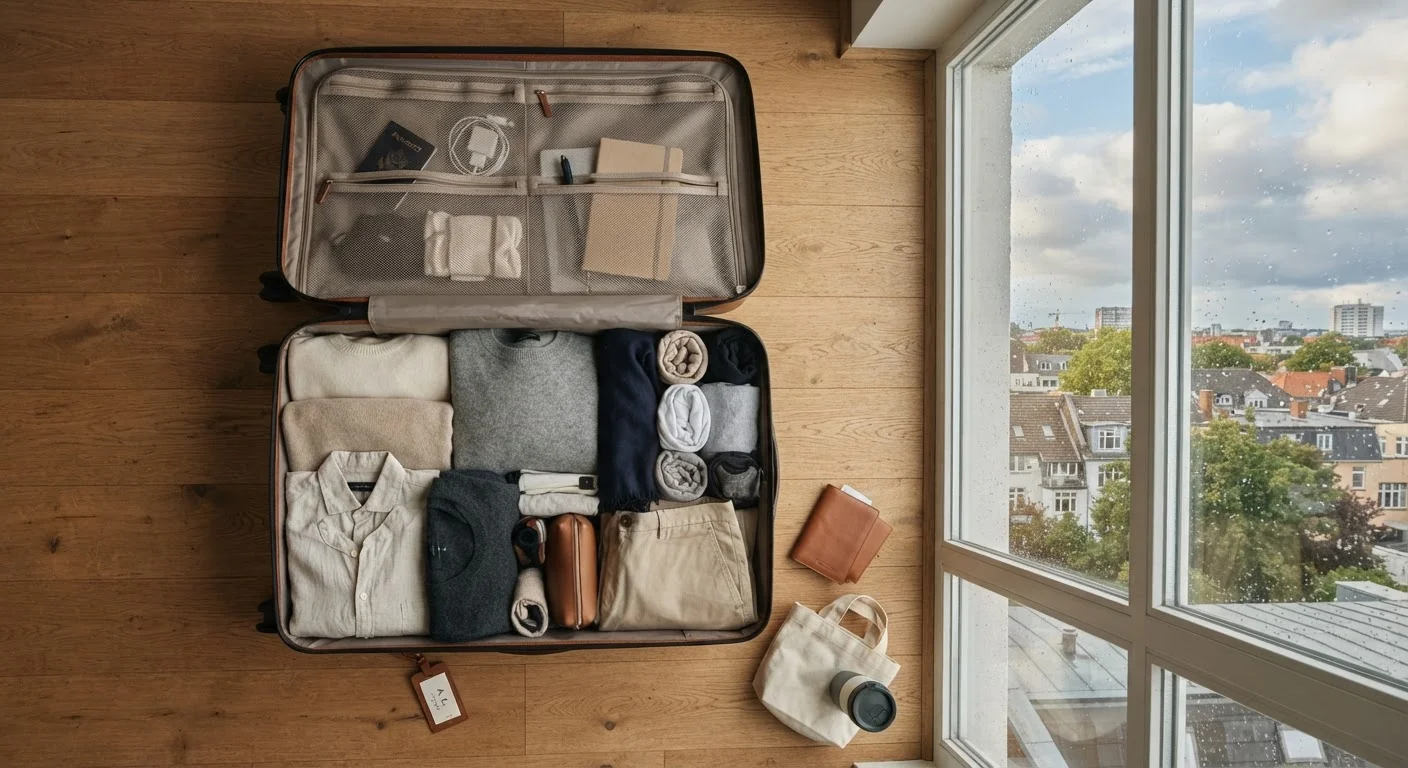
Why One Bag Can Handle Multiple Climates
The idea of fitting a tropical beach, a cool highland city, and a rainy coastal town into one suitcase sounds impossible - until you shift away from packing for places and start packing for conditions. Most climates call for the same underlying needs: warmth, moisture management, and sun or wind protection. The difference is how many layers you combine, not how many separate wardrobes you bring.
If you have ever returned from a trip with clothes you never touched, you have already experienced the core problem: packing based on imagined scenarios rather than likely ones. Understanding why travellers keep overpacking is a useful first step before working through the practical method below.
What you will need
Before you start, gather your itinerary and confirm your baggage allowance. The steps below walk you through building a one-bag, all-climate system from the ground up.
Check Airline Baggage Rules Before You Pack
Carry-on size and weight limits vary by airline and can change. Always verify the specific restrictions with your carrier before finalising your bag. Exceeding limits at the gate can mean unexpected fees or being forced to check a bag. See our guide to carry-on vs checked luggage for help deciding which approach fits your trip.
The Tools and Approach That Make It Work
Packing for multiple climates is less about owning specialised gear and more about choosing the right everyday items and organising them well. A small number of tools make the process significantly easier.
Packing cubes
Compress and separate clothing categories so layering pieces stay organised and accessible.
Lightweight waterproof shell jacket
Acts as both a rain layer and a wind barrier, covering the outer layer needs of most climates.
Merino wool or moisture-wicking base layer
Regulates body temperature across a wide range and resists odour, reducing how many pieces you need.
Luggage scale or bathroom scale
Confirms your bag meets airline weight limits before you reach the airport.
With these basics in place, the steps below show you exactly how to apply them. If you are also deciding between bag types for this kind of trip, the comparison of soft bags vs hard-shell suitcases may help you choose the most practical option for varied travel.
Avoid Climate-Specific Packing Traps
It is tempting to pack a full separate wardrobe for each climate on your itinerary - this leads directly to an overweight bag and real frustration. Resist the urge to prepare for every conceivable scenario. A layering system covers the vast majority of conditions without doubling your load.
Map out the climate range of your trip
Write down every destination and note its expected temperature range and likely weather during your travel dates. Identify the coldest low and the warmest high across the whole trip - these two extremes define your packing boundaries. You are not packing for each stop individually; you are building a system that covers the full range.
Build your outfit around a three-layer system
The layering method works by combining three types of clothing rather than packing heavier stand-alone items:
- Base layer: A lightweight, moisture-wicking top worn closest to your skin. Merino wool or synthetic blends regulate temperature and resist odour well.
- Mid layer: A fleece, cardigan, or light down vest that traps warmth. This is what you reach for in cool evenings or air-conditioned spaces.
- Outer layer: A packable waterproof or wind-resistant shell jacket that folds into its own pocket. This handles rain and wind without bulk.
In warm climates, you wear only the base layer. As temperatures drop, you add layers. The key insight is that three thin pieces together weigh and pack smaller than one heavy coat.
Select neutral, mix-and-match clothing in limited colours
Choose a colour palette of two or three tones that all work together - classic combinations are navy, grey, and white, or earth tones like tan, olive, and black. Every top should pair with every bottom without looking mismatched. This approach means seven items of clothing can create significantly more distinct outfits than seven items in uncoordinated colours.
Fabrics matter here: look for items that are wrinkle-resistant, quick-drying, and lightweight. Avoid heavy denim or thick cotton, which take up disproportionate space and dry slowly if washed on the road.
Limit footwear to two or three pairs with overlapping uses
Shoes are the single biggest space and weight drain in most suitcases. Aim for:
- One pair of comfortable walking shoes or low-profile trainers that work for casual sightseeing and most restaurants.
- One pair of sandals or lightweight slip-ons for warm climates, beaches, or hostel showers.
- Optionally, one pair of smarter shoes if your itinerary genuinely includes formal settings.
Wear your bulkiest pair on travel days rather than packing them. Store shoes in shoe bags or unused socks to protect clothing from dirt.
Pack toiletries and accessories in travel-sized containers
Liquid rules for carry-on bags (typically 100 ml per container in many regions) apply regardless of how many climates you are visiting. Decant products into reusable travel bottles rather than bringing full-size items. For multi-climate trips, sunscreen and a basic moisturiser often serve both hot and cold destinations, keeping your toiletry count low.
Accessories like a lightweight scarf or buff can serve as a neck warmer in cold climates, a head covering in sunny or culturally conservative destinations, and a sleep mask on overnight transport - one item, multiple uses.
Do a layout check before you close the bag
Lay every item out flat before packing. For each piece, ask: does this work in at least two different climates or two different contexts on this trip? If the answer is no, set it aside. This single question removes most over-packing decisions without requiring strict counting rules.
Once satisfied with your selection, use rolling or packing cube techniques to compress clothing efficiently and keep layers accessible without unpacking everything.
Test Your Bag Weight Before You Leave
Stand on a bathroom scale holding your packed bag, then subtract your own weight - this gives a reliable reading without a luggage scale. Aim to pack slightly under your limit so small souvenirs or purchases on the road don't push you over. This habit is one of the smart packing habits every traveller eventually learns.
After You Pack: Adjusting on the Road
Even the best pre-trip plan meets reality once you arrive. Expect to wear items more than once - this is not a compromise, it is the strategy. Most quick-drying fabrics can be hand-washed in a sink and dry overnight, which effectively doubles your wardrobe without adding weight. Plan to do this every few days on longer trips rather than packing enough to avoid it entirely.
If you find you have genuinely packed too much - a common realisation on day two - many destinations have luggage storage options at train stations or hotels, and some travellers ship items home rather than carry them. For future trips, the real benefits and trade-offs of packing light are worth reviewing honestly to see whether a more minimal approach suits your travel style. And if safety items are part of your packing consideration, see what travellers wish they had packed for safety for a practical non-obvious checklist.