Why a Packing Checklist Changes Everything
Most first-time travelers either overpack - lugging a heavy suitcase for a two-night stay - or underpacking and scrambling to buy forgotten items on arrival. A structured checklist cuts through both problems by giving you a repeatable, reliable system every time you leave home.
This checklist is designed for a two- to three-night weekend trip, whether you're heading to a nearby city, a cabin, or a coastal town. The goal is to pack one manageable bag with everything you genuinely need. For longer or overseas trips, see the International Travel Packing Checklist for a more comprehensive starting point.
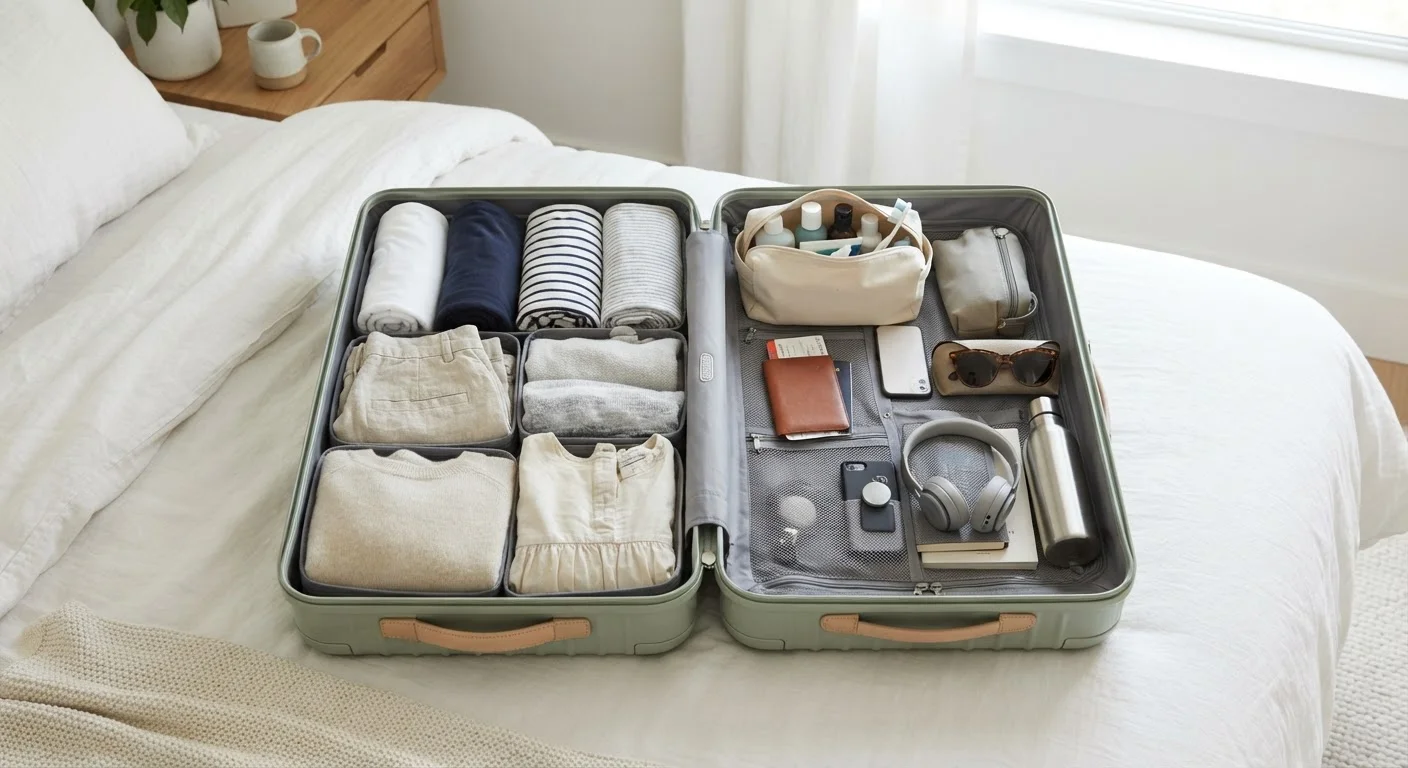
Before diving into the categories below, do one thing: lay everything out on your bed first. Seeing all items at once makes it far easier to edit down before anything goes into the bag. This single habit is explored in depth in our guide to smart packing habits every traveler eventually learns.
Clothing
Toiletries
Documents and Payment
Tech and Connectivity
What to Have Ready Before You Pack
The checklist above covers what goes in the bag. But a few minutes of preparation before you start packing will save real frustration later.
Carry-on bag or small duffel
A bag in the 35-45 liter range is typically sufficient for a 2-3 night trip and avoids checked baggage fees if flying.
Packing cubes
Compress clothing and separate categories so your bag stays organized and easy to unpack on arrival.
TSA-approved clear toiletry bag
Required for carrying liquids through airport security; keeps toiletries contained and easy to access.
Portable luggage scale
Lets you weigh your bag at home and avoid surprise overweight fees at the airport check-in counter.
Check that your toiletry containers are travel-sized (typically 3.4 oz / 100 ml or under if flying), and that any prescription medications are in their original labeled packaging. If you're flying domestically, a government-issued photo ID is sufficient - but always verify current requirements with your airline or the relevant authority before travel, as rules can change.
Don't Rely on Accommodation Amenities
While many hotels provide basics like shampoo and a hair dryer, hostels, vacation rentals, and budget properties often do not. Check your specific accommodation's listing before deciding what to leave behind. When in doubt, pack your own essentials rather than assuming they'll be available.
Once your bag is packed, run through the pre-departure checklist every first-time traveler should run through to confirm the surrounding logistics - transport to the airport, accommodation confirmation, and emergency contacts - are all handled too. For safety-specific preparation, the Before You Leave Home safety checklist is worth a quick scan before any trip.