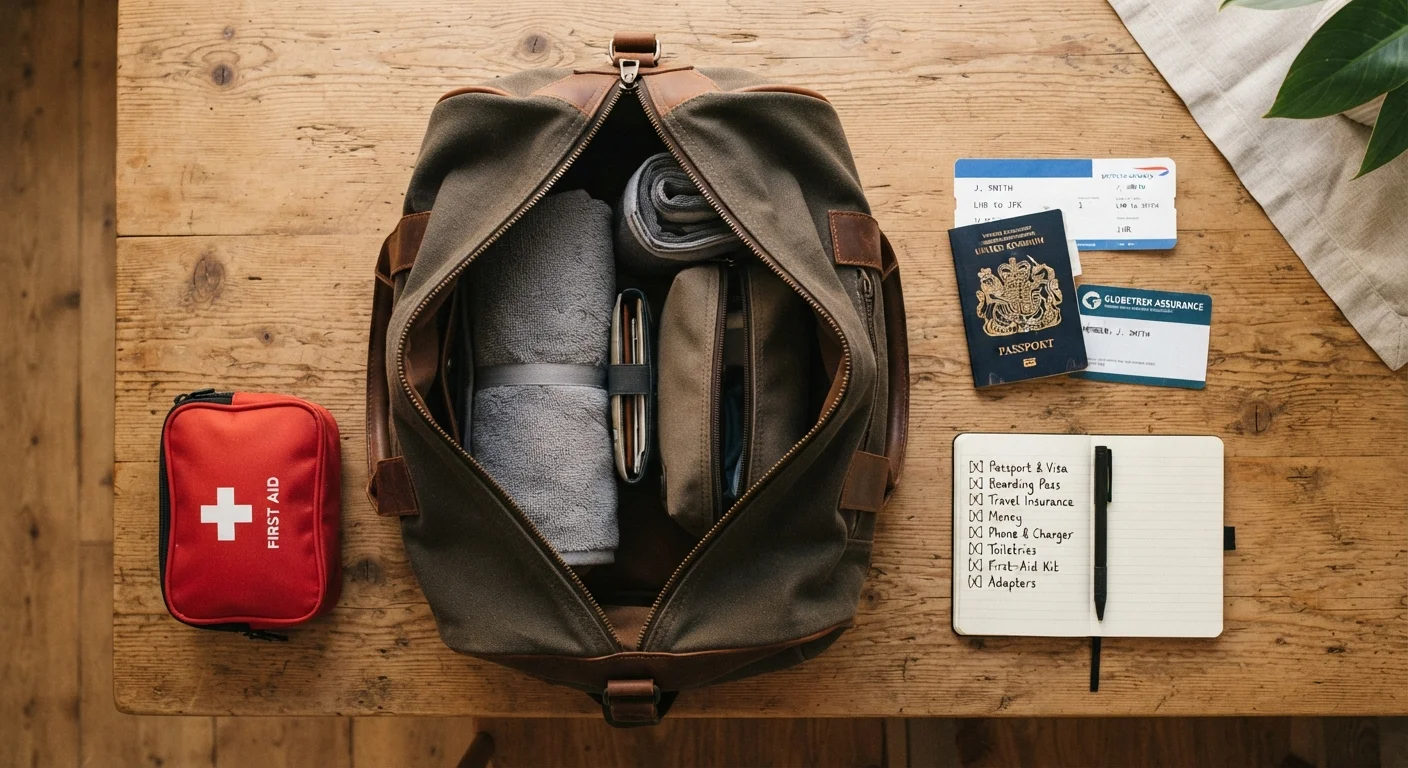
Why Pre-Trip Safety Preparation Matters
Most travel problems - lost documents, medical gaps, missed emergency contacts - are entirely preventable with a little advance planning. This checklist is designed to walk you through every safety-relevant step before you leave home, so you board your flight or hit the road feeling genuinely prepared rather than just optimistic.
Work through each group at least one week before departure where possible. Some items, like renewing a passport or scheduling a travel health consultation, can take days or weeks to resolve. Leaving them until the last minute creates unnecessary risk.
For a broader look at staying safe once you're already on the move, see our guide on practical safety habits worth building. This checklist focuses exclusively on what you do before you step out the door.
Documents and Entry Requirements
Travel Insurance
Health and Medical Preparation
Emergency Contacts and Communication
Financial Safety
Destination Awareness
Tools and Resources You'll Need
Before you start ticking items off, gather the following. Having everything in one place saves time and makes it easier to spot any gaps.
Government Travel Advisory Website
Check current safety ratings, entry requirements, and health notices for your destination from official sources.
Cloud Storage Account
Store scanned copies of your passport, insurance policy, and other critical documents so they're accessible from any device.
Travel Insurance Policy Documents
Confirm coverage details, exclusions, and the insurer's emergency contact number before departure.
Secure Password Manager
Safely store account logins and sensitive travel information you may need to access remotely.
Offline Maps Application
Download destination maps in advance so you can navigate without a mobile data connection.
For a comprehensive walkthrough of which documents to bring, how to back them up, and what to do if originals go missing, see our travel document essentials guide. If you want a complete packing reference alongside these safety steps, the international travel packing checklist covers gear, adapters, and medications too.
Don't Rely Solely on Digital Copies
Cloud access can fail if your phone is lost, stolen, or if you're in an area with poor connectivity. Always carry at least one physical photocopy of your passport and insurance details stored separately from your originals - for example, in a different bag or money belt. A combination of physical and digital backups gives you the most reliable safety net.
After the Checklist: What Comes Next
Once you've worked through all 22 items, you're in a strong position - but preparation doesn't stop at the door. The 12-24 hours before departure have their own rhythm. Our night-before departure routine walks you through that final window so nothing slips through.
When you arrive at your accommodation, run a quick safety check on your room. Our accommodation safety arrival guide covers door locks, fire exits, and other basics worth verifying at every new place you stay.
Finally, save or bookmark our reference on emergency numbers and embassy contacts before you leave. Knowing who to call in a crisis - and having that information accessible offline - is one of the most practical safety steps any traveller can take.
Verify Entry Rules with Official Sources
Visa requirements, vaccination mandates, and border policies can change with little notice. Information shared by fellow travellers, travel blogs, or even this checklist may not reflect the latest rules. Always confirm entry requirements directly with the official embassy or consulate of your destination country, and check your own government's travel advisory page, before you travel. Do not assume last trip's rules still apply.
This article provides general travel safety information and education. It is not a substitute for professional legal, medical, or financial advice. Always verify entry requirements, health recommendations, and travel advisories with official government sources and qualified professionals before travelling.