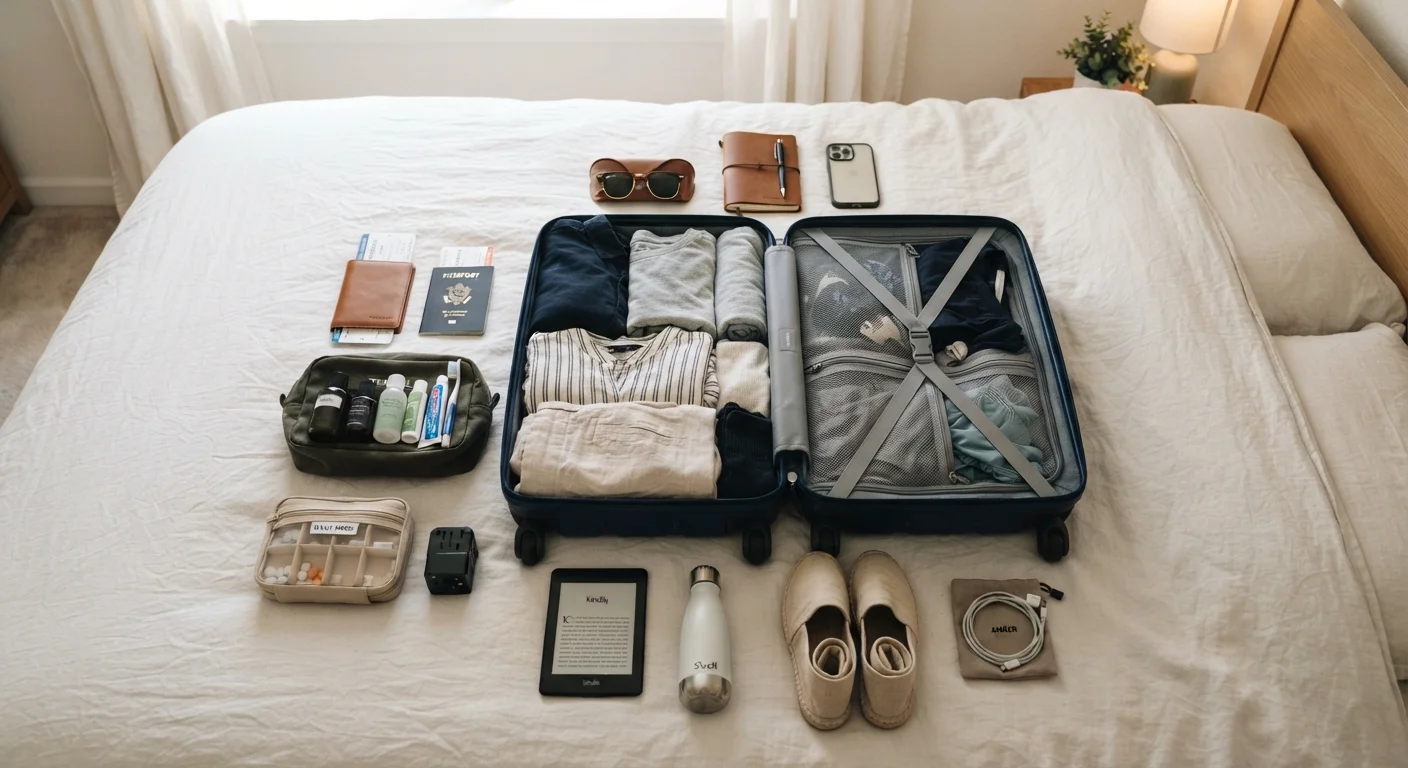
Why International Packing Requires Its Own Checklist
Packing for an international trip is meaningfully different from a domestic weekend getaway. You're crossing borders, navigating unfamiliar electrical systems, potentially dealing with language barriers, and may be far from home if something goes wrong. A forgotten item that's easy to replace locally on a road trip can become a real problem in another country.
This checklist is designed for first-time international travelers who want to arrive prepared - not just packed. It covers the essentials across five categories: documents, health and safety, clothing, electronics, and emergency preparedness. Work through it systematically, ideally starting at least a week before your departure date.
For a broader pre-trip review beyond packing, see the pre-departure checklist for first-time travelers, which covers money, insurance, and communication setup as well. And if you're still deciding how to bring your luggage, carry-on vs. checked luggage walks through the practical trade-offs.
Verify Entry Requirements Early - Not the Night Before
Visa processing times, health documentation requirements, and entry rules vary by destination and can change with little notice. Some visas require weeks or months to obtain. Always check requirements directly with the official embassy or consulate of your destination country and your home government's travel advisory page well in advance of your trip. Do not rely solely on travel forums or third-party websites for entry requirement information.
What You'll Need to Work Through This Checklist
Before you start pulling things off shelves, gather your reference materials. Having these on hand makes the process faster and reduces second-guessing.
Your destination's official government entry page
Verify current visa requirements, health entry conditions, and any travel advisories before you pack or confirm reservations.
Your home country's travel advisory page
Check current safety ratings and any alerts for your destination to inform your safety preparation.
Airline baggage policy page
Confirm carry-on dimensions, weight limits, and restricted items so your packed bags meet requirements before you get to the airport.
Luggage scale
Weigh your bags at home before departure to avoid overweight fees at check-in.
Packing cubes
Organize clothing and accessories into compartments to make repacking easier and keep your bag tidy throughout the trip.
Secure cloud storage or encrypted notes app
Store digital backups of your passport, insurance policy, and booking confirmations in a location accessible from any device.
The Full International Packing Checklist
Work through each group in order. Items marked must are non-negotiable for safe, legal international travel. Should items are strongly recommended. Nice to have items are optional enhancements worth considering depending on your destination and travel style.
For a deeper look at which documents to bring and how to back them up, the guide on travel document essentials is a useful companion read. For health considerations specific to international trips, see health risks travelers often overlook.
Travel Documents
Health and Medications
Clothing and Personal Items
Electronics and Connectivity
Safety and Emergency Preparedness
Passport Validity: The Six-Month Rule
Many countries require your passport to be valid for at least six months beyond your planned return date - even if your trip is only one week long. Travelers have been denied boarding and turned away at borders because of an expiring passport. Check your passport's expiration date now, and renew it early if there's any doubt. Passport renewal timelines can extend to several weeks or more during peak periods, so don't leave this to the last minute. See passports, visas, and entry requirements explained for a fuller overview.
Before You Zip Up: Final Verification Steps
Once everything is packed, run through these final checks before heading to the airport.
- Weigh your bag against your airline's checked and carry-on limits to avoid fees at the gate.
- Review carry-on restrictions - liquids, sharp objects, and certain electronics have specific rules. The carry-on liquid rules and restricted items reference is a plain-language guide to what's allowed.
- Confirm your emergency contacts are written down, not just saved in your phone. Phones get lost, stolen, or run out of battery. Keep a note with your embassy's number, your travel insurer's claims line, and a trusted home contact. The article on who to call when things go wrong abroad is worth bookmarking.
- Store one copy of your passport photo page separately from your actual passport - in your checked bag, email, or a secure cloud folder.
For safety items that experienced travelers often wish they'd brought, packing for safety covers the non-obvious additions worth considering.
This article provides general travel preparation guidance only. Entry requirements, health recommendations, and airline rules change frequently - always verify current requirements with official government sources, your airline, and a qualified health professional before traveling.