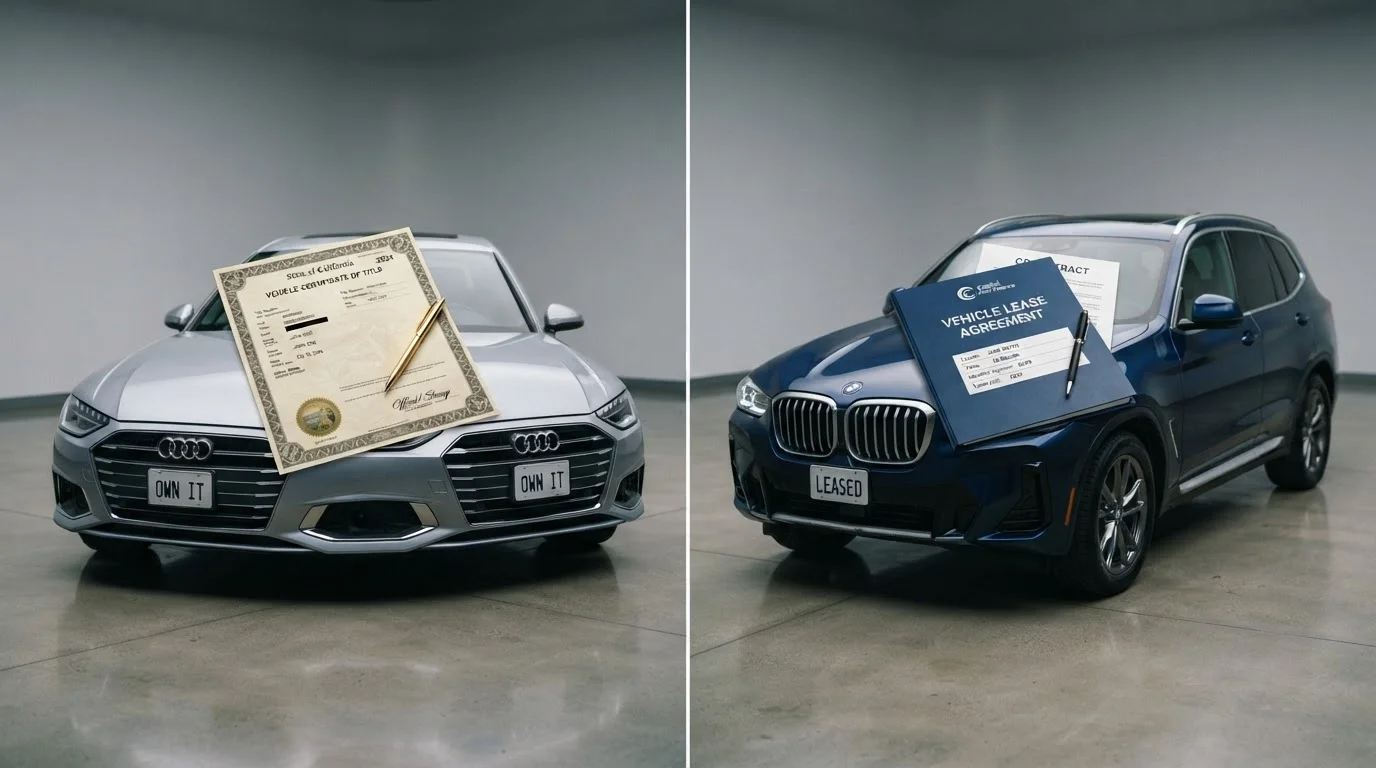
What Buying Actually Means
When you buy a car, you acquire ownership of it - either by paying the full purchase price upfront in cash, or by taking out an auto loan that you repay over time. With a loan, the lender holds a financial interest in the vehicle until you've made all your payments, at which point the title transfers fully to you.
Ownership comes with significant freedom. You can drive as many miles as you want, modify the vehicle however you like, and sell or trade it in at any time. You're also responsible for all maintenance and repair costs, including those that arise after any warranty expires.
One key advantage: every loan payment builds equity - your financial stake in the car. Once the loan is paid off, you have an asset with resale value. To understand the different ways you might finance a purchase, see our guide on dealer finance vs. bank loans.
What Leasing Actually Means
Leasing is more like a long-term rental. You pay a monthly fee to use a vehicle for a set period - typically two to four years - and then return it to the leasing company at the end of the term. You never own the car.
Lease payments are calculated differently from loan payments. Rather than financing the vehicle's full value, you're paying for its depreciation (the drop in value that occurs during your lease period), plus interest and fees. Because you're only paying for a portion of the car's value, monthly payments are often lower than comparable loan payments.
However, leases include restrictions that ownership does not. Most leases set an annual mileage cap - commonly between 10,000 and 15,000 miles - and charge a per-mile fee if you exceed it. You're also expected to return the car in good condition; excessive wear and tear can trigger additional charges.
Understand All Lease Fees Before Signing
Lease agreements can include charges that aren't obvious upfront - acquisition fees, disposition fees when you return the car, excess mileage penalties, and wear-and-tear assessments. Read the full contract carefully and ask the leasing company to explain every fee line by line before you commit.
How the Two Arrangements Compare
The table below lays out the core differences across several practical dimensions. Use it to see at a glance how each arrangement behaves over time.
| Buying | Leasing | |
|---|---|---|
| Ownership | You own the car (or will after loan payoff) | Leasing company retains ownership |
| Monthly payments | Higher - financing full vehicle value | Lower - financing depreciation only |
| Mileage limits | No limits | Annual cap, usually 10,000-15,000 miles |
| Equity built | Yes - grows with each payment | None - payments cover usage only |
| Modifications allowed | Yes, unrestricted | Generally not permitted |
| End of term | You own the car outright | Return the car or negotiate a new lease |
| Early exit | Sell or trade in at any time | Early termination fees typically apply |
For a broader look at how borrowing tools work - which is relevant if you're financing either option - the comparison of personal loans vs. credit cards offers useful background on how different credit products function.
Factors to Think Through Before You Decide
There's no single right answer - the better arrangement depends on your specific situation. Here are the questions worth asking yourself:
- How many miles do you drive annually? If you regularly exceed 15,000 miles per year, leasing can become expensive quickly once overage fees apply.
- How long do you plan to keep the car? Buying becomes more cost-efficient the longer you hold onto the vehicle, because loan payments eventually end while a lease simply rolls into another agreement.
- Do you want to customize the vehicle? Leased cars must generally be returned in stock condition. Buying gives you full latitude.
- What's your monthly budget? Lower lease payments can free up cash in the short term, but you have nothing to show for those payments at the end of the lease.
Once you have a clearer sense of your priorities, you can move into the broader process of selecting and securing a vehicle. Our full walkthrough of the car-buying process covers every stage from budgeting to driving away.
Think About Your Two-Year and Five-Year Plans
Consider where you'll likely be in two to five years - a different city, a growing family, a change in commute. If your needs are likely to change significantly, leasing's built-in turnover cycle can be an advantage. If you expect stability and want to eventually eliminate a monthly car payment altogether, buying and holding tends to work in your favor over time.
This article provides general educational information about car buying and leasing arrangements. It is not financial or legal advice. Consult a qualified financial adviser for guidance specific to your personal situation.