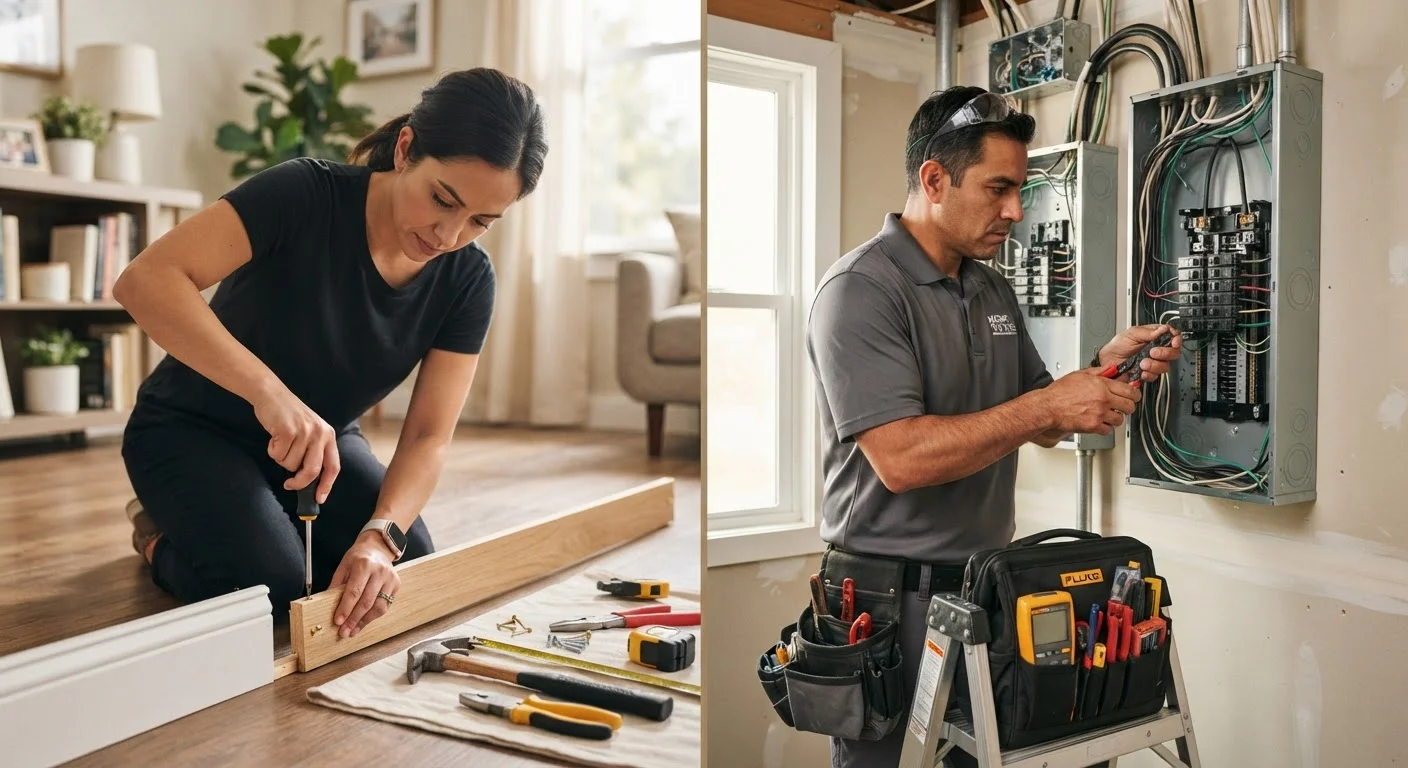
Why the DIY vs. Pro Decision Matters More Than You Think
For first-time homeowners, every repair or upgrade triggers the same question: can I handle this myself? The instinct to save money is understandable, but the real cost of the wrong answer - an unsafe repair, a failed inspection, or voided homeowner's insurance - can far exceed what a professional would have charged.
This isn't about whether you're handy. It's about applying a clear framework to each task before you pick up a tool or dial a contractor. As a starting point, our guide for first-time homeowners covers the broader landscape of home improvement and helps you set realistic expectations from the beginning.
| Criterion | DIY | Hire a Professional |
|---|---|---|
| Typical cost | Lower upfront (materials only) | Higher upfront (labor + materials) |
| Safety risk | Low for simple tasks | Managed by licensed expertise |
| Permit handling | Your responsibility to check | Pro typically manages permits |
| Time investment | Higher - includes learning curve | Lower for homeowner |
| Code compliance | Risk of errors if unfamiliar | Expected as part of the job |
| Skill required | Varies; low for basic tasks | Professional-grade expertise |
| Best suited for | Cosmetic, low-risk maintenance | Electrical, gas, structural, plumbing |
The Four Questions to Ask Before Every Project
Run any home improvement task through these four filters before committing to either path:
- Is there a safety risk? Work involving electricity beyond simple fixture swaps, natural gas, load-bearing walls, roofing, or main plumbing lines carries injury and fire risk significant enough to warrant a licensed professional - no exceptions.
- Does it require a permit? Many municipalities require permits for structural changes, HVAC work, and electrical upgrades. Unpermitted work can complicate home sales and void insurance claims. Check with your local building department before starting.
- Do I have the skills and tools? Be honest. Watching a tutorial is not the same as having practiced experience. If a mistake would be expensive or dangerous to correct, that's a strong signal to hire out.
- What does failure actually cost? A botched paint job is inconvenient. A botched pipe repair behind a wall can cause thousands in water damage. Weight the downside before weighing the savings.
~33%
DIY projects that result in an injury
The Consumer Product Safety Commission estimates roughly one in three DIY home improvement attempts leads to some form of injury, most often from falls or tool misuse.
Up to 10%
Home value impact of unpermitted work
Real estate professionals commonly note that unpermitted additions or repairs can reduce a home's appraised value or complicate a sale, sometimes significantly.
Tasks That Typically Belong in the DIY Column
Many everyday maintenance tasks are well within reach for a beginner who's willing to research and take their time. Common examples include:
- Painting interior walls and ceilings
- Patching small drywall holes
- Replacing cabinet hardware, outlet covers, or light switch plates
- Caulking around tubs, sinks, and windows
- Installing weatherstripping and door sweeps
- Basic landscaping and garden bed preparation
These jobs share a few traits: they're low-stakes, well-documented, require modest tools, and have forgiving learning curves. Our guide to essential hand tools covers exactly what you'll need to tackle repairs like these safely and effectively.
It's also worth knowing which home improvement myths might be nudging you toward DIY on work that genuinely needs a professional - overconfidence in DIY electrical work being a common one.
When DIY and Professional Work Overlap
Some projects fall in a middle ground - for example, you might handle demo and painting while a licensed plumber handles the fixture rough-in. Breaking a project into phases this way can reduce cost without cutting corners on the parts that require expertise. Always confirm with your contractor which portions you can legally and safely take on yourself before splitting the work.
When to Put the Tool Belt Down and Call a Pro
Certain categories of work should almost always go to a licensed contractor, regardless of how confident you feel:
- Electrical work: Panel upgrades, new circuit installation, or anything beyond replacing a like-for-like fixture typically requires a licensed electrician and a permit.
- Gas lines: Never attempt to modify, extend, or repair gas supply lines yourself. This is universally considered professional-only work.
- Structural changes: Removing or modifying walls - especially load-bearing ones - requires engineering knowledge and inspections.
- Main plumbing: Work that connects to your home's main water supply or sewer line carries real risk of flooding or contamination.
- Roofing: Beyond clearing minor debris, roof repairs involve fall risk and require skills that take time to develop safely.
A good rule of thumb: if the task could injure someone, displace a family, or lead to a code violation that affects your home's resale value, it belongs with a professional. Keep a seasonal maintenance checklist handy so these larger issues get flagged early - before they become emergencies.