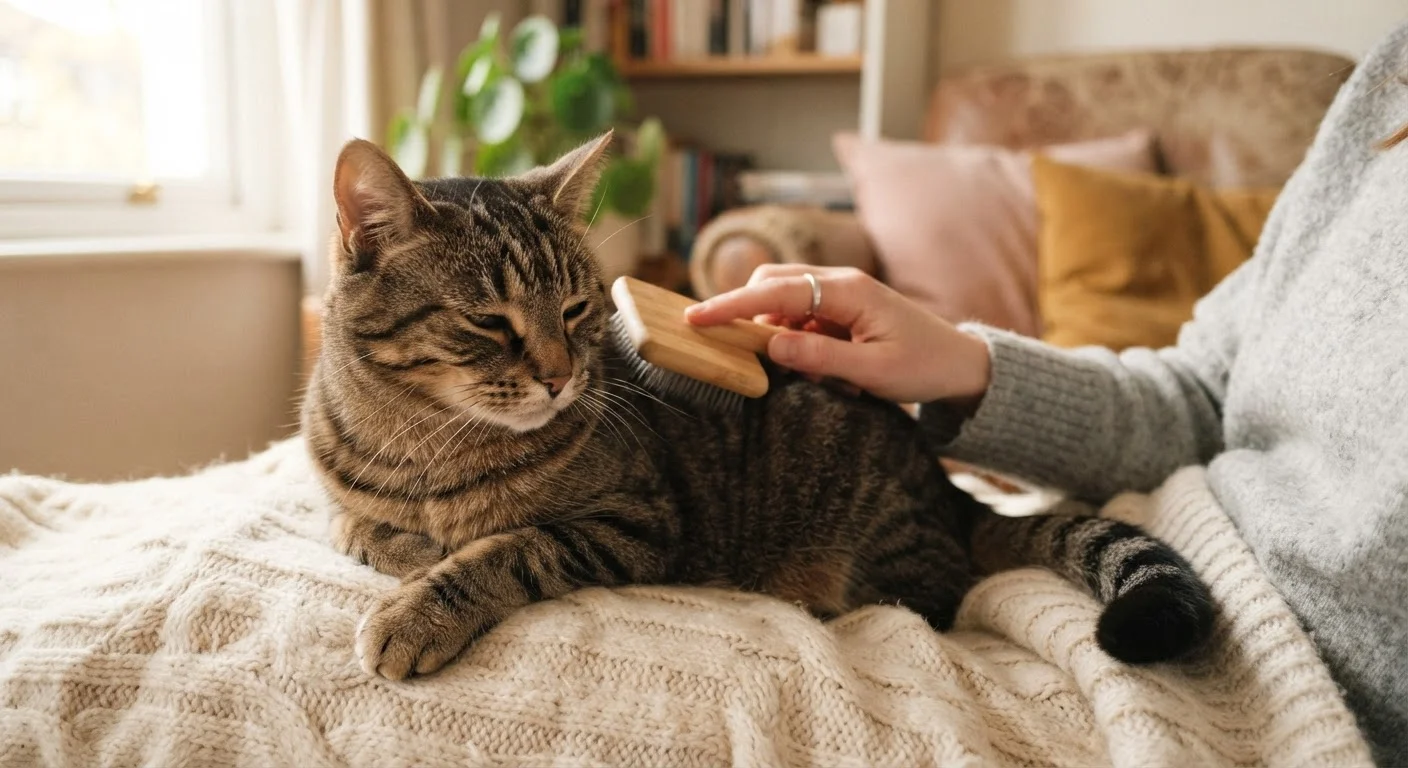
Why Grooming Matters - Even for Self-Cleaning Cats
Cats groom themselves constantly, but that doesn't mean they handle everything on their own. Regular handling by you - brushing, nail trims, and ear checks - serves several purposes beyond cleanliness. It helps reduce hairballs, catches skin or coat changes early, and keeps your cat comfortable in their own body. It also makes veterinary handling far less stressful over a cat's lifetime.
Understanding your cat's signals during grooming is half the battle. Learning to read feline body language - a flicking tail, flattened ears, or a suddenly tense posture - tells you when to pause before a small protest turns into a scratch. Grooming is also part of a broader picture of feline health; for a full overview, see this comprehensive guide to feline health care.
What you will need
What You'll Need Before You Start
Gathering the right tools in advance means you won't need to leave mid-session to rummage through a drawer - movement and delay can unsettle a cat that was just starting to relax.
Slicker brush or grooming mitt
Removes loose fur, distributes natural oils, and detangles minor knots in the coat.
Fine-toothed comb
Reaches deeper into long or dense coats to catch tangles the brush may miss.
Cat nail clippers
Trims nail tips cleanly without splintering - scissor-style or guillotine-style both work.
Styptic powder
Stops minor bleeding quickly if a nail is accidentally cut too short.
Cotton balls
Used to gently wipe the outer ear canal during routine ear checks.
High-value treats
Rewards calm behavior during grooming to build a positive association over time.
Step-by-Step: Brushing, Nail Trims, and Ear Checks
Work through grooming tasks in the order below. Each builds on the previous one - if your cat tolerates brushing well, they're more likely to stay calm for nail trims. Never rush to complete all three in a single session, especially with a new or anxious cat.
Choose the right moment
Pick a time when your cat is already calm - after eating, after a play session, or during a usual nap period. Place your cat on a stable, non-slip surface at a comfortable height for you. Offer a treat and let them sniff your tools before you begin.
Brush the coat
Start at the neck and work toward the tail, brushing in the direction of hair growth. Use gentle, short strokes. For short-haired cats, aim for two to three sessions per week. Long-haired cats benefit from daily brushing to prevent mats. Pay attention to behind the ears, under the chin, and around the collar area - spots cats enjoy and that build positive associations with the brush.
Avoid brushing against the grain on sensitive areas like the belly unless your cat clearly invites it. If you hit a small tangle, hold the hair above the mat with your fingers to reduce pulling before working through it.
Trim the nails
Gently press one paw pad between your thumb and forefinger to extend the nail. You'll see a clear or white outer shell and, inside it, a pink area called the quick - the living tissue containing blood vessels. Clip only the curved tip, staying at least 2 mm from the quick.
Work on one paw per session if your cat is new to this. Most cats need a trim every two to three weeks. If your cat pulls the paw away, release it without gripping harder, offer a treat, and try again after a brief pause.
Check the ears
Gently fold back one ear flap and look inside. A healthy ear is pale pink, clean, and odor-free. Use a dry cotton ball to wipe only the outer visible portion of the ear - never insert anything into the ear canal.
You're looking for: excessive dark wax, a coffee-ground-like residue (which may suggest ear mites), redness, swelling, or an unpleasant smell. If you notice any of these, contact your vet rather than attempting home treatment.
End on a positive note
Always finish a grooming session before your cat shows signs of real stress, even if you haven't completed everything on your list. Offer a treat, some calm praise, or a few minutes of their favorite play. Ending positively is what trains your cat to associate grooming with something good - not something to dread.
Over several weeks of consistent, short sessions, most cats become noticeably more tolerant, and many begin to seek out the attention.
Build the Habit Gradually
New cat owners often try to complete a full grooming routine in one sitting and end up with a stressed cat and scratched hands. Instead, spend the first two weeks just touching your cat's paws, ears, and face during normal cuddle time - no tools involved. This desensitization makes formal grooming sessions far smoother when you introduce them.
Troubleshooting Common Grooming Challenges
Even with the best preparation, some cats resist grooming consistently. Here's how to work through the most common sticking points:
- Cat won't sit still: Try grooming when your cat is naturally drowsy - after a meal or a play session. Keep the first few sessions under two minutes.
- Hissing or swatting: This is a clear stop signal. End the session calmly, don't punish the reaction, and try again later with an even shorter goal. Over time, most cats habituate.
- Mats in long-haired coats: Never pull or cut through a mat with scissors - the skin underneath is easily nicked. Work a small amount of detangling powder or cornstarch into the mat and tease it apart gently with fingers or a mat splitter. Severe mats should be handled by a groomer or vet.
- Overgrown nails: If you've let trims slide and the nails have curved into the paw pad, don't attempt to cut them yourself. Contact your vet.
Know When to Call the Vet
Grooming is a good time to spot changes, but it isn't a substitute for professional assessment. If you notice persistent head shaking, pawing at ears, a strong odor, sudden changes in coat condition, or any signs of pain during handling, contact your vet. These can be early indicators of infections, parasites, or other conditions that need proper diagnosis. See what to expect at your first vet visit if you haven't yet established care.
For dogs in the household, this guide on home grooming frequency and technique covers comparable ground from a canine perspective.