Why Cat Body Language Matters
New cat owners often interpret feline behaviour through a human or even canine lens - and that mismatch leads to confusion. A wagging tail in a dog signals excitement; the same motion in a cat can mean irritation. Cats communicate constantly through physical signals, and missing those cues can lead to accidental scratches, a stressed cat, or a strained relationship.
The good news: once you know what to look for, reading your cat becomes far more intuitive. You don't need any special training - just a basic framework for what each part of the body is doing. For a deeper dive into specific behaviours like kneading or slow blinking, see our guide to everyday feline behaviours.
16+
Distinct ear positions cats can produce
Veterinary behaviour researchers note cats have more than a dozen independently movable ear positions, giving them a finely grained emotional signalling system.
~45%
Of cat bites linked to missed warning signals
Animal behaviour studies suggest a substantial proportion of cat bites occur when owners miss or misread body language cues indicating overstimulation or stress.
Reading the Tail
The tail is often the easiest place to start. Here's what different positions generally mean:
- Tail held high, slightly curved at the tip: A confident, happy cat approaching in a friendly mood.
- Tail puffed out like a bottlebrush: Fear or extreme agitation - the cat is trying to appear larger.
- Tail low or tucked under the body: Anxiety, submission, or discomfort.
- Tail lashing or flicking rapidly: Irritation or overstimulation. Stop petting and give the cat space.
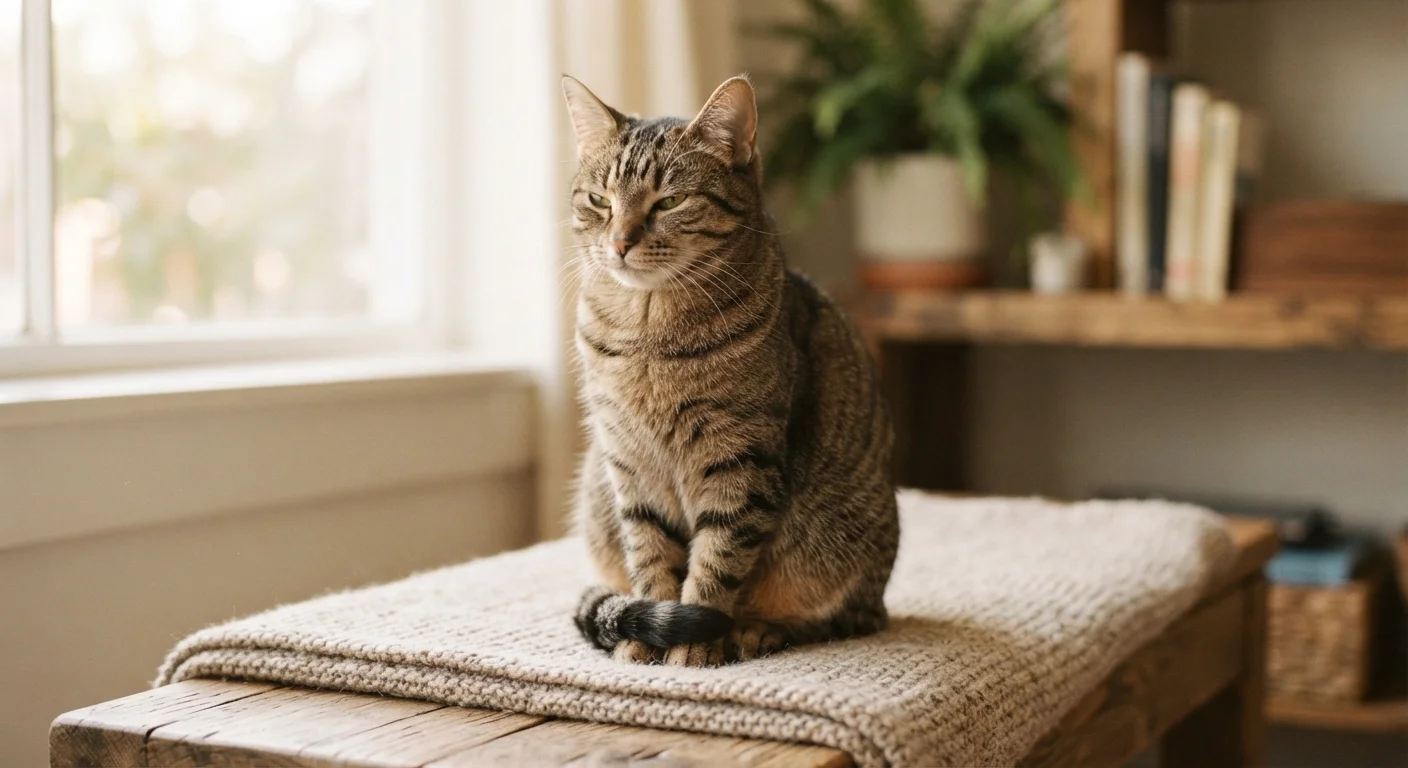
- Tail wrapped around the body while sitting: Contentment and calm.
Always pair what the tail tells you with what the rest of the body is doing - context matters.
Watch the Whole Body, Not Just One Signal
No single signal tells the full story. A puffed tail with forward ears and a play-crouch probably means your cat is in hunting mode during play - not genuinely afraid. A puffed tail with flattened ears and a hissing mouth is a different situation entirely. Build the habit of scanning head to tail every time you interact.
Ears, Eyes, and Whiskers
These three areas together give you a reliable snapshot of your cat's emotional state:
Ears
- Forward-pointing ears: Alert, curious, or relaxed.
- Ears rotated sideways (like airplane wings): Uncertain or mildly annoyed.
- Flat ears pinned back: Fear or aggression - back off and give the cat room.
Eyes
- Slow blink: Often described as a feline "I trust you." You can try slowly blinking back.
- Dilated pupils in normal light: Excitement, fear, or play mode - check the rest of the body to tell which.
- Constricted pupils with a hard stare: Tension or a potential warning sign.
Whiskers
- Relaxed and fanned out to the sides: Calm and comfortable.
- Pulled tight against the face: Fear or defensiveness.
- Pushed forward: High curiosity or engagement.
Posture and Overall Body Position
A cat's whole body posture rounds out the picture:
- Loose, relaxed muscles with a comfortable sit or loaf position: Content and at ease.
- Crouched low with weight shifted back: Fear - the cat is preparing to flee or defend itself.
- Arched back with fur raised: Classic fear or aggression display, often combined with a puffed tail.
- Rolling over to expose the belly: A sign of trust, but not necessarily an invitation for belly rubs - many cats find that overstimulating.
- Rubbing head or cheeks against you: Affectionate marking behaviour; the cat is comfortable and claiming you as safe.
One important note: body language that looks like stress - hiding, hunching, or a persistently tucked tail - can sometimes signal pain or illness rather than emotion. If these signals persist without an obvious cause, review our article on signs your cat may be unwell to know when a vet visit is warranted.
Putting It All Together
Reading body language gets easier with practice. Rather than analyzing one signal at a time, train yourself to glance across the whole cat - tail, ears, eyes, posture - and form a quick overall impression. A cat with ears forward, tail up, soft eyes, and a relaxed body is almost certainly in a good mood. A cat with flattened ears, dilated pupils, and a low crouch is telling you it's frightened.
If you're also navigating grooming sessions with a reluctant cat, understanding its stress signals first will make the process smoother - see grooming your cat without the drama for techniques that work with, not against, your cat's comfort level.
“Cats are not small dogs. Their communication style is more nuanced and often more subtle - owners who take time to learn those signals are far better equipped to meet their cat's needs.”
— American Association of Feline Practitioners, Veterinary professional organization focused on feline health standards
It's also worth noting that cats vary individually. A rescue cat with an unknown history may display more guarded body language at first, while a cat raised with confident handling may be far more expressive. Get to know your cat's baseline - what relaxed looks like for this cat - and changes from that baseline become much easier to spot.