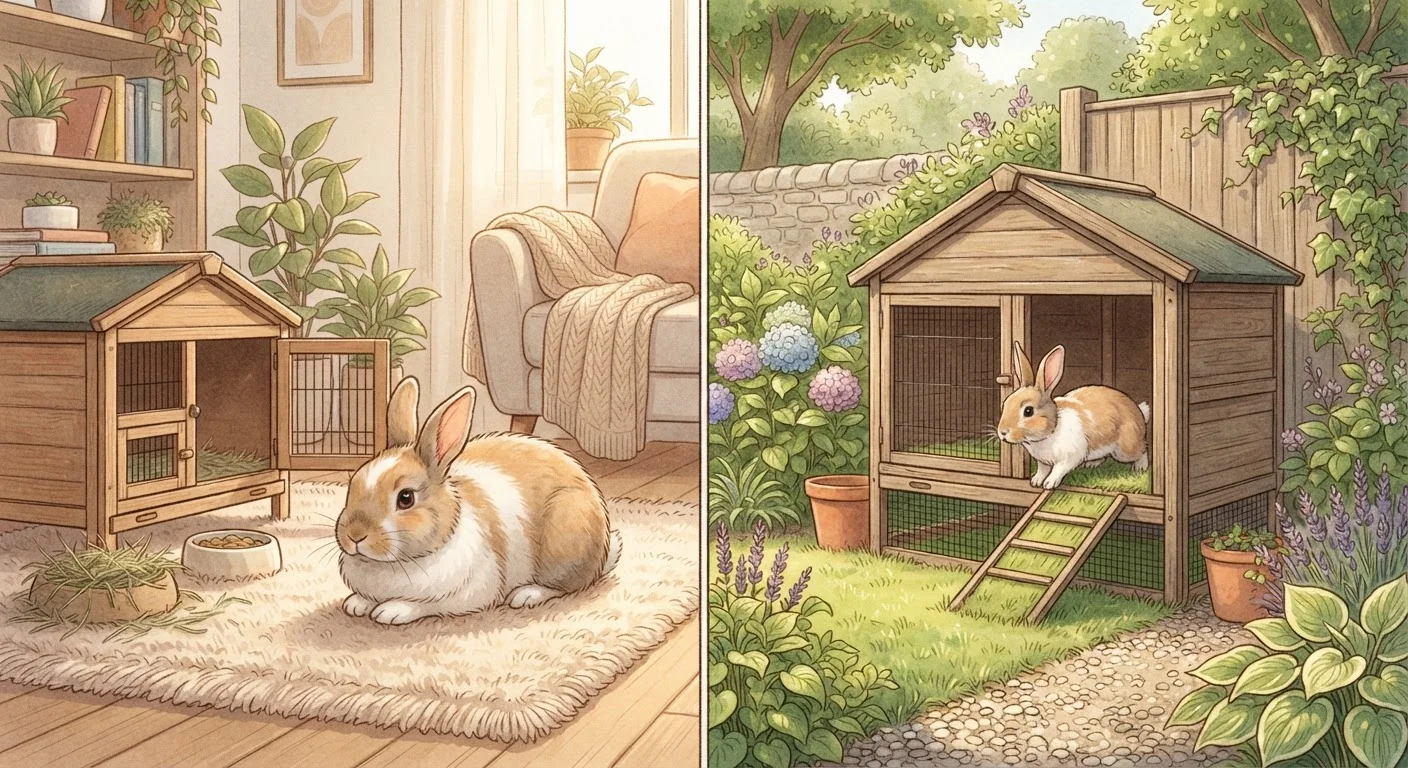
Why the Indoor vs. Outdoor Decision Matters
Rabbits are the third most popular small pet in the United States, yet they're also among the most commonly rehomed - often because owners underestimated how much their living environment shapes the rabbit's health and behavior. Whether you keep your rabbit indoors or outdoors affects everything from temperature regulation and predator exposure to how much social time the animal receives each day.
This isn't a matter of one approach being right and the other wrong. It's about understanding the real trade-offs and matching your setup to what you can realistically provide. If you're still deciding whether a rabbit is the right pet for your lifestyle at all, comparing small pet options is a useful starting point before committing.
The Case for Indoor Rabbit Keeping
Keeping a rabbit inside your home has become the recommended approach by many rabbit welfare organizations in recent years, and the reasons are grounded in safety and social biology.
Protected from predators and fatal fright stress
Rabbits can die from cardiac shock caused by the presence of a predator, even without direct contact. Indoor environments remove this risk almost entirely.
Easier temperature regulation year-round
Indoors, rabbits are shielded from dangerous heat spikes and drafts, both of which are serious health hazards for the species.
More frequent, natural social interaction
Rabbits housed in the home are exposed to human activity throughout the day, reducing isolation and supporting behavioral health.
Health changes are easier to spot early
Owners sharing living space with a rabbit are more likely to notice subtle changes in appetite, movement, or droppings - all key early indicators of illness.
Indoor rabbits are naturally sheltered from the two biggest environmental threats: predators and temperature extremes. Rabbits are prey animals and can experience fatal cardiac stress simply from a predator's presence nearby - even if no physical contact occurs. Indoors, that risk is almost eliminated. Temperature is equally important; rabbits can suffer heatstroke at temperatures above roughly 80°F and are also vulnerable to drafts and dampness.
Social contact is another significant benefit. Rabbits housed indoors become part of the household's daily rhythm, which means they receive more frequent, low-effort interaction. This matters because rabbits are social animals that can develop behavioral problems - including overgrooming and aggression - when isolated. For a deeper look at building that daily routine, see how a rabbit's daily schedule supports its wellbeing.
The Case for Outdoor Rabbit Keeping
Outdoor keeping has a long tradition, and when done carefully, it can give rabbits access to space and natural stimuli that a typical indoor setup struggles to match.
Predator and fright risk is significantly higher
Outdoor rabbits are exposed to foxes, raccoons, dogs, and birds of prey, and even the scent or sound of a predator near the hutch can cause fatal stress.
Temperature management requires constant vigilance
Summer heat and winter cold both pose serious risks; maintaining a safe temperature range outdoors demands infrastructure, monitoring, and daily adjustment.
Most commercial hutches are too small
The standard hutches sold in pet stores typically fall well below the space minimums recommended by rabbit welfare organizations, yet are marketed as complete solutions.
Illness is harder to detect when rabbits are outside
Reduced daily contact means subtle signs of pain or disease - which rabbits are instinctively inclined to hide - are more likely to go unnoticed until the condition is advanced.
A well-designed outdoor enclosure - secure against foxes, raccoons, and domestic dogs, weatherproofed for rain and cold, shaded against direct sun - can offer rabbits room to run, dig, and graze on fresh grass. These are behaviors rooted in the species' natural history and can support physical and psychological health when the environment supports them safely.
However, "well-designed" is doing significant work in that sentence. Many commercial hutches sold for outdoor use are far too small and poorly insulated to be appropriate long-term homes. The minimum space recommended by rabbit welfare groups is considerably larger than the typical hutch on the market. If you're building or purchasing an outdoor setup, what makes an enclosure safe and stimulating is essential reading before you invest.
Outdoor Water Sources Freeze in Winter
Water bottles and bowls left outside can freeze solid overnight in cold climates, leaving your rabbit without water for hours. Outdoor owners in colder regions need heated water bottles or must check and replace water at least twice daily during freezing weather. Dehydration in rabbits develops quickly and can become a medical emergency.
Outdoor keeping also places a higher daily burden on the owner: hutches require cleaning in all weather, water bottles freeze in winter, and monitoring for illness is harder when the rabbit isn't in the same living space.
Practical Factors That Should Influence Your Choice
Beyond the general pros and cons, your specific circumstances should guide the decision.
80°F
Heat danger threshold for rabbits
Rabbit welfare organizations and veterinary sources consistently cite temperatures above roughly 80°F as a heatstroke risk for domestic rabbits.
3rd
Most popular small pet in the US
Rabbits are frequently cited as the third most common small companion animal in American households, after dogs and cats.
- Climate: If summer temperatures in your area routinely exceed 80°F, outdoor keeping carries serious heat risk without significant investment in shade, ventilation, and cooling. Cold climates are more manageable for rabbits if the hutch is properly insulated and draft-free, but frozen water sources require daily attention.
- Housing type: Apartment or condo dwellers will almost always default to indoor keeping, but it's worth checking whether your lease permits rabbits. keeping small pets in rented homes covers what to check before bringing any small animal into a rental.
- Other animals: Dogs and cats in the household don't automatically rule out indoor rabbit keeping, but careful, slow introductions and secure separate spaces are essential. Outdoors, domestic pets can be a predator risk even through wire mesh.
- Your schedule: Indoor rabbits benefit from being free-roamed or given supervised exercise time daily. Outdoor rabbits need their environment checked morning and evening. Neither setup is low-maintenance.
A Hybrid Approach: The Best of Both?
Many experienced rabbit owners land on a hybrid arrangement: the rabbit lives indoors but has access to a secure outdoor run during mild weather. This provides natural enrichment and space without exposing the rabbit to the full risks of permanent outdoor housing.
If you pursue this approach, the outdoor run still needs to be fully predator-proof - including a solid or wire floor to prevent digging out and predators digging in - and the rabbit should never be left unsupervised in an outdoor space. Transition times between environments should avoid temperature extremes.
Whatever setup you choose, remember that environment is only one part of rabbit welfare. Diet, enrichment, companionship, and regular veterinary care are equally important and apply equally to indoor and outdoor rabbits.
This article provides general educational information about rabbit care and is not a substitute for advice from a qualified veterinarian familiar with your specific animal.