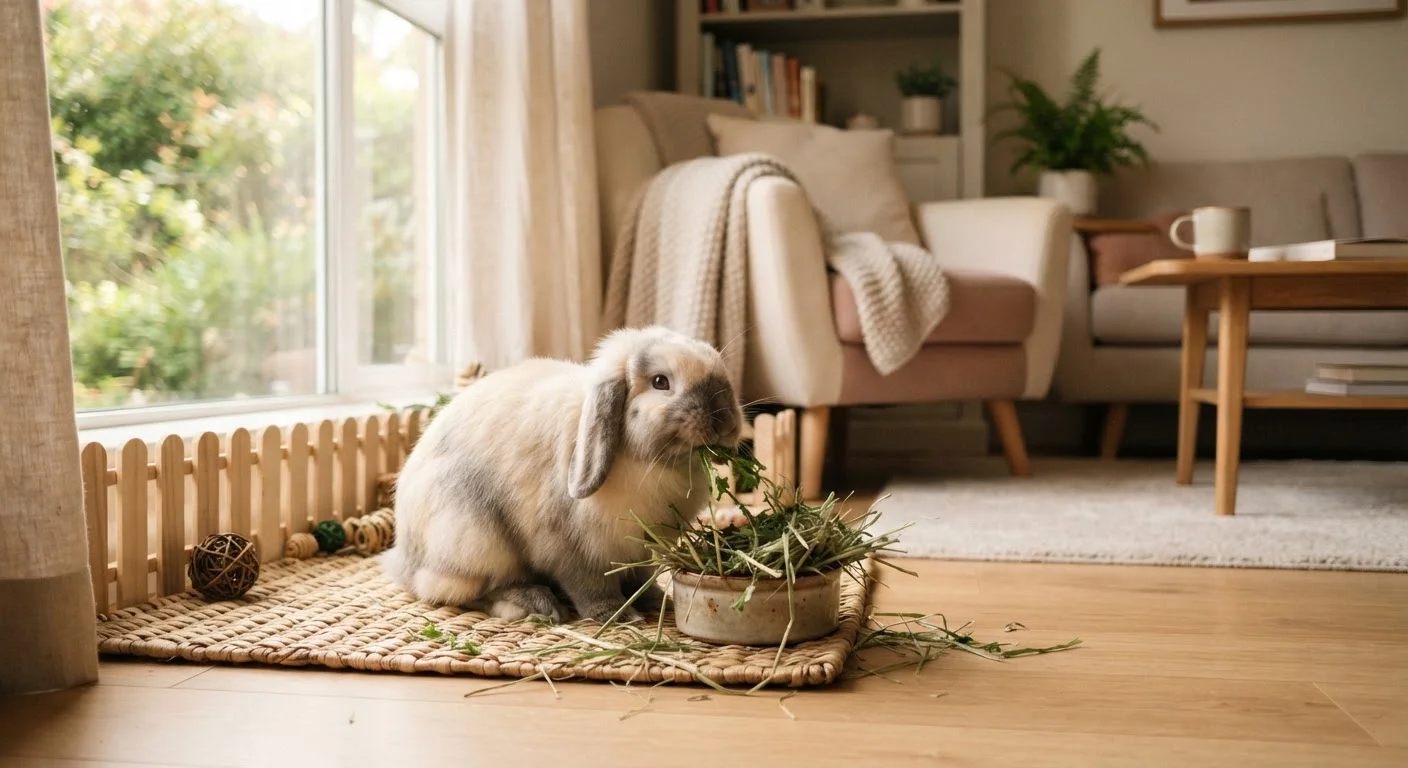
Why Rabbits Need a Structured Daily Routine
Rabbits are creatures of habit. Their digestive system - one of the most sensitive among common pets - depends on a steady, predictable rhythm of eating, moving, and resting. Skip a feeding window or disrupt their usual schedule, and you can trigger stress or gut slowdown (called GI stasis, a potentially life-threatening condition where the digestive tract stops moving properly).
New rabbit owners are sometimes surprised to discover how demanding a rabbit's daily needs are compared to what they expected. If you're still weighing whether a rabbit is the right fit, our small pet comparison guide can help you think it through.
The good news: once you establish a routine, rabbits thrive on it - and you'll notice a calmer, healthier, and more engaged animal almost immediately.
Feeding: What Goes in the Bowl (and What Doesn't)
A rabbit's diet is straightforward once you understand the proportions:
- Hay (~80% of daily intake): Timothy hay is the standard choice for adult rabbits. It provides the fiber needed to keep digestion moving and naturally wears down teeth. Hay should be available around the clock - never let it run out.
- Fresh leafy greens (~15%): Offer a handful of washed greens daily. Romaine lettuce, cilantro, and leafy herbs are generally well-tolerated. Avoid iceberg lettuce (low nutrition, high water content) and anything from the onion family.
- Pellets (~5%): Plain, high-fiber pellets in measured amounts (roughly one-quarter cup per five pounds of body weight is a common starting point, but confirm the amount with your vet). Pellets are a supplement, not a staple.
- Fresh water: Always available. A heavy ceramic bowl is easier to clean and harder for a rabbit to tip than a bottle.
Feed greens in the morning and again in the evening to align with your rabbit's natural activity peaks. If you notice any change in eating habits or droppings, treat it seriously - see our guide to small pet health warning signs for what to watch for.
Introduce New Foods Slowly
When adding a new leafy green to your rabbit's diet, offer a small amount on its own for two to three days before mixing it with other greens. This makes it easier to spot any digestive reaction. Loose stools after introducing a new food are a signal to pull it from the menu and try again later or skip it entirely.
Exercise: Room to Run Is Non-Negotiable
Rabbits are not sedentary animals. In the wild they cover significant ground each day, and that instinct doesn't disappear in a domestic setting. A rabbit kept in a small enclosure without daily exercise time is at risk of obesity, muscle weakness, and behavioral problems like aggression or excessive chewing.
Aim for a minimum of three to four hours of free-roaming time per day, ideally split across morning and evening when rabbits are naturally most active. This can be in a rabbit-proofed room or a secure exercise pen - the key is enough open space to do full binkies (spontaneous jumps and twists that signal a happy rabbit) and sprint short distances.
Provide at least three to four hours of free-roaming time outside the enclosure every day.
Rabbits need sustained movement to maintain healthy muscle tone, prevent obesity, and reduce stress-related behaviors. Confined rabbits frequently develop physical and behavioral problems that are largely preventable with adequate exercise.
Rabbit-proof the exercise area before each free-roam session.
Rabbits chew constantly, and exposed electrical cords, toxic houseplants, and small gaps behind furniture are genuine hazards. A quick walk-through before opening the enclosure prevents accidents.
Incorporate enrichment items that encourage natural digging, chewing, and foraging behaviors.
Mental stimulation is as important as physical movement. Boredom in rabbits often surfaces as destructive chewing or repetitive behaviors, both of which signal an understimulated animal.
Keep exercise sessions consistent in timing from day to day.
Rabbits internalize schedules and can become anxious or restless when routines shift unexpectedly. Consistent timing reinforces trust and helps your rabbit feel secure.
For guidance on building a safe space for exercise and rest, see our article on setting up a rabbit enclosure.
Social Time and Mental Stimulation
Rabbits are social animals. Left alone without interaction, they can become withdrawn, anxious, or destructive. Daily bonding time - sitting quietly on the floor while your rabbit explores around you, offering gentle petting, or simply being present - goes a long way toward building trust.
If you have a single rabbit, human interaction is especially important. Many rabbit owners eventually adopt a second rabbit as a companion (after proper bonding steps with a vet or experienced rescue). A bonded pair will groom each other, play together, and generally experience less stress.
Mental stimulation matters too. Rotate simple enrichment items - cardboard tunnels, willow balls, paper bags to dig through - to keep your rabbit curious and engaged during exercise time.
A rabbit's daily social needs look quite different from a dog's - if you're curious how care schedules compare across species, our dog daily care overview offers a useful contrast.
Daily Enclosure Maintenance
A clean enclosure is a health requirement, not just a preference. Rabbits are fastidious animals, and a dirty litter box or wet bedding can cause respiratory irritation, skin problems, and increased stress.
- Daily: Remove soiled litter, refresh hay in the hay rack, rinse and refill the water bowl, and wipe down any visibly wet areas.
- Weekly: Full litter change, enclosure wipe-down with a rabbit-safe cleaner, and a check for any chewed or damaged items that could cause injury.
Keep the enclosure in a stable indoor environment - away from drafts, direct sunlight, and extreme temperature changes. For a broader look at where and how to house your rabbit, our indoor vs. outdoor rabbit keeping guide breaks down the key considerations.
Rabbits Produce Two Types of Droppings
You may notice your rabbit eating some of its own droppings directly from its hindquarters - this is normal and healthy behavior called cecotrophy. Cecotropes are soft, nutrient-rich pellets produced by the gut that rabbits re-ingest to absorb essential B vitamins and proteins. Hard, round droppings are the waste you'll clean from the litter box. If you stop seeing cecotropes being eaten, or notice a sudden change in dropping shape or quantity, consult your vet.