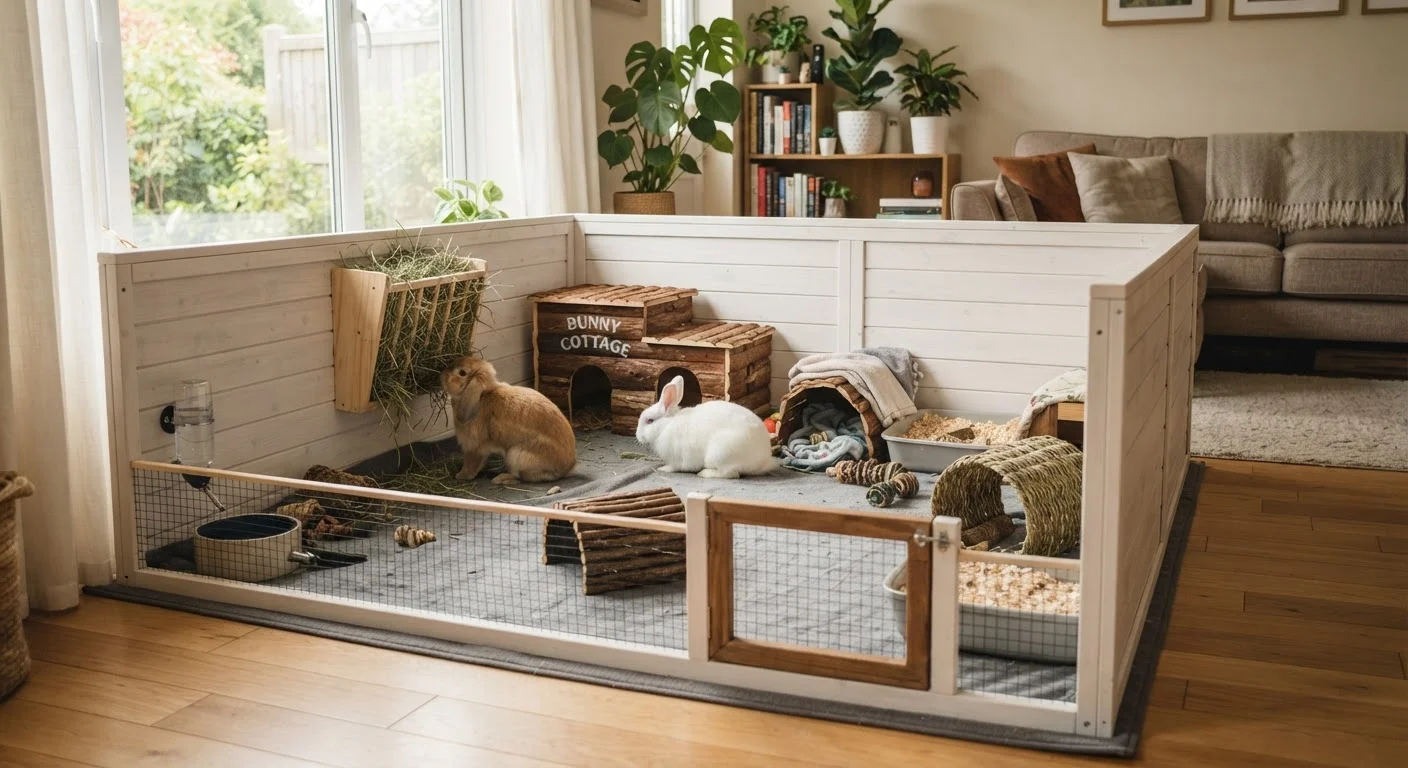
Why the Enclosure Setup Matters So Much
Rabbits are often thought of as low-maintenance pets, but their housing needs are more involved than most beginners expect. A poorly designed space leads to boredom, destructive behaviour, and health problems - all of which are preventable. If you are still deciding whether a rabbit is the right fit, our small pet comparison guide outlines what rabbit ownership realistically involves compared to other small pets.
Getting the enclosure right before your rabbit arrives is also far easier than trying to troubleshoot problems once a stressed animal is already inside. Use the preparation checklist for new small pet owners alongside this guide to make sure nothing is overlooked.
What you will need
What You Will Need
The items below cover everything required to build a functional, safe enclosure from the ground up. Most can be sourced from general pet or home stores. Prioritise solid construction and non-toxic materials over aesthetics.
Exercise pen or puppy pen panels
Creates the main perimeter of the enclosure with enough square footage for a rabbit to move freely.
Solid flooring mat or fleece blanket
Covers any wire-grid surface to protect the rabbit's feet and provide traction.
Hay rack or hay feeder
Keeps unlimited hay accessible and off the ground to stay cleaner for longer.
Ceramic or heavy-bottomed water bowl
Provides a stable, easily cleaned water source; rabbits often drink more from bowls than bottles.
Litter box with paper-based bedding
Designates a toileting area and makes cleaning the enclosure much faster.
Hideout or wooden tunnel
Gives the rabbit a secure retreat to rest and feel safe - critical for a prey animal's wellbeing.
Cardboard boxes or untreated wooden chews
Provides mental stimulation and satisfies the natural urge to chew and dig.
Build a Modular Setup for Easy Cleaning
Connecting puppy pen panels with zip ties lets you reconfigure the enclosure layout as needed and fold the whole thing flat for thorough cleaning. This approach is often more affordable than purpose-built rabbit cages and gives your bunny significantly more space.
Step-by-Step: Building the Enclosure
Work through these steps in order. Each one builds on the last, so completing them sequentially reduces the chance of needing to redo earlier stages. Expect the full setup to take one to three hours depending on the complexity of your layout.
Never Use Wire-Bottom Flooring
Wire-grid floors are commonly sold with rabbit hutches but cause a painful and serious condition called sore hocks, where the skin on a rabbit's feet breaks down from constant pressure. Always cover wire flooring completely with solid mats, untreated wood boards, or fleece blankets. If you are buying a new enclosure, look for solid or slatted flooring from the start.
Choose the Right Location
Select a spot away from drafts, direct sunlight, and loud appliances. Rabbits are sensitive to temperature extremes - ideally their space stays between 60°F and 72°F. Indoors, a quiet corner of a living room or bedroom works well. Avoid garages where cars are parked, as exhaust fumes are toxic to rabbits.
Set the Minimum Space
The enclosure's living area - where the rabbit spends time between exercise sessions - should be at least 12 square feet. A 4-by-3-foot grid of exercise pen panels works as a practical starting point. Larger breeds such as Flemish Giants need substantially more room. Remember, this is the home base; rabbits also need several hours of free-roam time outside it each day.
Sort Out the Flooring
Lay down a solid, non-slip surface throughout the entire enclosure. Fleece blankets, foam-backed rugs, or untreated wood boards are all suitable. If your base enclosure has any wire sections, cover them fully. Avoid synthetic carpets that the rabbit can ingest if chewed, and check all materials are free from dyes or chemical treatments.
Install a Litter Box and Hay Station
Place a medium-to-large litter box in one corner filled with paper-based bedding - never cedar or pine shavings, which are harmful to rabbits. Put the hay rack directly above or adjacent to the litter box. Rabbits naturally eat and toilet at the same time, so combining these areas reinforces litter training quickly. Hay should make up about 80% of a rabbit's diet and must be available at all times.
Add a Water Source and Food Dish
Set a heavy ceramic bowl in a spot unlikely to be tipped over, or attach a water bottle securely to the pen wall as a backup. Change water daily. Place a small dish for any fresh vegetables or pellets at the opposite end of the enclosure from the litter box to encourage movement. Keep food dishes low enough that the rabbit can eat without straining its neck.
Provide a Hideout and Enrichment
Every rabbit needs at least one enclosed hiding spot - a wooden house, a covered tunnel, or even a cardboard box with a door cut in. This is not a luxury; a prey animal that cannot retreat when stressed will develop chronic anxiety. Alongside the hideout, add one or two enrichment items: a tunnel to run through, an untreated willow ball to toss, or a cardboard box stuffed with hay to dig through. Rotate items weekly to maintain interest.
Rabbit-Proof the Free-Roam Area
Before allowing your rabbit out of the enclosure for daily exercise time, scan the room at floor level. Cover or conceal electrical cords - rabbits chew through them readily, with potentially fatal results. Block access to furniture undersides where the rabbit could get stuck, and remove any houseplants that are toxic to rabbits (common culprits include pothos, philodendron, and aloe vera). Use pen panels as barriers to close off unsafe zones.
Keeping the Enclosure Safe Over Time
A well-built enclosure still needs regular attention to stay safe and stimulating. Spot-clean the litter box daily and do a full litter change every two to three days. Wash food and water bowls daily. Check pen panels and latches weekly for signs of chewing or loosening. Swap out enrichment items regularly so your rabbit does not lose interest.
Housing is only one part of a rabbit's wellbeing. Once the enclosure is set, your next focus should be establishing a consistent daily routine. Our guide to a rabbit's daily routine covers diet timing, exercise hours, and the social interaction rabbits need to stay mentally healthy.
Outdoor Setups Require Extra Safety Layers
Outdoor hutches must have predator-proof latches, hardware cloth (not chicken wire) on all sides, and a solid roof. Rabbits can die from fright alone when a predator approaches, even without physical contact. Review the full trade-offs in our indoor vs. outdoor rabbit keeping guide before committing to an outside setup.