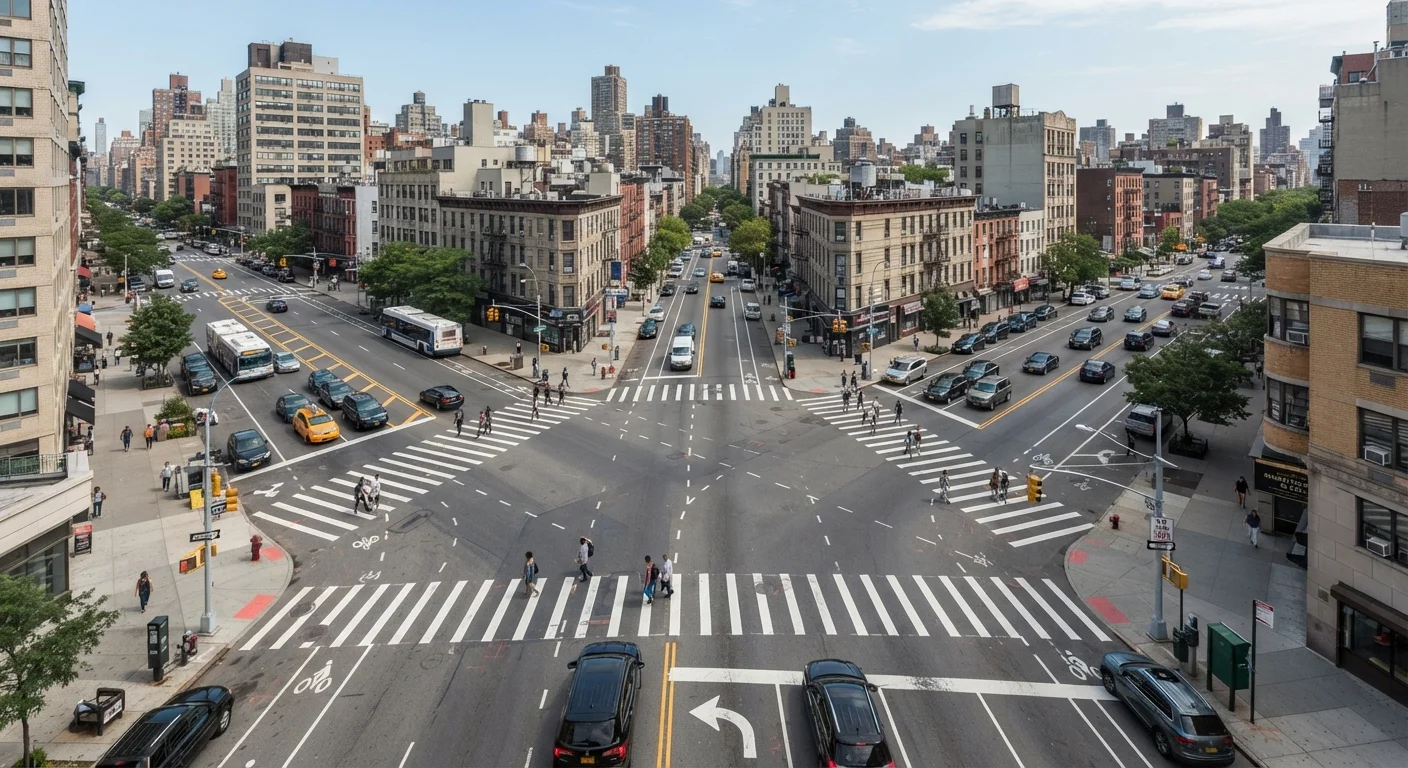
Why Right of Way Rules Exist
Intersections are among the most dangerous places on any road network because multiple streams of traffic - cars, cyclists, and pedestrians - attempt to use the same space at the same time. Without a shared agreement about who moves first, every crossing would require constant negotiation and guesswork.
Right of way rules replace that guesswork with a predictable system. When everyone understands and follows the same set of priority rules, traffic flows more smoothly and drivers can anticipate each other's behaviour. According to the National Highway Traffic Safety Administration (NHTSA), failure to yield right of way is consistently among the top contributing factors in intersection collisions in the United States.
Importantly, having the right of way does not mean you can proceed without looking. The law in every U.S. state requires all drivers to exercise due care - meaning you must still check for other road users and avoid a collision even when you technically have priority.
Right of Way Is a Shared Responsibility
Having the right of way does not give you permission to proceed blindly. U.S. traffic law universally requires drivers to take reasonable care to avoid a collision - even when another driver has made an error. Treating right of way as a courtesy system rather than a rigid entitlement keeps everyone safer.
The Core Rules at Common Situations
Uncontrolled Intersections (No Signs or Signals)
When you arrive at an intersection without a stop sign, yield sign, or traffic light, the default rule applies: yield to any vehicle already in the intersection, and if two vehicles arrive simultaneously, yield to the driver on your right. This right-hand rule is simple but often forgotten under pressure.
Stop Signs and Yield Signs
A stop sign requires a complete stop before the line, then yielding to crossing traffic before proceeding. A yield sign means slow down, check for oncoming traffic, and only enter when it is clearly safe - a full stop is not always required, but must happen if traffic is present.
Traffic Signals
Green means go - but only when the intersection is clear. Turning left on a green light still requires you to yield to oncoming straight-through traffic and to pedestrians crossing in your path. A flashing yellow light means proceed with caution; a flashing red acts like a stop sign.
Merging and Lane Changes
When lanes merge - such as an on-ramp joining a highway - the merging driver must yield to traffic already in the lane they are joining. The highway driver has priority, though courteous drivers often make space. For more detail on signalling correctly before lane changes, see our guide to indicators and lane changes.
~40%
Of U.S. crashes occur at intersections
According to the Federal Highway Administration (FHWA), approximately 40 percent of all reported traffic crashes in the U.S. occur at or near intersections.
#1
Driver error type at intersections
Failure to yield right of way is consistently ranked among the top driver errors contributing to intersection crashes, per NHTSA crash data analyses.
Pedestrians, Cyclists, and Special Situations
Pedestrian Crosswalks
At marked crosswalks, drivers must stop for pedestrians who are in the crosswalk or have stepped off the curb to cross. This applies even when you are turning on a green light - a turning vehicle must yield to pedestrians crossing the road you are turning into. School crossing zones carry additional requirements; always slow down and be prepared to stop.
Cyclists
Cyclists generally follow the same right of way rules as motor vehicles. When a cyclist is in a bike lane at an intersection, treat them as you would another lane of traffic. Check mirrors and blind spots before turning across a bike lane.
Emergency Vehicles
When an emergency vehicle - police car, ambulance, or fire truck - approaches with active lights and siren, all drivers must pull over to the right and stop until the vehicle passes. This rule overrides every other right of way consideration.
Roundabouts
Roundabouts operate on a simple priority principle: traffic already inside the circle has right of way. Entering drivers yield at the entry point and wait for a safe gap before joining the circulating flow. If roundabouts make you nervous, our full guide to how roundabouts work walks you through them step by step.
When in Doubt, Yield
If you are ever unsure who has priority at an intersection, the safest action is to yield and let the other road user go first. A brief delay is far less costly than a collision. Experienced drivers use this principle regularly - it is not a sign of poor driving, but of good judgment.
Applying These Rules With Confidence
New drivers often feel anxious at intersections not because the rules are complicated, but because they haven't had enough practice applying them under time pressure. The good news is that right of way rules are consistent - once you learn them, they apply in most situations you'll encounter daily.
A practical habit: before entering any intersection, briefly ask yourself who has priority here? This quick mental check becomes automatic within a few weeks of regular driving. Pair it with the mirror-signal-manoeuvre sequence described in detail for lane changes, and your approach to junctions will become structured rather than reactive.
Right of way rules also vary slightly by country and road type. If you ever drive abroad, verify local priority laws before getting behind the wheel - our article on road safety abroad is a useful starting point. Similarly, how right of way plays out in dense city traffic differs from rural road junctions - our comparison of urban traffic and rural roads explains what to watch for in each environment.
Understanding right of way is one stepping stone in a broader set of driving fundamentals. Once intersections feel manageable, you might be ready to tackle higher-speed environments - our introduction to motorway driving covers the next stage of building road confidence.