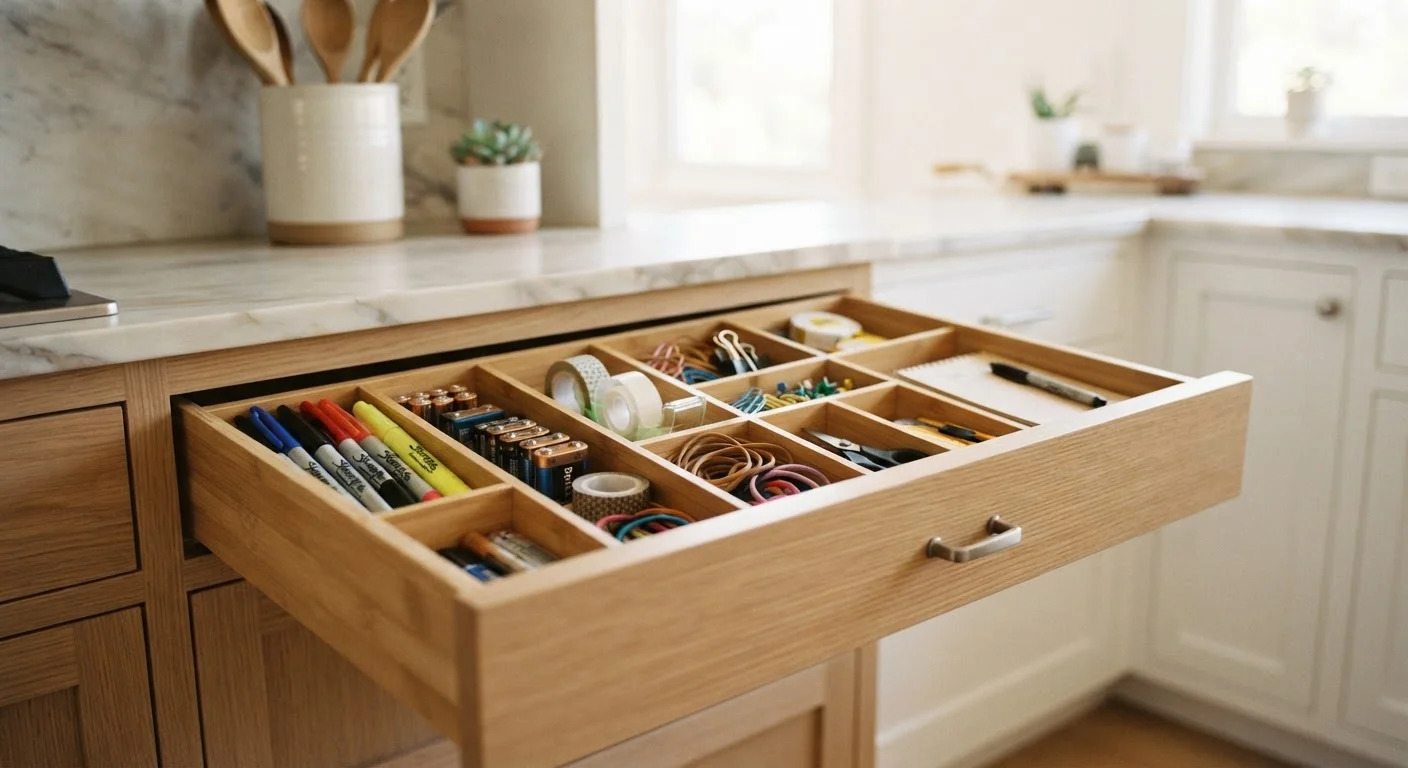
What We Actually Mean by a Junk Drawer
Almost every American kitchen has one: a drawer that collects batteries, takeout menus, rubber bands, spare keys, mystery screws, and anything else without an obvious home. The junk drawer is so common it's practically a cultural institution - and it's also one of the most debated spots in home organization circles.
For new homeowners setting up a functional space from scratch, this is a real decision worth thinking through. Should you designate a drawer for miscellaneous items on purpose? Or is the junk drawer a habit worth breaking before it starts? The honest answer lies somewhere in the middle, and it depends on how your household actually operates day to day.
The Case for Keeping a Junk Drawer
Organizational purists sometimes argue that every item should have a specific home - but real life produces genuinely miscellaneous items that don't fit neatly into any category. A junk drawer, managed with intention, solves a real problem.
Reduces daily decision fatigue for miscellaneous items
Not every object needs a permanent labeled home. A designated catch-all drawer removes the mental overhead of deciding where to put a spare rubber band or a loose battery in the moment.
Keeps countertops and surfaces clearer
Without a designated landing zone, miscellaneous items often migrate to countertops. A junk drawer gives those items somewhere to go that's out of sight.
Centralizes frequently needed small items
A well-curated junk drawer puts commonly reached-for items - a pen, scissors, a tape measure - in one predictable spot, saving time on routine tasks.
Accommodates the reality of how households work
Real life generates genuinely miscellaneous items. A small, managed catch-all zone is an honest acknowledgment of that rather than a system built around an unrealistic ideal.
The key phrase there is managed with intention. A functional junk drawer has a defined size (one drawer, not a whole cabinet), holds only items you actually use, and gets edited every few months. Think of it less as a dumping ground and more as a flexible utility zone. For more on how to evaluate borderline items, see what to do with items you're not sure about keeping.
The Case Against the Junk Drawer
The junk drawer's biggest weakness is what organizational experts sometimes call the expansion problem: clutter tends to grow to fill whatever space you give it. A drawer designated for overflow becomes the default destination for everything that doesn't have a better home - until it's overflowing and mostly useless.
Acts as a clutter magnet without clear rules
A drawer with no defined limits quickly fills with items that should be elsewhere - or discarded. The convenience of dropping things in often overrides the discipline of putting them away properly.
Items get lost and stay lost inside it
When a drawer becomes a jumble, finding anything inside it takes longer than it would if the item had its own designated spot. The time savings disappear.
Can become a source of visual and mental stress
Even when the drawer is closed, knowing it's disorganized creates low-level background stress for some people - particularly those who are sensitive to clutter in shared living spaces.
Normalizes keeping items that should be discarded
Dead batteries, expired coupons, and broken items frequently accumulate in junk drawers because there's no natural pressure to evaluate them. The drawer makes it easy to defer decisions indefinitely.
If you notice you're avoiding the drawer because it's overwhelming to sort through, or that items stay lost inside it for months, those are signs the drawer is costing you more than it's saving. Everyday habits that undermine an organized home are worth understanding here - a junk drawer often reflects broader patterns rather than being the problem itself.
How to Make a Junk Drawer Actually Work
If you decide to keep one, treating the junk drawer as a system - not a free-for-all - makes all the difference. Here's how to approach it:
- Set a physical limit. One standard kitchen drawer is the maximum. When it's full, something leaves before something new goes in.
- Use a simple insert. Small dividers or a basic tray keep items from becoming a tangled pile. You don't need specialized products - repurposed containers work fine.
- Define what belongs. Batteries, a tape measure, a few pens, a spare key, takeout menus if you use them. If an item has a better logical home elsewhere, put it there.
- Edit it seasonally. Set a reminder every three or four months to pull everything out and discard what's dead, expired, or unused.
One Drawer, One Rule
The most common advice from professional organizers isn't to eliminate the junk drawer - it's to contain it strictly to a single drawer. The moment junk overflow moves into a second drawer or a cabinet, the system breaks down. Treating the drawer's physical capacity as a hard limit is the simplest way to keep it functional rather than chaotic.
Choosing a junk drawer is also a storage philosophy choice. If you're weighing whether open or closed storage makes more sense across your kitchen overall, open shelving versus closed storage offers a useful framework for each room.
When Eliminating It Entirely Makes More Sense
Some households genuinely function better without a catch-all zone. If you prefer strict systems, live with limited drawer space, or find that a junk drawer consistently becomes a source of frustration rather than convenience, eliminating it is a reasonable choice.
In that case, the discipline required is finding a specific home for every item that would otherwise land in that drawer - wall-mounted key hooks, a small toolkit in a closet, a dedicated battery container in a pantry. The sorting by category versus sorting by room guide can help you think through how to build those systems from the start, before clutter habits form.
Neither approach is universally right. The most important thing for a first-time homeowner is to decide on purpose - knowing why you're making the choice - rather than defaulting to whatever habit you grew up with.