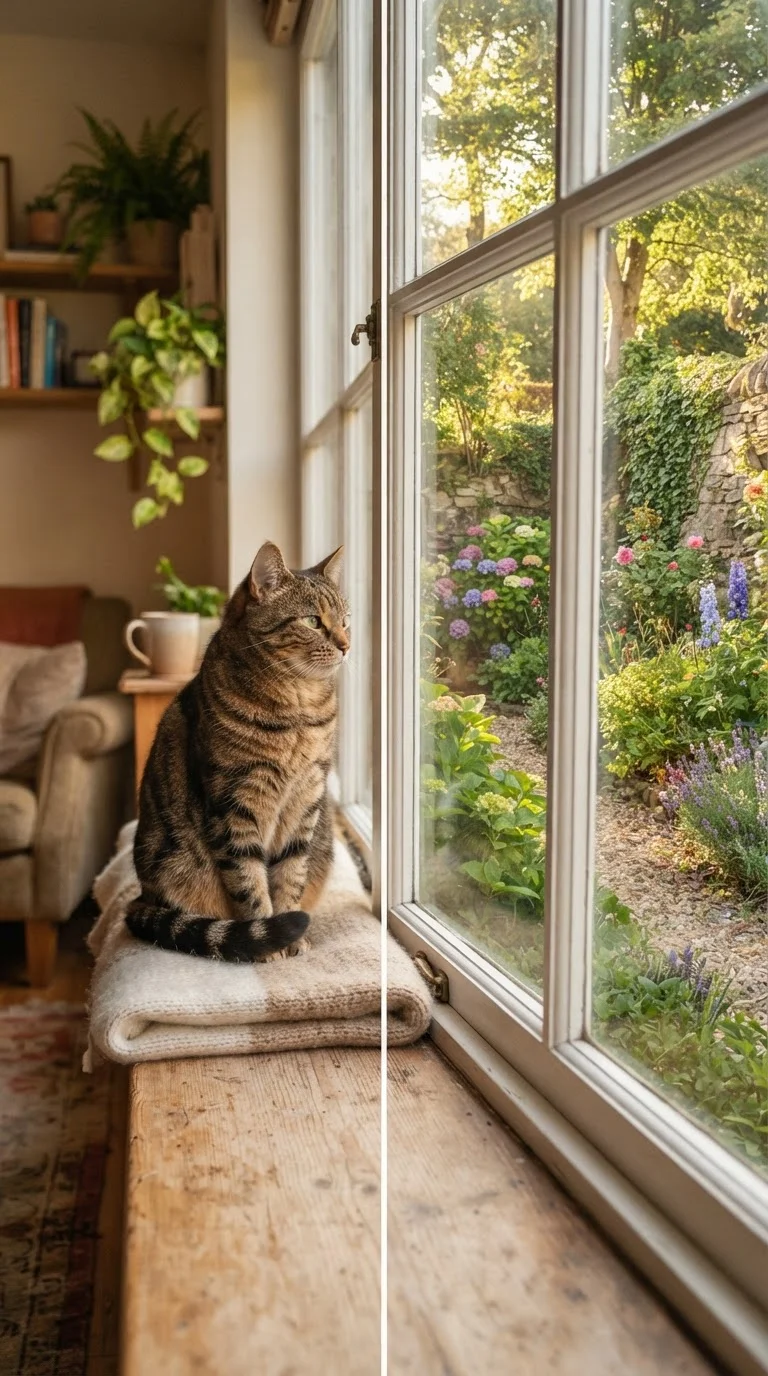
Why This Decision Matters More Than Most Owners Expect
One of the first choices new cat owners face - often without realising its significance - is whether to keep their cat indoors, allow outdoor access, or find a middle ground. This isn't simply a lifestyle preference; it has measurable effects on your cat's health, safety, and quality of life.
Veterinary organisations, including the American Veterinary Medical Association (AVMA), generally recommend keeping cats indoors or providing only supervised outdoor time. Understanding why - and what trade-offs come with each approach - helps you make a genuinely informed choice rather than going with habit or assumption.
If you're also working through other foundational decisions, see our guide on common cat health myths to separate fact from fiction early on.
| Indoor Cat | Outdoor Cat | |
|---|---|---|
| Average lifespan | 10-17 years (typical range) | 2-5 years shorter on average |
| Disease risk (FIV, FeLV) | Low | Significantly higher |
| Parasite exposure | Minimal with basic prevention | High; ongoing treatment needed |
| Behavioural enrichment | Requires deliberate effort | Naturally higher variety |
| Injury / accident risk | Very low | Substantially higher |
| Owner management effort | Enrichment, play, litter upkeep | Parasite control, monitoring, vet visits |
The Case for Keeping Cats Indoors
The most frequently cited advantage of indoor living is longevity. Indoor cats are not exposed to moving vehicles, predators, toxic plants, or other cats that may carry infectious disease - all of which meaningfully reduce lifespan risk.
Key benefits of indoor living include:
- Reduced injury risk: Road accidents are among the leading causes of traumatic injury and death in outdoor cats.
- Lower disease exposure: Feline immunodeficiency virus (FIV) and feline leukemia virus (FeLV) spread through bites and close contact with infected cats - risks that are dramatically reduced indoors.
- Parasite control: Fleas, ticks, and intestinal worms are far easier to manage when a cat doesn't roam.
- No wildlife predation: Cats are natural hunters; keeping them indoors protects local bird and small mammal populations as well as the cat itself from injury sustained while hunting.
The main challenge is enrichment. An unstimulating indoor environment can lead to boredom, stress, or behavioural issues. Puzzle feeders, climbing structures, window perches, interactive play sessions, and a well-maintained litter box all help. Our article on litter box setup and maintenance is a useful starting point for building a comfortable indoor routine.
Make Indoors Interesting
Rotate toys regularly to prevent boredom, and dedicate at least two short interactive play sessions per day using a wand or laser toy. A tall cat tree placed near a window gives indoor cats a vantage point that partially replicates outdoor territory-watching. These small investments make a measurable difference to indoor cats' wellbeing.
The Case for Outdoor Access
Outdoor access gives cats opportunities that are genuinely difficult to replicate inside: patrolling a territory, climbing real trees, hunting, and responding to changing smells and sounds. For cats accustomed to outdoor life - particularly those adopted as adults with a roaming history - sudden confinement can cause significant stress.
Potential benefits of outdoor access include:
- Behavioural enrichment: The sensory variety outdoors satisfies instincts that even the best indoor setup can only partially address.
- Natural exercise: Cats that roam tend to be more physically active, which can support healthy weight management.
- Reduced boredom behaviours: Scratching furniture, excessive vocalisation, and over-grooming sometimes improve with outdoor access.
These benefits must be weighed honestly against the risks. Traffic, toxins (antifreeze, rodenticides, certain garden plants), hostile encounters with other animals, and theft or injury from humans are all real hazards. Whether outdoor access is reasonable depends heavily on your specific environment.
Common Outdoor Toxins to Know About
Antifreeze (ethylene glycol) is highly toxic to cats and has a deceptively sweet taste that attracts them - even small amounts can be fatal. Rodenticides (rat poisons) are another significant hazard, as cats can be secondarily poisoned by eating an affected rodent. If your cat has outdoor access, talk to your vet about the specific risks in your area and what signs of poisoning to watch for.
Middle-Ground Options Worth Considering
Many owners find that a compromise approach works well. Rather than treating this as a binary choice, consider options that allow outdoor exposure while limiting the most serious risks:
- Catios (cat patios): Enclosed outdoor structures - ranging from simple window boxes to large walk-in enclosures - let cats experience fresh air, sunlight, and outdoor stimulation without roaming freely.
- Leash and harness walks: Some cats adapt well to harness training, enabling supervised outdoor exploration. This works best when introduced gradually, ideally in kittenhood.
- Supervised yard time: Allowing outdoor access only when you are present and in a securely fenced area reduces - though doesn't eliminate - risk.
Whichever approach you choose, ensuring your cat is spayed or neutered is important. Intact cats are more likely to roam widely and fight, increasing their risk exposure significantly. Our article on neutering and spaying covers what to expect from that decision.
Feeding your cat a complete, nutritionally appropriate diet also supports whichever lifestyle you choose. For guidance on that, see our overview of wet food vs. dry food.
10-17 yrs
Typical indoor cat lifespan
The ASPCA notes that indoor cats commonly live into their teens, while outdoor cats face significantly higher mortality rates from accidents and disease.
~50%
FIV prevalence in feral populations
Studies cited by veterinary schools suggest FIV infection is substantially more common in free-roaming cat populations than in indoor-only cats.