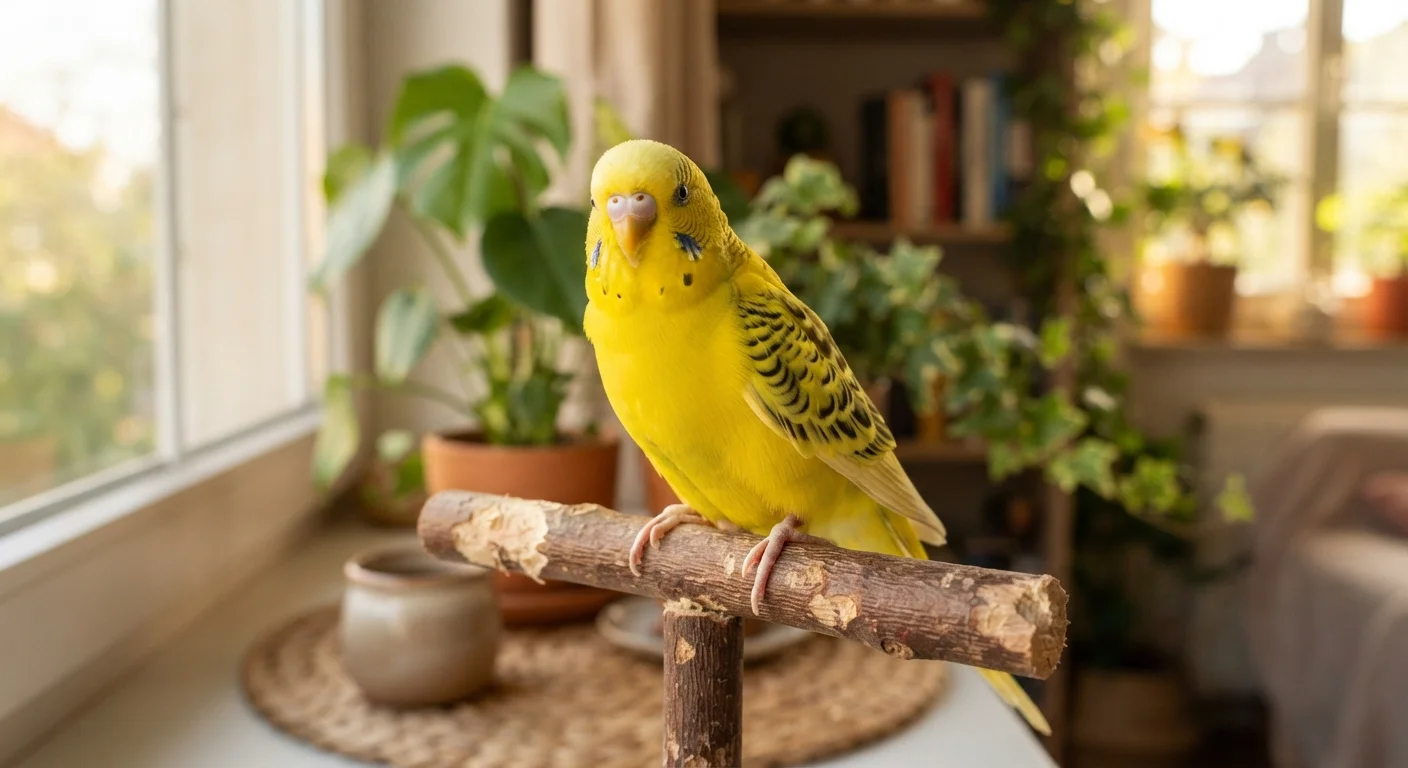
How to Use This Guide
Choosing your first pet bird involves more than picking a species you find attractive. Noise tolerance, time availability, and how much hands-on interaction you want all shape which bird will actually thrive in your home. This reference guide focuses on three species commonly recommended for beginners - budgerigars (budgies), cockatiels, and canaries - and breaks down what day-to-day ownership really looks like for each one.
If you're still weighing birds against other small pets, see our comparison guide for a broader look at care demands and temperaments. For a complete starting framework, The First-Time Small Pet Owner's Complete Starting Point walks through setup from scratch.
| Species covered | Budgerigar, Cockatiel, Canary |
| Typical lifespan (budgie) | 5-10 years (Varies with diet and care quality) |
| Typical lifespan (cockatiel) | 15-20 years (Well-cared-for individuals may exceed this) |
| Typical lifespan (canary) | 8-12 years |
| Best for hands-on interaction | Budgies and cockatiels |
| Best for lower-contact ownership | Canaries |
| Avian vet visit recommended | Within first week of ownership, then annually |
Species Breakdown: Noise, Bonding, and Daily Needs
Understanding what each species requires day to day helps you avoid surprises after you bring a bird home.
Avian vet
A veterinarian with specialized training in birds and exotic animals. General practice vets may have limited experience with birds, so seeking an avian specialist is strongly recommended for pet bird health care.
Flock-calling behavior
Vocalizations birds make to communicate with or locate companions. In pet birds, this often appears as loud calling at dawn or dusk, mimicking natural flock communication patterns.
Pellet diet
A commercially formulated food made from a balanced blend of grains, vegetables, and nutrients compressed into small pellets. Often recommended as a nutritional base for pet birds alongside fresh foods.
Foraging toy
A toy or device that requires a bird to work or puzzle to access food or treats. Foraging toys promote natural feeding behaviors and provide important mental stimulation for caged birds.
Out-of-cage time
A daily period when a bird is allowed to leave its cage and move freely in a safe, supervised space. This supports physical exercise, mental health, and bonding with owners.
Budgerigars (Budgies)
Noise level: Moderate. Budgies chirp, chatter, and may attempt to mimic words and sounds. Their volume is rarely disruptive, making them well-suited to apartments.
Bonding: Budgies are social and can form close bonds with their owners, especially when handled gently from a young age. A single budgie kept without a companion bird will need more daily human interaction to stay mentally stimulated.
Daily care: Fresh water and seed or pellet mix every morning, plus daily spot-cleaning of the cage floor. Budgies benefit from at least one hour of supervised out-of-cage time each day. Their cages require a full clean weekly.
Cockatiels
Noise level: Moderate to high. Male cockatiels in particular can whistle loudly and repeatedly, especially at dawn and dusk. This is normal flock-calling behavior, not a sign of distress.
Bonding: Cockatiels are affectionate and often enjoy being held or perching on a shoulder. They tend to bond strongly with one or two primary caregivers. Expect to invest meaningful daily time in interaction, particularly if your bird is kept alone.
Daily care: Fresh food and water daily, a varied diet that includes pellets, fresh vegetables, and limited seeds. Plan for 1-2 hours of out-of-cage time and interaction. Weekly full cage cleaning is standard.
Canaries
Noise level: Males sing consistently and melodiously; females are quieter. Canary song is generally pleasant but can be persistent throughout daylight hours.
Bonding: Canaries are largely hands-off birds. Most do not enjoy being handled and are better appreciated as visual and auditory companions rather than interactive pets. They are a good fit for owners who want a lower-contact bird.
Daily care: Fresh water, seed mix, and a small amount of fresh greens or fruit daily. Canaries are active flyers and need a longer cage (wider than it is tall) to move freely. Weekly cage cleaning applies here too.
15-20 yrs
Typical cockatiel lifespan with proper care
Cockatiels are a long-term commitment - many outlive common expectations for small pets.
1-2 hrs
Daily out-of-cage time recommended for cockatiels
Avian welfare organizations generally recommend daily supervised free-flight time for social bird species.
Before committing to any species, review what small pets actually cost beyond the purchase price - avian vet visits, appropriate caging, and ongoing supplies add up quickly.
Practical Care Principles That Apply to All Three
Regardless of species, certain care principles remain consistent across beginner-friendly pet birds.
Birds Hide Illness - Act Early
Pet birds instinctively mask signs of sickness as a survival behavior inherited from wild ancestors. By the time a bird looks visibly unwell - fluffed feathers, lethargy, loss of appetite - it may already be seriously ill. Establishing care with an avian vet before any health issues arise is one of the most important steps a new bird owner can take.
- Veterinary care: Birds are prey animals that instinctively hide signs of illness. Schedule a wellness exam with an avian vet shortly after bringing your bird home, and at least annually thereafter. Do not wait for visible symptoms before seeking care.
- Diet: Seeds alone are not a complete diet for most pet birds. Pellets formulated for the species, paired with fresh vegetables and limited fruit, provide better long-term nutrition. Consult your avian vet for species-specific guidance.
- Cage placement: Keep cages away from kitchens (cooking fumes, especially from non-stick cookware, can be fatal to birds), drafts, and direct strong sunlight. A stable temperature and low-stress environment support good health.
- Mental enrichment: Foraging toys, rotating perch types, and safe chewable materials reduce boredom and stress. An under-enriched bird may develop repetitive or destructive behaviors over time.
The same principle of consistent, attentive care applies across all pets - if you're curious how early missteps can affect a new pet's wellbeing, common first-time owner mistakes offers useful parallel lessons even for non-dog owners.
This article is for general informational purposes only and does not constitute veterinary advice. Always consult a qualified avian veterinarian for guidance specific to your bird's health and care needs.