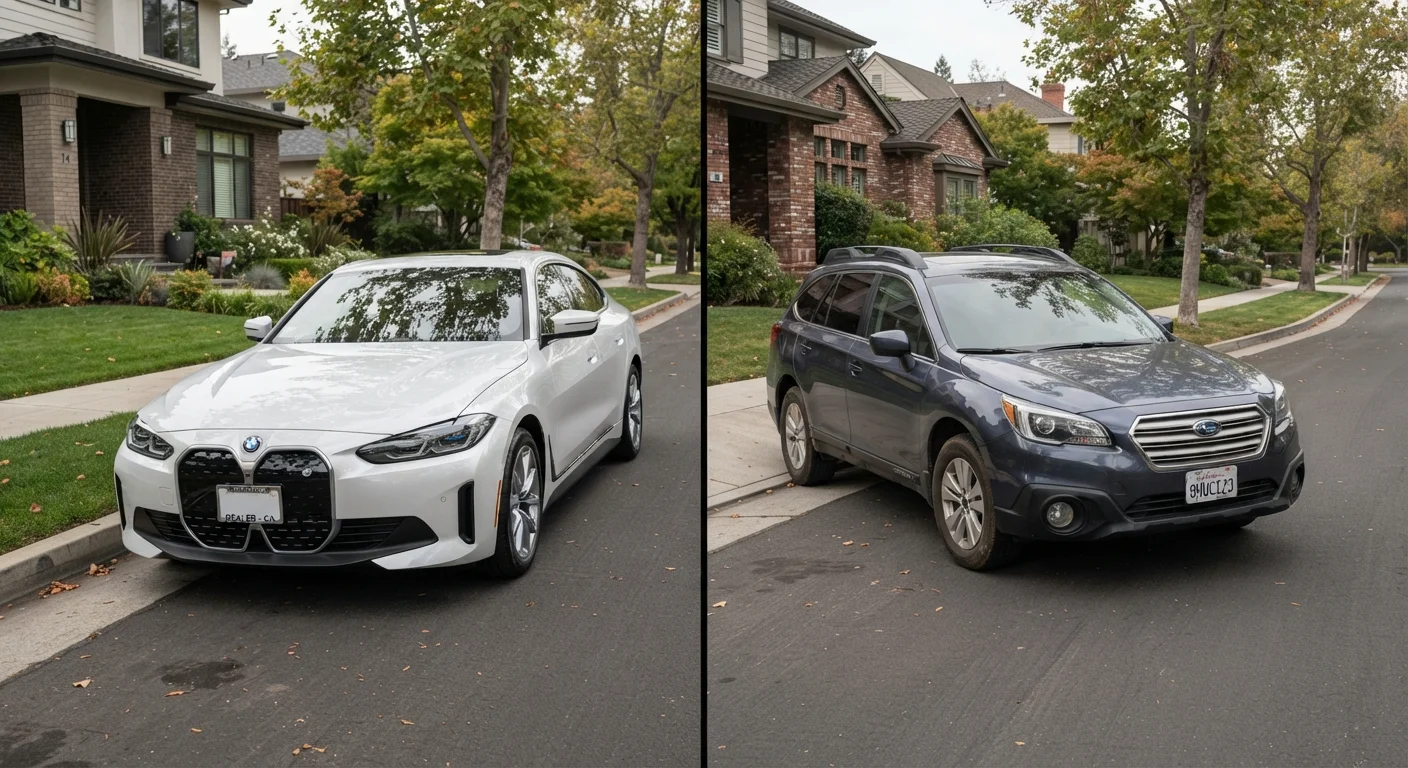
The Core Trade-Off: Cost Today vs. Certainty Tomorrow
The fundamental tension between buying new and buying used comes down to two competing priorities: spending less money now, or having more certainty about what you're getting. Neither priority is wrong - they just point in different directions.
A new car carries a higher sticker price, but you receive a vehicle with zero prior owners, a full manufacturer warranty (typically three years or more for basic coverage, and longer for the powertrain), and detailed knowledge of every mile driven. A used car asks you to accept some unknowns in exchange for a lower purchase price - and those unknowns can be managed with the right preparation, but they can't be eliminated entirely.
Understanding how depreciation works is crucial here. New vehicles lose a significant portion of their market value in the first one to three years. That loss is unavoidable for new-car buyers, but used-car buyers effectively let the first owner absorb it - which is one of the strongest financial arguments for going used.
| Criterion | New Car | Used Car |
|---|---|---|
| Purchase price | Higher - full market value | Lower - post-depreciation value |
| Depreciation impact | You absorb early steep drop | Previous owner absorbed it |
| Warranty coverage | Full manufacturer warranty | Limited, expired, or CPO warranty |
| Ownership history | None - clean slate | Unknown or partially documented |
| Financing rates | Generally lower interest rates | Generally higher interest rates |
| Insurance cost | Typically higher premiums | Often lower premiums |
| Safety technology | Latest features as standard | Varies by model year |
| Selection | Current models and trims only | Wide range of ages and prices |
What You're Actually Paying For (and What You're Not)
With a new car, your price includes the assurance that no one has neglected the oil, been in an undisclosed collision, or modified the vehicle in ways that aren't immediately obvious. It also includes the current model year's safety features, which improve meaningfully from generation to generation.
With a used car, your price reflects the vehicle's age, mileage, condition, and market demand. You may get far more car - more engine, more interior space, more features - than a new car at the same price point. But you inherit whatever happened during the previous owner's time with it.
This is why due diligence is non-negotiable when buying used. A vehicle history report is a useful starting point - but as our guide on reading a used car's history explains, records have real gaps. Pairing that report with a pre-purchase inspection from an independent mechanic gives you a far more complete picture before you commit.
~20%
Typical first-year new-car depreciation
Industry data consistently shows new vehicles can lose around 15-20% of their value in the first year, with the steepest drop occurring in early ownership.
3-5 yrs
Typical new-car powertrain warranty length
Most mainstream manufacturers offer powertrain coverage of at least three years or 36,000 miles, with many extending to five years or 60,000 miles.
~$11K+
Average price gap between new and used
According to automotive market analysts, the average transaction price for used vehicles is several thousand dollars below comparable new models, though this gap fluctuates with market conditions.
Financing, Insurance, and Ongoing Costs
The purchase price is only one part of the total cost. Financing terms, insurance premiums, and ongoing maintenance all differ between new and used vehicles in ways that can shift the overall calculation.
Lenders generally offer lower interest rates on new-car loans than used-car loans, because new vehicles represent less risk as collateral. However, new cars also tend to require higher insurance premiums - comprehensive and collision coverage costs more when the vehicle is worth more. These factors can narrow the monthly-cost gap between new and used more than many first-time buyers expect. For more on how financing works, the Credit & Debt hub covers the credit and loan basics worth understanding before you sign anything.
Maintenance is another variable. New cars typically need only routine service during their warranty period. Used cars - especially older ones - may require more frequent or more expensive repairs, though this varies greatly by make, model, mileage, and how the vehicle was cared for. A used car sold as certified pre-owned (CPO) often includes a manufacturer-backed limited warranty, which can offer some of the same reassurance as buying new at a lower price point.
If you're weighing whether to buy at all or explore leasing, it's worth reading how buying and leasing fundamentally differ before making your final decision.
What 'Certified Pre-Owned' Actually Means
A certified pre-owned (CPO) vehicle has been inspected and reconditioned to meet standards set by the manufacturer or dealership, and typically comes with a limited warranty. CPO programs vary widely between manufacturers - some are backed directly by the automaker, while others are dealer-administered. Always ask specifically what the CPO warranty covers, for how long, and whether it transfers if you sell the car.
Making a Decision That Fits Your Situation
There is no universally correct answer. A new car makes more practical sense if you plan to keep the vehicle for a long time, if peace of mind outweighs upfront cost for you, or if you need cutting-edge safety features. A used car makes more practical sense if your budget is firm, if you're comfortable doing research, or if you'd rather let depreciation work in your favor.
Whether you go new or used, taking a thorough test drive is essential - and so is understanding the differences between buying from a private seller versus a dealership, since your legal protections and negotiating position differ significantly between those two routes. Before you get to either, it's also worth checking our overview of common car-buying myths so you can separate fact from the advice that sounds authoritative but regularly leads first-time buyers astray.
Approach the decision methodically: set a realistic budget, decide how much uncertainty you're comfortable with, and then let those answers guide you toward whichever option genuinely fits your life.