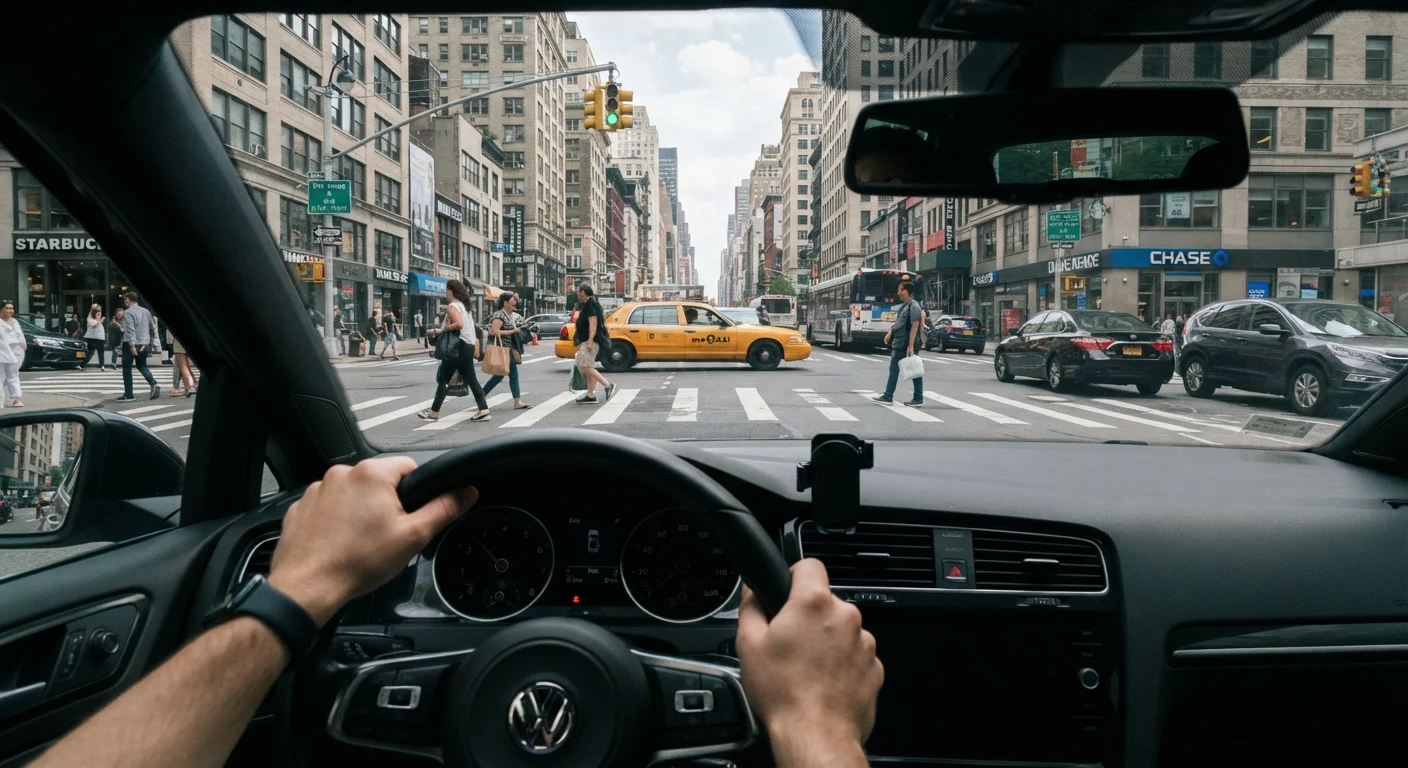
What Each Mindset Actually Means
At its core, the difference between defensive and reactive driving comes down to when your brain engages with a hazard.
A reactive driver processes danger at the moment it appears. A child runs into the street - they brake. A car cuts in - they swerve. This feels natural because it mirrors everyday human reflex. But driving at speed compresses time dramatically: at 40 mph, you cover about 59 feet every second. That leaves almost no room for pure reaction.
A defensive driver is already thinking ahead. They spotted the ball rolling into the road and lifted their foot off the accelerator before the child appeared. They noticed the merging car drifting and created extra space proactively. The hazard still happens - but the defensive driver has already reduced its impact on them.
This distinction isn't about being a "perfect" driver. It's about building a habit of reading the road rather than just watching it. See our guide on how experienced drivers spot hazards early for a deeper look at the scanning patterns behind this skill.
| Criterion | Defensive Driving | Reactive Driving |
|---|---|---|
| Core approach | Anticipate and prepare | Respond as hazards appear |
| Timing of engagement | Seconds before the hazard | At the moment of the hazard |
| Following distance | Deliberately maintained buffer | Varies, often too short |
| Mirror and scan habits | Regular, systematic checks | Triggered by movement or noise |
| Speed management | Adjusted for conditions | Adjusted after conditions change |
| Crash risk | Substantially reduced | Higher, especially in poor conditions |
| Suitable for new drivers | Yes - ideal foundation | Common starting point, not ideal |
Why Reactive Driving Falls Short
Most new drivers are reactive - not through carelessness, but because it's how humans are wired. We respond to stimuli we can see. The problem is that driving requires anticipating stimuli that haven't appeared yet.
Reactive driving also has a compounding weakness: decision fatigue and surprise increase error rates. When a hazard appears without warning, drivers must simultaneously perceive, evaluate, and act - all under stress. This is where late braking, overcorrecting, and misjudged gaps happen.
~90%
Crashes involving human error
The National Highway Traffic Safety Administration (NHTSA) has consistently attributed the vast majority of traffic crashes to driver behavior rather than vehicle or road failure.
1.5 sec
Average human reaction time to a hazard
Research into driver perception-reaction time suggests that even an alert driver typically needs 1.5 seconds or more to perceive and begin responding to an unexpected event.
88 ft
Distance covered while reacting at 40 mph
At 40 mph, a car travels roughly 88 feet during a 1.5-second reaction delay - before braking even begins, illustrating why anticipation matters so much.
Conditions that expose reactive driving most sharply include low visibility at night, wet roads, and unfamiliar environments. If you drive after dark, the reactive approach is particularly risky - our guide on night driving explains exactly what changes and how to adjust. Similarly, adverse weather conditions like ice or heavy rain shrink your reaction window even further.
Core Habits That Define Defensive Driving
Defensive driving isn't a single technique - it's a set of layered habits that work together. Here are the most important ones for new drivers to develop:
- Maintain a following distance of at least three seconds behind the vehicle ahead. In poor conditions, extend this further. This gap is your buffer - it converts reaction time into thinking time.
- Scan ahead, not just immediately in front. Aim to look 10-15 seconds down the road and check your mirrors every 5-8 seconds. This is what gives you early warning.
- Expect the unexpected. Assume other drivers may make mistakes - run late for amber lights, change lanes without signaling, or stop suddenly. Assume pedestrians may not see you.
- Control your speed relative to conditions, not just the posted limit. Speed limits define the legal maximum, not always the safe speed for current traffic, visibility, or road surface.
- Communicate clearly using signals, horn, and lights so others can anticipate your movements too.
These habits apply differently depending on your environment. Urban and rural roads demand different versions of defensive awareness - understanding that distinction helps you adapt your approach appropriately.
Defensive Driving Courses Are Widely Available
Many states recognize formal defensive driving courses for insurance or license purposes. These programs vary by provider and state, so check with your state's motor vehicle authority for accredited options. Completing a recognized course can reinforce the habits described here in a structured, supervised setting.
Building the Defensive Mindset Over Time
Shifting from reactive to defensive doesn't happen overnight, and that's completely normal. The goal for a new driver isn't perfection - it's gradual, conscious habit-building.
A practical starting point: after each drive, spend 60 seconds reflecting on one moment where you reacted to something rather than anticipating it. Ask yourself what earlier signal you could have read. Over time, this self-review trains your brain to notice those signals in real time.
It's also worth recognizing that defensive driving is especially valuable in unfamiliar settings. If you ever drive in another country, different traffic rules and driving cultures mean your usual environmental cues may not apply - our road safety abroad guide covers what to be aware of before getting behind the wheel in an unfamiliar traffic system.
With time and deliberate practice, the defensive mindset becomes less of a conscious checklist and more of an automatic way of seeing the road - and that shift is one of the most meaningful steps a new driver can take toward lasting confidence and safety.